Dr. Crawford's Developmental Neuroscience Lab


Research Overview:

Autism
is a complex disorder of the brain that lasts throughout a person’s life and affects the ability to communicate, form relationships with others, and respond appropriately to the environment typically by 3 years of age. In the past two decades autism became a primarily disorder of brain development. The incidence of Autism Spectrum Disorders is currently 1 in 150 and it affects boys four times more often than girls. As many as 20 or more genes on different chromosomes may be involved in the disorder to various degrees and determine the severity of symptoms. Interactions between those genes in addition to environmental factors likely contribute to variable expression of autism-related traits. The multidisciplinary research program in my laboratory integrates genetics, molecular and cellular neurobiology approaches to study the link between the causative biological factors and behaviour.


The major focus of my research is to identify and characterize genes and environmental risk factors underlying causes of brain dysfunction in autism. The emphasis is also on investigating the molecular mechanisms and signaling pathways contributing to potential deficits that may contribute to abnormal brain development and lead to Autism Spectrum Disorders. The aim is to improve our understanding of what is different or missing in the developing brain of individuals affected with the disorder.  The ultimate goal of this research is to develop proper diagnostic tools so that more effective intervention programs and treatments can be developed earlier in life.

Current Research Studies in my Lab:

STUDY 1: Characterization of Genetic Risk Factors Associated with Autism Spectrum Disorders

Early brain development relies largely on intrinsic pattern of gene expression and may be influenced by genetic and/or environmental predispositions. Therefore, early neuronal development can be vulnerable to gene dosage changes. In this study we measure the differences in gene expression level in affected individuals compared to normally developing children to assess what might be different in the brain of a child with autism. We also search for common heritable markers in siblings, twins and parents. This study enables identification of genetic causes and will reveal common metabolic and signaling pathways that might be defected in the nervous system or causing other physiological symptoms found in autism such as gastro-intestinal, immune, motor, or anxiety.


Gene expression profiling is used in our lab for detection of genes affected in Autism Spectrum Disorders.  It provides a global view of functional gene networks that might be altered in the brain, it allows identification of compromised pathways and provides a meaningful approach towards understanding the complex biology of autism disorders. Our goal is to further our understanding of molecular changes occurring in the brain and how they might contribute to various symptoms. Gene expression analysis involves fewer steps, gives the possibility to evaluate a wide range of candidate genes and can be a useful tool for diagnosis of autism earlier in life before the symptoms become noticeable. We collect mouth epithelial cells (buccal cells) using a gentle brush. It is a non-invasive method especially useful for very young subjects.

We are currently seeking participants of all ages, siblings, twins, parents and other family members for our study.


STUDY 2: Environmental Factor Contributing to Autism Spectrum Disorders

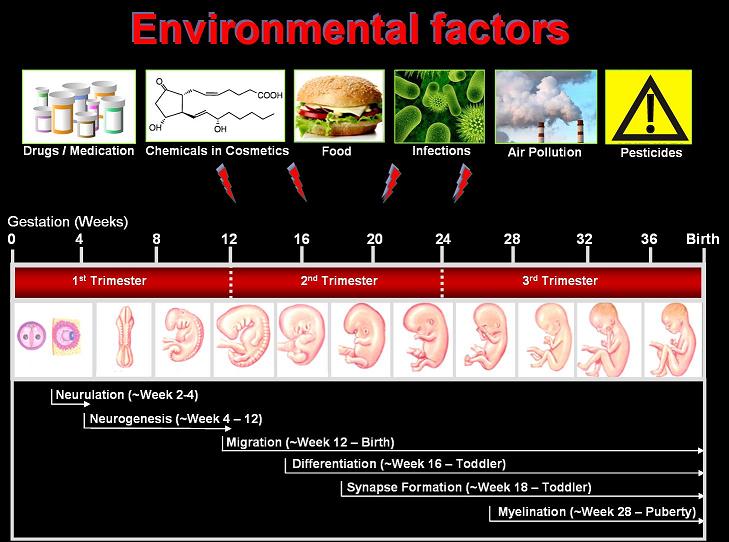
The plasma membrane phospholipids play an important role in the nervous system and serve as a supply of second messenger molecules important for normal functioning of the brain. The emerging evidence implicates that abnormal fatty acid metabolism may play a contributing role in the pathology of autism. Fatty acids homeostasis may be altered in autism as a result of insufficient dietary supplementation, genetic defects, function of enzymes involved in their metabolism, or influence of various environmental agents such as drugs such as misoprostol, infections or inflammation.


Neurobiology of Lipid Signaling


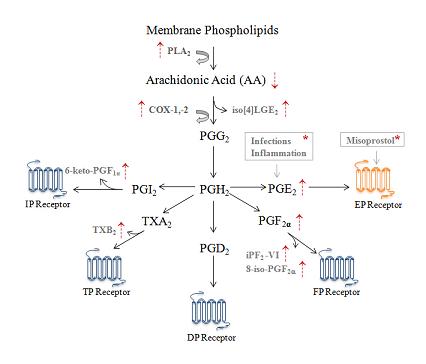
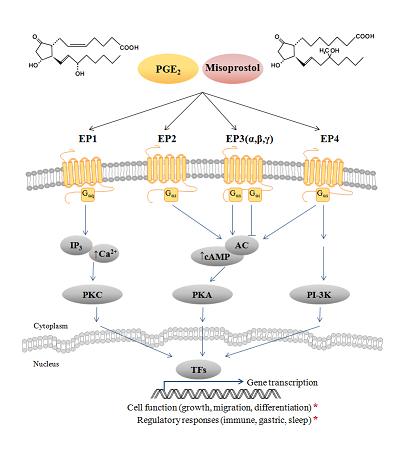
Various bioactive fatty acid molecules such as arachidonic acid (AA) can be normally released from membrane phospholipids by the action of phospholipase A2 (PLA2) and subsequently metabolized into various types of bioactive prostanoids. Cyclooxygenase-1 enzyme (COX-1), constitutive form, or cyclooxygenase-2 (COX-2), inducible form, converts AA to the unstable PGG2 intermediate and then to the prostanoid precursor PGH2, which is further metabolized by the prostaglandin (PG) synthase into the major lipid signaling messengers such as prostaglandins (PGE2). PGE2 is an important signaling molecule involved in inflammation, pain or synaptic plasticity in the nervous system. It exerts its effects through activation of their respective G-protein-coupled receptors (GPCRs) called EP receptors (EP1-4). Our lab investigates how alterations in this pathway affect cell function and contribute to brain dysfunctions seen in autism. We use various cell cultures (neuronal stem cells, neurons and astrocytes) and mouse as experimental model systems.


Prostaglandin E2 and misoprostol induce neurite retraction in Neuro-2a cells

Prostaglandin E2 (PGE) is a key lipid-derived compound which mediates important physiological functions in the nervous system Recent studies have shown that elevated levels of lipid peroxidation and oxidative stress biomarkers and prostaglandin metabolites may underlie some pathologies of the nervous system. The prenatal exposure to a drug misoprostol, a prostaglandin type E analogue, has also been linked to a number of neurodevelopmental defects. Using ratiometric calcium imaging with fura-2AM (left) as a calcium indicator (at 340nm when bound to calcium) we test the dose-dependent effects of PGE2 and misoprostol on calcium homeostasis in neuronal type cells (Neuro-2a), astrocytes type I and neuronal stem cells. Our recent results show that both drugs increase the amplitude of calcium transients in growth cone of Neuro-2a cells and induce neurite retraction (below). This might have significant implications for neuronal differentiation and cell comunication in the nervous system.


Misoprostol elevates intracellular calcium in Neuro-2a cells

Studies in our lab have also provided evidence for the involvement of prostaglandin E2 (PGE2) signaling in abnormal intracellular calcium homeostasis and its potential affect on the nervous system. Misoprostol, a prostaglandin type E analogue, has been implicated in a number of neurodevelopmental disorders. Our lab investigates its mode of action in the nervous system. Misoprostol acts on the same receptors as PGE2, a natural lipid-derived compound, which mediates important physiological functions in the nervous system via activation of the EP receptors (EP1-4). Using ratiometric calcium imaging with fura-2 AM  we have shown that misoprostol alters intracellular calcium levels in mouse neuroblastoma (Neuro-2a) cells via similar mechanisms as PGE2. We have demonstrated in that the misoprostol-induced increase in calcium is mediated by a protein kinase A (PKA)-dependent mechanism and that the EP4 receptor signalling pathway may play an inhibitory role on calcium regulation.


Expression pattern of EP receptors during mouse embryonic development


Quantitative real-time PCR revealed that the mRNA expression level of the four EP receptors was significantly higher during the neurogenesis period in mouse indicating the importance of PGE2 signalling in early neuronal development. We assessed the expression level of mRNA for the EP receptors (EP1, EP2, EP3α, EP3β, EP3γ and EP4) in mouse embryos at days 7, 11, 15 and 17 (E7, E11, E15 and E17). The relative quantification (RQ) of EP1, EP2, EP3α and EP3β receptors exhibits a significant increase in the expression level at E15 (peak of neurogenesis; day 12-17). EP3α and EP3β expression level was also significantly higher at E7, part of organogenesis (prior to day 12). The EP3γ receptor shows relatively uniform expression in all developmental stages with E7 being the highest expression. The EP4 receptor was predominantly expressed at significantly higher levels (about 150-fold increase) at E7 as compared to the adult brain. The results indicate that EP receptors may play an imortant role during the critical period and that changes in the level of endogenous PGE2 or exogenous drug misoprostol may have profound effects on the developing nervous system.


Most recent publications:

Tamiji J. and Crawford D.A. The Neurobiology of Lipid Metabolism in Autism Spectrum Disorders. NeuroSignals. 2010;18(2):98-112. pdf

Tamiji J. and Crawford D.A. Misoprostol-induced elevation of intracellular calcium in Neuro2a cells requires protein kinase A. Biochemical and Biophysical Research Communication. 2010. Sept 3;399(4):565-70. pdf

Tamiji J. and Crawford D.A. Prostaglandin E2 and misoprostol induce neurite retraction in Neuro-2a cells. Biochemical and Biophysical Research Communication. 2010. Jul 30;398(3):450-456. pdf

Vallipuram J., Grenville J. and Crawford D.A. The E646D-ATP13A4 mutation associated with autism reveals a defect in calcium regulation. Cellular and Molecular Neurobiology. 2010. Mar;30(2):233-46. pdf

Kwasnicka-Crawford D.A., Roberts W., Li M., and Scherer S.W. Characterization of an autism-associated segmental maternal heterodisomy of the chromosome 15q11-13 region. Journal of Autism Developmental Disorders. 2007 Apr;37(4):694-702. pdf

Kwasnicka-Crawford DA, Carson AR, Summers A, Roberts W, and Scherer SW. IQCJ–SCHIP1, a novel fusion transcript encoding a calmodulin-binding IQ motif protein. Biochemical and Biophysical Research Communication. 2006 Dec 1;350(4):890-9. pdf

Kwasnicka-Crawford D.A., and Vincent S.R. Role of a novel dual flavin reductase (NR1) and an associated histidine triad protein (DCS-1) in menadione-induced cytotoxicity. Biochemical and Biophysical Research Communication. 2005 Oct 21;336(2):565-71. pdf

Kwasnicka-Crawford DA, Carson AR, Summers A, Roberts W, Karola Rehnström, Irma Järvelä, and Scherer SW. Characterization of a novel cation transporter ATPase gene (ATP13A4) interrupted by 3q25-29 inversion in an individual with language delay. Genomics. 2005 Aug;86(2):182-94. pdf


Funding:

The Alva Foundation
National Sciences and Engineering Research Council of Canada (NSERC)
Canada Foundation for Innovation (CFI)
Ontario
Innovation Trust Matching Funds for CFI
Faculty of Health, York University

Donate to Autism Research - contact us if you want to donate to our research programs.