
Right The Future
Amazing things happen when diverse communities work together to tackle world issues. When York University students apply their knowledge, they have the power to make things right. Join us in creating positive change at our three core campuses in the Greater Toronto Area - Keele, Glendon and Markham (opening spring 2024).
Latest News


Resisting Microbial Resistance
How York scholars are preparing to win the war with superbugs


Muscling In
The fountain of youth? It might be closer than you think


Moving On Up
York ranks high in several notable higher education surveys

York University School of Medicine
York University announces a new School of Medicine to help accelerate the pace and path to new medical doctor programs.

Learn More
York is a leading modern, multi-campus, urban University located in Toronto, Canada. Visit our campuses, apply and join our community today.
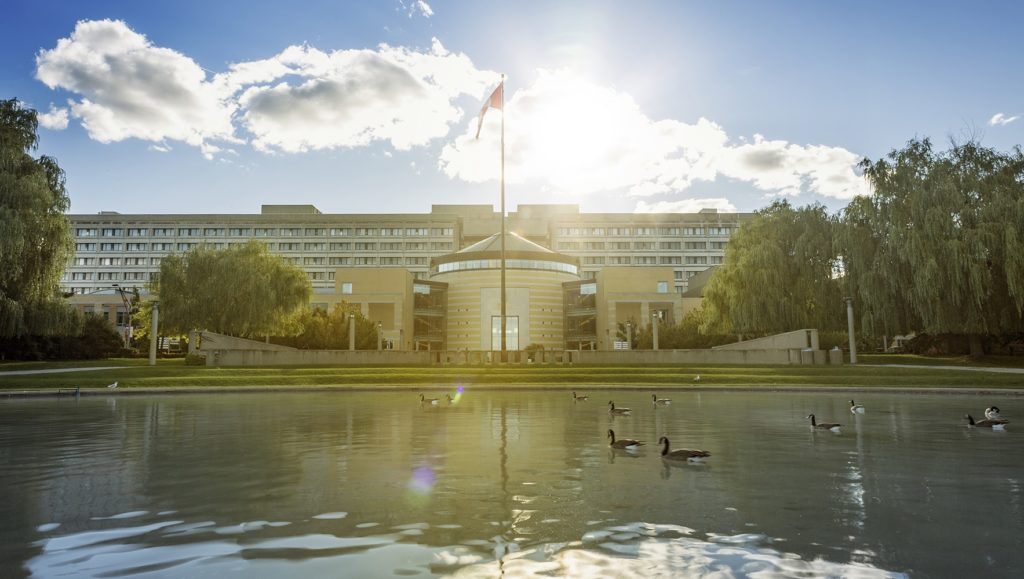
A community of changemakers working to create a better future
York believes that our diverse community, excellent learning and research, and commitment to collaboration allows us to address complex global challenges to create positive change in the local and global communities we serve. Our staff, students and faculty are passionate about building a more innovative, just and sustainable world.
We recognize that many Indigenous Nations have longstanding relationships with the territories upon which York University campuses are located that precede the establishment of York University. York University acknowledges its presence on the traditional territory of many Indigenous Nations. The area known as Tkaronto [Tig-ar-on-toe] has been care taken by the Anishinabek [Nish-na-bek] Nation, the Haudenosaunee [Ho-dee-no-sho-nee] Confederacy, and the Huron-Wendat. It is now home to many First Nation, Inuit and Métis communities. We acknowledge the current treaty holders, the Mississaugas of the Credit First Nation. This territory is subject of the Dish with One Spoon Wampum Belt Covenant, an agreement to peaceably share and care for the Great Lakes region.