|
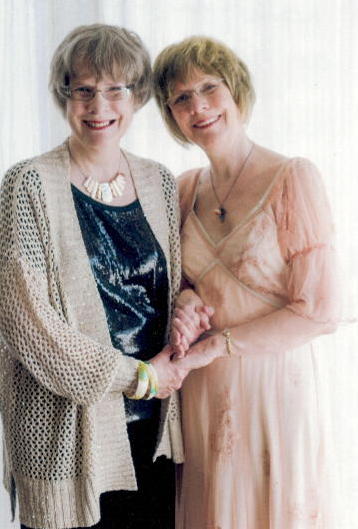
M Louise Ripley, MBA, PhD. Professor Emeritus and Senior Scholar York University Faculty of Liberal and Professional Studies (Retired from York July 1, 2015)
|
 (photo by Bert Christensen) |
|
M Louise Ripley, MBA, PhD. Professor Emeritus and Senior Scholar York University Faculty of Liberal and Professional Studies (Retired from York July 1, 2015)
|
(photo by Bert Christensen) |
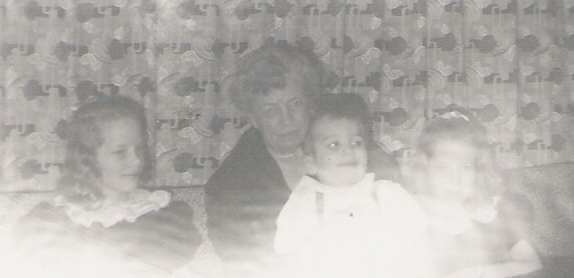
My mother, a Scottish-English-Canadian, spent her early married years as a classic 1950's work-at-home mom. After my father died at the too-young age of 57, she worked as a teacher, and then an editor for the U.S. National Education Association to support three children. From my mother I learned the fierce determination that enabled me to complete my Masters and Doctoral degrees while working full time and raising a family. She recently turned 100 years old! She retired from her volunteer jobs at the Corcoran and Kreeger Art Galleries in Washington D.C. at the age of 92. At the age of 91, she learned email so she could correspond more with me. My father, an American of Irish descent, raised his twin daughters to believe they could do anything they wanted if they worked hard enough. He never had the chance to go to university but was far better read than anyone I have ever met, having read on his own all of Shakespeare, and all of The World's 100 Greatest Books, including the twelve volumes of The Golden Hind and T.H. Lawrence's The Seven Pillars of Wisdom. My early memories of him include his being woken at 3:00 a.m. to take a long distance telephone call from a union colleague in the midst of negotiations somewhere across the country, rattling off the full details of some hugely complicated recent settlement they needed to know, and falling instantly back to sleep (when we were teens, our parents, bless them, allowed us to have the bedroom area phone in our room, and my memory is of him standing in the doorway, talking encouraging talk to striking workers). My memories of him also include a soft-spoken gentle man who fought like a tiger for the rights of the downtrodden, and who possessed a devilish wit and a love of language (it comes with Irish heritage). My gifts from him include my love of learning, my sense of ethics and fair play, my Union heart, my love of crossword puzzles, and an ability to sleep anywhere any time.
|
|
When I was 10, we moved to Virginia, where I experienced great difficulty fitting in as a Southern Belle but did pick up some of their techniques, and developed what became a life-long love of reading about the American Civil War. I have written a novel that takes place during that time (I wrote it out of the passions and emotions of the 1997 York faculty/librarians strike). My New York agent (I love saying that!) tried for six long years to find it a home, but apparently no one wants to publish a story with a gay Southern cavalry hero. I am contemplating self-publishing in retirement. This picture of Civil War pickets in Virginia was painted in 1862 by Bierstadt.
I remained an ardent civil rights supporter even growing up in the South; marched, with my twin sister, with my father's union (AFL-CIO) in the 1963 civil rights march in Washington at the age of 16 and stood on the Washington Memorial grounds to hear Martin Luther King deliver his famous "I Have a Dream" speech. When my sister and I were 13, a kid in our neighbourhood, knowing that we were supporters of the American Civil Rights Movement, burned our house down. I take this stuff seriously.
While my father was carving the roast (THE special dinner of those days), Mrs. Roosevelt offered to pass the green beans and mashed potatoes. She knew, she said, that Franklin always disliked it when he had to both carve and serve.
|
I did my undergraduate work at
Shimer College, a small liberal-arts
college in the midwest United States, graduated 1968. Visit their web site to see more about the
place that shaped my academic career and my understanding of
education. It's part of why I am a Professor both in Business and Women's
Studies. As a York student, you may have to stretch your imagination to conceptualize
what I mean by "small classes." When my sister and I attended Shimer in the 1960s, there
were 183 students, classes were never larger than 12, and there
were 70 students in our graduating class. The college now has an
enrolment of 120 students; classes are still never more than
12, and the Dean
knows every student by name and face. The curriculum is based in "The Great Books", reading only from
original sources (our bookstore bills were horrendous). The
emphasis is entirely on academics; Shimer was listed
in publicity brochures as having the
4,713th largest football team in America. We once put out a
publicity brochure claiming to have lost the most number of
basketball games in a row, but a college in Mississippi wrote to
say that we hadn't done it fairly because we had also played high
schools! In a recent study,
Shimer came in third after MIT and UCLA Berkeley in the
percentage of students who go on to complete doctoral
degrees.
In 2005, Shimer moved again to new quarters within the Illinois Institute of Technology, calling itself "The Great Books College of Chicago". The move was for financial reasons and it seems to have worked; things are going well at Shimer again. Click here to read my Recruiting Letter for Shimer. In the 1990s, I served on the Board of Trustees for Shimer, providing needed expertise in marketing as they prepared to renew their accreditation. One of my students, Wangeci Warui, fed up with York's huge classes (80 students in fourth year seminars at that time) asked me if I knew any schools that had small classes. I directed her to my web site to read about Shimer. She applied, was accepted, and went there on a full scholarship. In May of 2004, I went to Shimer to see her graduate, along with my sister and my mother. She called us her "aunties". She studied law at the Sorbonne and learned French, and after working in Health and Safety in the diamond mines of Alberta for several years, is now acting with the CBC, in Newfoundland. She still hopes to go to law school. Shimer graduates tend to have eclectic tastes and it has carried into my professional university teaching career, at York - where I teach Marketing, Gender Issues, and Environmental Studies, and write about Advertising Ethics, Marketing to Women, Teaching with Technology, and Cybernetics. In November of 2004, the New York Times wrote a great article about this fantastic little liberal arts school. |
 |
I earned my MBA at the Loyola University of Chicago, at what is now the Quinlan School of Business. I graduated in 1978, with a major in Finance. This took me five years of part-time study while working full time in the financial district in downtown Chicago. I had a number of good professors, but two stand out particularly: Dr. Mary Hamilton, who was the only female professor in my entire programme and who taught me Finance, and Father Thomas McMahon, who taught me Business and Social Responsibility and who is responsible for my strong interests today in business ethics and issues of the environment and women's rights. And yes, I've expressed my gratitude to each of them. |
| I earned my PhD at the University of Toronto in 1989, at what is now the Joseph L. Rotman School of Management, major in Marketing and minor in Finance. It took me 8 years to complete, and I did it while working full time at York. It is to the credit of Atkinson College and my understanding students and colleagues, and my supportive husband and forgiving young son that I was able to do it, because U of T offered no part-time doctoral programmes at the time. |  |
| U of T was not the warmest most welcoming institution I've known, but individual professors made a difference. Notable among them - Professor Myron J. Gordon, the "Gordon" of the Gordon Dividend Model, for those who have studied Finance (at York: AK/ADMS3530), on account of whom I went to U of T in the first place (I'm not a supporter of the Modigliani and Miller Theory) was tremendously supportive. Professor Shizuhiko Nishisato is cited in the Acknowledgements section of my doctoral thesis for giving me back my love of learning in, of all places, a Factor Analysis class. Professor Dan Greeno in addition to bringing me up to speed in Marketing after I changed majors also taught me the importance of looking out for myself. Professor Hugh Arnold was one of the kindest professors I met at U of T while remaining one who taught his subject - Research Methodology, in a such a dynamic and exciting way that it has stayed with me all these years. Professor Larry Ring, whose wonderful explanation of the evolution of the sales person I appropriated for my Introductory Marketing lecture and then the webpage on Promotion - I took his class at 8:00 in the morning after teaching from 7:00 to 10:00 the two previous nights and without his wicked sense of humour I'd perhaps never have found it worthwhile to make that early morning trek downtown. I also read every single case study for his Advertising class and wrote my summaries because the man told us at the start of the course that he would collect three summaries at random from each of us, and then never collected anything, thereby ensuring we prepared for every class. And my thesis supervisor, George Day, described below. Good teachers, all of them. I don't know that in my harried years there I really had a chance to say a proper "thank you" so maybe they will read it here. |
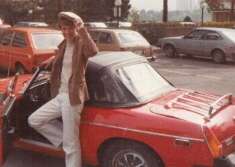
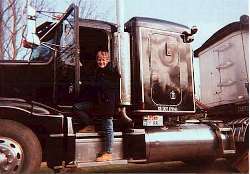
| My thesis, a copy of which is in the York Library, was on Channels of Distributions, for which I had a superb thesis supervisor, Professor George Day, now at Wharton School of Business. I always figured I probably ended up studying distribution because I'm nuts about cars, tractors, trucks, planes, trains, machinery... anything that moves. On the left below is me with my beloved 1980 MGB; next is me on the John Deere tractor I learned to drive on my sabbatical in Antigonish, Nova Scotia in 1992, next on the right is me in "my truck" although it's really Bernie's, the one who taught me to back up in a cornfield, in April of 1994, and in so doing, taught me a great lesson about my own profession - teaching. On the far right is my current beloved little red car, a Mazda MX5, also known as the Miata. His name is Beauregard. |
|

|
|
 |
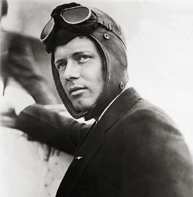
My childhood
hero was Charles Lindbergh
|
who, in 1927
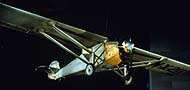
flew the first trans-Atlantic flight in this:
The actual plane, the Spirit of St. Louis, now hangs in the Smithsonian Institute in Washington, D.C., where I visited it many times with my family, growing up, and still go to see it when I'm visiting in Washington. A tiny model of it hung in the plant in my office all the years I taught at York.
|
||
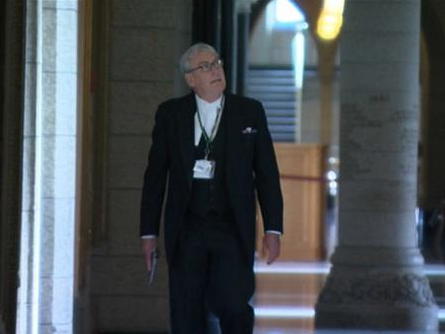
| My
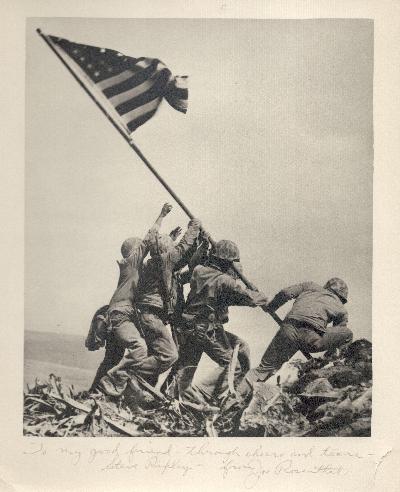
Latest Hero: "Not in My House" Kevin Vickers, Sergeant-at-Arms House of Parliament October 22, 2014 Sgt. Vickers took down the coward who shot Cpl. Nathan Cirillo in the back as he stood unarmed guarding the National War Monument. |
 |
Other Jobs I held before
coming to York:
|
| I have been at York since 1980, when I started teaching part time as a contract faculty member, with an M.B.A. In 1982, I applied for and was appointed to a full-time teaching position at York in the same week that I was accepted for full-time study at the University of Toronto doctoral programme in Management Studies, major in Marketing and minor in Finance. I earned my Tenure and Promotion to Associate Professor in 1989, the same year I finished my doctorate. In 2010 I was promoted to Full Professor. |
 |
Retirment - July 1, 2015, after 35 years of teaching at York. To the left is a picture of the inner me contemplating that retirement < |
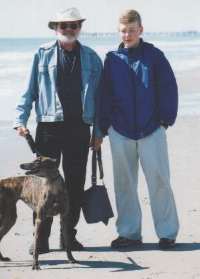 |
I am married to Bert Christensen a retired small-businessman and a self-taught computer expert who taught me web page design and who now in his retirement designs web pages professionally. He is the love of my life and I never would have been able to complete my PhD and my tenure battles without him. We have a son Erik who was born in the middle of my doctoral programme. I guess I kind of figured that as long as I was working full time and going to school full time with full-time care of a four-bedroom house I might as well toss in a baby too. I've never regretted it; Erik brought a perspective to my studies and my life that nothing else in the world could have done. He taught me that the sun does not rise and set on the completion of an academic paper, and that there are more important things in the world than grades. This picture was taken at Myrtle Beach, South Carolina, where we went for several spring breaks after I went to a conference there one October and fell in love with the place. |
Erik completed his
apprenticeship programme with the Carpenters' Union (Toronto
Local 27), and is a journeyman scaffolder. I am very proud of
him that he has chosen a Union career (so would be his
grandfather, my father, the labour-union-organizer). Here is a
picture Erik took of himself at work, on top of the
Commerce Court Building (and yes, it was my first question: he's
wearing a safety harness!)
|
||||
| This second picture is of Erik working at the Trump Tower. | ||||
We have two
older sons, by Bert's first marriage. Both are married and have
children. The sons and wives are all computer professionals. Soo has taught me a lot about being a Chinese
student in Canada. Our oldest grandchild, David, graduated from McMaster University
and is working for Rothman's where his Dad also works. He's
already known so well for his accomplishments there that Mark, his
father, who has been there for decades, frequently gets introduced
as, "David's father". Sarah plays in a championship-level hockey
league and is at McMaster taking urban geography. Laura was on a championship-level wrestling team
and went to University of Guelph on a $25,000 Presiden'ts Scholarship.
She graduated as an Environmental Engineer,
complete with the cherished iron ring. Brenda does beautiful championsip Irish dancing and is
finishing
high school. We are very proud of all of them.
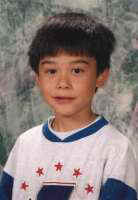
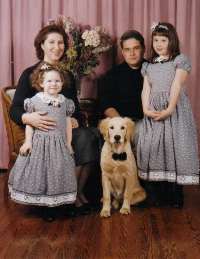
These pictures are from when they were much younger.
|
|
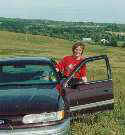
My eggplant-coloured 1992 Ford Taurus in the hills of Nova Scotia. This was my first new car bought all on my own. I continued to drive the Bull till he was 12 years old and then my son drove him for another year; he finally died at the age of 13, with more than 300,000 km to his credit.
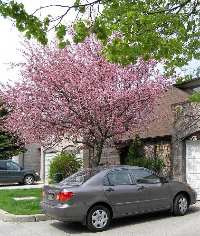
Here's what I replaced the Bull with, a 2004 Toyota Corolla: The Grey Ghost, and after 6 years in which I only ever had one tiny thing go wrog with my Toyota (the lock rocker stuck on the driver's side door and they fixed it for free), I traded him in for a car I've wanted since it came out in 1989. Here is Beauregard (Gaelic nickname "gille beag ruahd"), with his convertible hard top in the process of lowering.
|
I collect frogs - my
son once counted 153 in my washroom
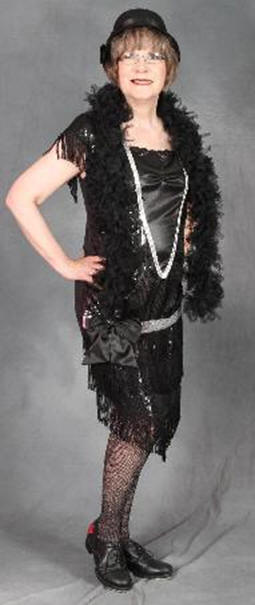
At the age of 65, I took up tap dancing, something I've wanted to do most of my life. It's a little harder when you're older, but we were two adults in a class of only two and our teacher, Miss Ana Pacanins at Toronto Dance Vibe was wonderfully helpful and understanding...and patient! Below is a picture of me at my first solo.
|
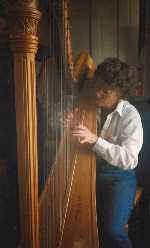
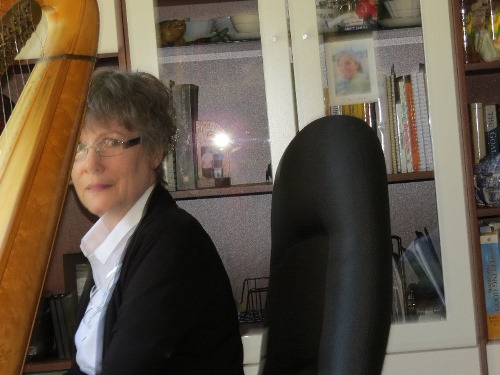
I play the harp and have recently taken it up again after a long absence. I worked a job I hated for five years to save the money to buy it. I started with money I was awarded in an out-of-court settlement of an equal-pay suit against a major Chicago stockbrokerage and every time I look at it, even when I'm not playing, I remember that I did something important and right. I am currently learning Pachelbel's "Canon".
|
||||
|
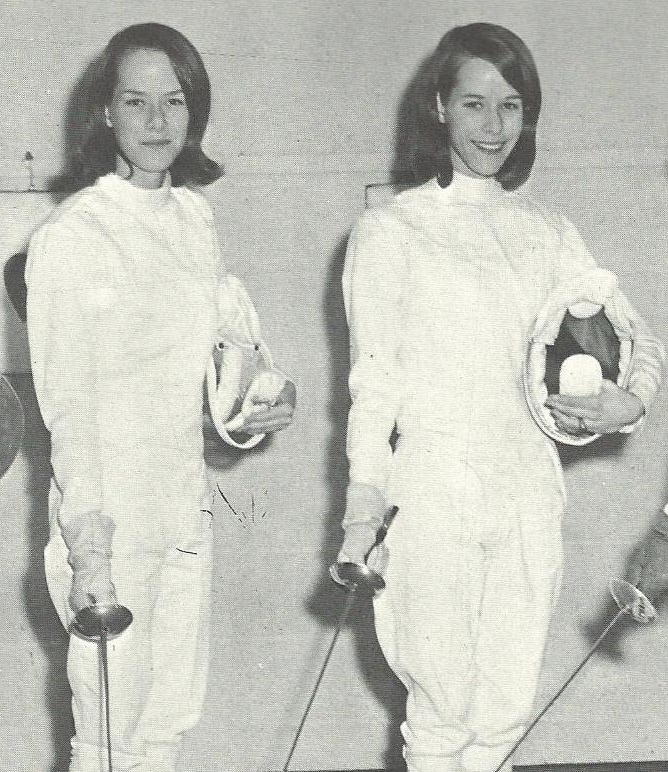
My sister and I at a championship fencing
match Mary Washington College of the University of Virginia |
 |
| I am, by religion, a Unitarian Universalist. You can check out the website for the First Unitarian Congregation of Toronto (originally designed by my husband, Bert Christensen) and you also can read a UU Sermon titled "Shopping Mall Values," given by The Rev. Dr. Donna Morrison-Reed, a former minister at the church. Her sermon, typically for UU sermons, dwells not on issues of God and Saints and some possible AfterLife, but on how we live our everyday lives today in the world that is here with us. This particular sermon is highly relevant to Marketing, and expresses much of the feeling with which I approach the teaching of Marketing, hoping to instill in students a respect for the fact that, in addition to learning how to market all the products that overwhelm our lives, we also need to critically evaluate the whole process of cultivating a consumer society. |
I used to love to cook, as did my husband. He did the day-to-day cooking and I hit the kitchen for major productions. My specialties are East Indian, Mexican, Chinese, Thai, and Southern United States (Virginia ham, hominy, fried green tomatoes, pralines, and pecan pie, but I draw the line at collard greens). A while back we renovated the kitchen, and it's one of the few places where I really relax. Lately though, we are both busy and eat in restaurants quite often, something I never thought I'd do, and I'm learning to relax in other ways.
I love to read more than almost anything else, especially fiction. My favourite author used to be John Irving but has changed recently to Alistair McLeod, who wrote No Great Mischief, a story of life in Cape Breton; on sabbatical in 1992-1993, we lived a half hour from the causeway and visited Cape Breton often. As someone who rarely reads a book more than once because there are too many wonderful books and never enough time, I have read Irving's The Cider House Rules twice, and A Prayer For Owen Meany seven times. I've now read McLeod's No Great Mischief three times and seen a play of it at the Tarragon Theatre in Toronto three times My course kits regularly advise that if you want to learn to write well, read good books.
|
||||||||||
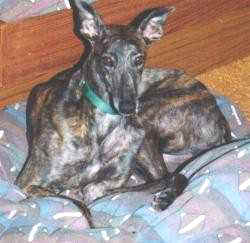 |
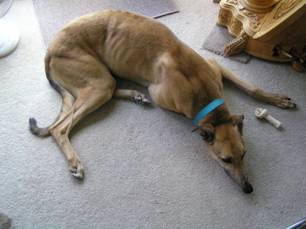
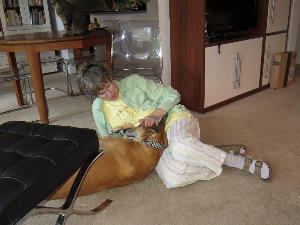
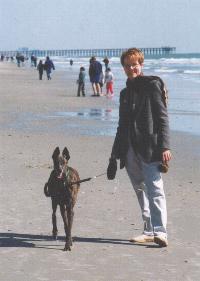
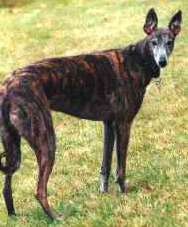
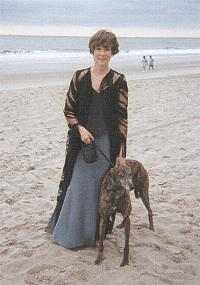
MY FIRST DOG/Treating Depression On sabbatical in 1998, we adopted a greyhound, a "failed" racer, rescued from a racetrack in Wisconsin by a wonderful woman in Kitchener, Laurie Soutar. Her name was Amber, and she brought untold joy into my life. She exemplifies my philosophy of life -- that we never really fail; sometimes there are things we don't do as well as others, but every time we try something, we learn, and everything we do finds some value somewhere. If Amber had not "failed" at the race track, I would never have known her and might well be dead of stress levels and depression that I never learned to handle until she came into my life. In May 2009, Amber passed away. She had fought off thyroid cancer the previous summer, and lived long enough to help me through breast cancer in the fall of 2008.
|
 |
 |
 |
Greyhounds
run differently from other dogs; they run like a horse with all
four feet on and then off the ground, like this:
 |
| and here is how the artist Mick Cawston sees a greyhound: |
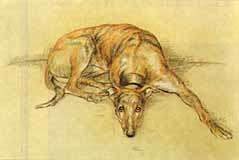 |
| The picture is called "Plea
of Innocence" and the greys often look just like this, especially after some meat has just disappeared from a high kitchen counter. |
|
Some of My Words to Live By My favourite, and it's no coincidence that it comes from sports analogies (for those of you in Gender Issues in Management), is attributed to pitcher Leroy Robert "Satchel" Paige, the first black baseball player to be inducted into the hall of fame for his career in what was then called "the Negro Leagues". He also played in the Major Leagues, and was one of my father's favourite baseball players. We routinely said this in undergraduate school and it was probably my earliest experience with "living in the now" and getting through what had to be got through - Satchel Paige - "Some you win, some you lose, some get rained out, but you suit up for every game". Jose Bautista of the Toronto Blue Jays speaking on April 22, 2014 - "The most important game of the season is the one you're playing today". Wayne Gretzky - "You miss 100% of the shots you don't take". Then, from the military is this one, crucial if you're going to battle anything, anywhere - "Choose your hill to die on". Not everything is worth dying for and we've all got a limited amount of energy and time. One of my favourites regarding teaching - "Ultimately it's all connected, everything to everything else, and one of the joys of education and scholarship is discovering those links". I think actually it is I who said this, often. From "Believe" by Justin Bieber, one of his side men talking - "You gotta make it through your journey and tell the story of that journey because that's going to help someone else make it through their journey" and from the same DVD, Justin himself - "Sometimes you have to take matters into your own hands and fly". Justin Bieber is a favourite musician of my tap dance teacher. And from Zen philosoophy, of which I've read a lot in my bid to simplify my life, reduce my stress levels, and get my depression under control (I'm still learning to remember these) -
No job is ever menial if it needs to be done and
you do it well. |

York University, Toronto
©
M Louise Ripley, M.B.A., Ph.D.