|
A/S HUMA 2105: Roman Literature and Culture Fall/Winter 2008-9 |
|
|

|
Course Description |
|
Timeline of Key Periods |
|
9th - 5th c BCE
5th – 3rd c BCE
3rd-2nd c BCE |
|
Outline of Lecture
I. SUCCESS!
II. TENSION...
III. CRACKS...
IV. CATASTROPHE!!!
V. TENSIONS AGAIN....
VI. VOICE OF (T)REASON
|


|
I. SUCCESS!!
A. From 509 down to the first c BCE, the Roman government functions in peace and order :
- conflicts between patricians and plebeians are resolved by means of civil disobedience (plebs) and legislative reform (pats) by 287 bce
- the government responds to change by complexifying, i.e., adds new magistracies
- official civic apparatus governs the life of the citizen:
MILITARY : citizen soldiers / FISCAL: redistribution of wealth / JUDICIAL/POLITICAL: equality before the law
B. By approx. 275 BCE, the Romans subdue their rivals and control the entire Italian peninsula, a success achieved through a combination of military strength and flexibility of settlement, i.e., granting citizen status to their former enemies
C. Romans win the first Punic war (264-241) and acquire the provinces of Sicily and Corsica as well as domination of the western Mediterranean
D. Romans win the second Punic war (218-201, against Hannibal) and obliterate their rivals for power in the west
E. Romans make gains in the East through wars with Macedonia and Syria
|

|
II. TENSION...
A. Massive influx of money and people into Rome
B. Change in agriculture patterns; Trend toward latifundia worked with slave labour
C. Increase in urban plebs: those driven off their land; veterans; Italian and other immigrants
D. Escalation of the competition for personal glory among elites
E. Change in attitudes towards power: e.g., the triumph now becomes primarily the demonstration of individual glory and status for elites, not the religious ritual of thanks
F. Personal and family ties begin to outweigh civic institutions
G. Decrease in military recruits; shortage of good land; hunger and poverty |
|
III. CRACKS...
“The plebeians and Senate of Rome were often at strife with each other concerning the enactment of laws, the cancelling of debts, the division of lands, or the election of magistrates. Internal discord did not, however, bring them to blows; there were merely dissensions and contests within the limits of the law, which they settled by making mutual concessions, and with much respect for each other...The sword was never carried into the assembly, and there was no civil butchery until Tiberius Gracchus, while serving as tribune and bringing forward new laws, was the first to fall a victim to internal commotion; and with him many others who were crowded together at the Capitol round the temple were slain. Sedition did not end with this abominable deed. Repeatedly the parties came into open conflict, often carrying daggers; and from time to time in temples, the assemblies, or the forum, some tribune or praetor, or consul, or candidate for those offices or some person otherwise distinguished would be slain.” (Appian, Civil War, 1.1-2) |

|
Tiberius Gracchus (168-133 bce)
- Proposed land reform to increase military recruitment, gain popularity - Used his position as TRIBUNE of the PLEBS to politically outmanoeuvre his enemies - Angered his enemies (senatorial class) with his brashness and appeals to the people - Successfully obtained a land commission to redistribute public land - murdered along with 300 of his followers by his rivals
Gaius Gracchus (154-121 bce)
- Became tribune of the plebs in 123; exploited this position to the utmost - passed the Grain Law to ensure corn for urban plebs - passed many laws (military, fiscal) to the benefit of the middle class and poor - broke the power monopoly of the oligarchy - after his enemies in the senate passed the senatus consultum ultimum (allowing the consuls to take any means necessary to protect the state) he was murdered along with 250 of his followers
|

|
Marius
Rose to prominence in war in Africa
NOVUS HOMO (a new man, without distinguished ancestors)
Brilliant general
Reorganized the army by ending property qualifications, resulting in soldiers with new loyalties to generals
Held six consulships
Immensely popular with the people
In hostilities to Sulla’s party, marches on Rome in 87 and unleashes a bloody reign of terror
Dies in 86 after receiving his 7th consulship |
|
IV. Catastrophe! 122-80 bce |

|
SULLA FELIX
Rose to prominence in war in the East
Aristocratic family
As a result of personal / factional power struggles in Rome, Sulla marches on the city and takes power in 88
Sulla takes Rome again in 82; becomes dictator and holds supreme power; introduces proscriptions
Confiscates huge amounts of land in Italy for his veterans
Reforms the government to increase the power of the optimates (best men) and also to prevent accumulation of power in any one individual
Resigns dictatorship in 80 and dies in 78 in Campania peacefully
|

|
V. TENSIONS RISE AGAIN…(80-63 bce)
Pompey the Great (106-48)
- Extremely rich aristocrat - Loyal follower of Sulla - Very successful general, esp. in Spain and the East - Became consul `illegally `in 70 -Hugely lucrative campaigns in the east (66-62) -Dominant figure in Roman politics from 70 on
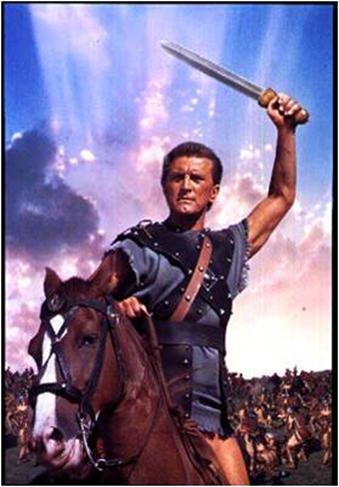
Spartacus leads slave revolt (73-31 bce) - army of up to 140,000 - quashed in 71 by Crassus
|

|
Feb. 2 Civil Wars I, or, How the Romans Killed Each Other |
|
Early Rome: Republican government (consuls and other elected magistrates, senate, voting assemblies); monumentalization of the city; military control established over the Italian peninsula; civic institutions strengthened (census; assemblies, magistracies, festivals and other religious ceremonies) which creates a more cohesive civic body; conflict between patricians and plebeians resolved peacefully; levels of citizenship extended to colonies and Italian towns (Livy, II and III) |
|
Middle Republic: Wars with Carthage; expansion of the empire in East, West and Africa; increased wealth at Rome; influx of slaves from about the Mediterranean; trend toward plantation-style agriculture; Roman experimentation with Greek forms of literature, e.g., comedy and tragedy, epic poetry, history; ‘Hellenization’ of Roman elites (Plautus’ plays) |
|
Archaic Rome: Original period of urban settlement and development at Rome; monarchic government; literacy; trade throughout the Mediterranean; Etruscan civilization flourishes in Etruria; Greek colonies established in Southern Italy, or, Magna Graecia (Livy, I |