


DONALD L. CARVETH, Ph.D.


Professor of Sociology and Social & Political Thought, York University, Glendon College

 Training & Supervising Analyst, Canadian Institute of Psychoanalysis


 HomePublicationsReviewsPracticeCoursesPsychoanalysisExistentialism | Religion | Values | Blues | Links  


Psychoanalytic Theory and Practice, Existential Philosophy and Theology


Psychoanalysis vs. Cognitive-Behavioral Therapy


Psychoanalysts have tended to believe that feelings, affects, impulses and drives are somehow more fundamental or “deeper” than mere cognitions. As I argued in The Analyst's Metaphors: A Deconstructionist Perspective (1984), the cognitive dimension of psychoanalytic work has been insufficiently appreciated by psychoanalysts in their descriptions of the analytic process. Kleinian psychoanalysis is an exception to this for, like cognitive psychology, it recognizes that affects and drives exist only in the context of the phantasies or cognitions that generate them. Very often intense emotional reactions subside immediately upon recognition of the misperception upon which they were based. Bion developed this aspect of Klein's work, reformulating the unconscious not as a "seething cauldron of instinctual drives" as the later Freud viewed it, but rather as an infinite realm of preconceptions seeking to rendezvous with realizations achieving conception through such coupling.  In "The agency of the letter in the unconscious or reason since Freud," Lacan arrived at a similar insight: "Yet that is what we must resign ourselves to. The unconscious is neither primordial nor instinctual; what it knows of the elementary is no more than the elements of the signifier. ...  It is the abyss open up at the thought that a thought should make itself heard in the abyss that provoked resistance to psychoanalysis from the outset.  And not, as is commonly said, the emphasis on man's sexuality." Despite its tendency in theory to privilege affect over cognition, in practice psychoanalysis has always worked to bring unconscious beliefs, assumptions, phantasies and narratives to consciousness where they can be subjected to reality-testing. Properly practiced, psychoanalysis is CBT Plus, while CBT is Psychoanalysis Light.


A person will spend his whole life writhing in the clutches of the superficial,

psychological symptoms of guilt unless he learns to speak its true language.

--James Carroll


Never underestimate the power of a guilty conscience.

--Det. Eames, Law & Order: Criminal Intent


Thus conscience doth make cowards of us all ...
--Shakespeare, Hamlet. Act III, scene i.


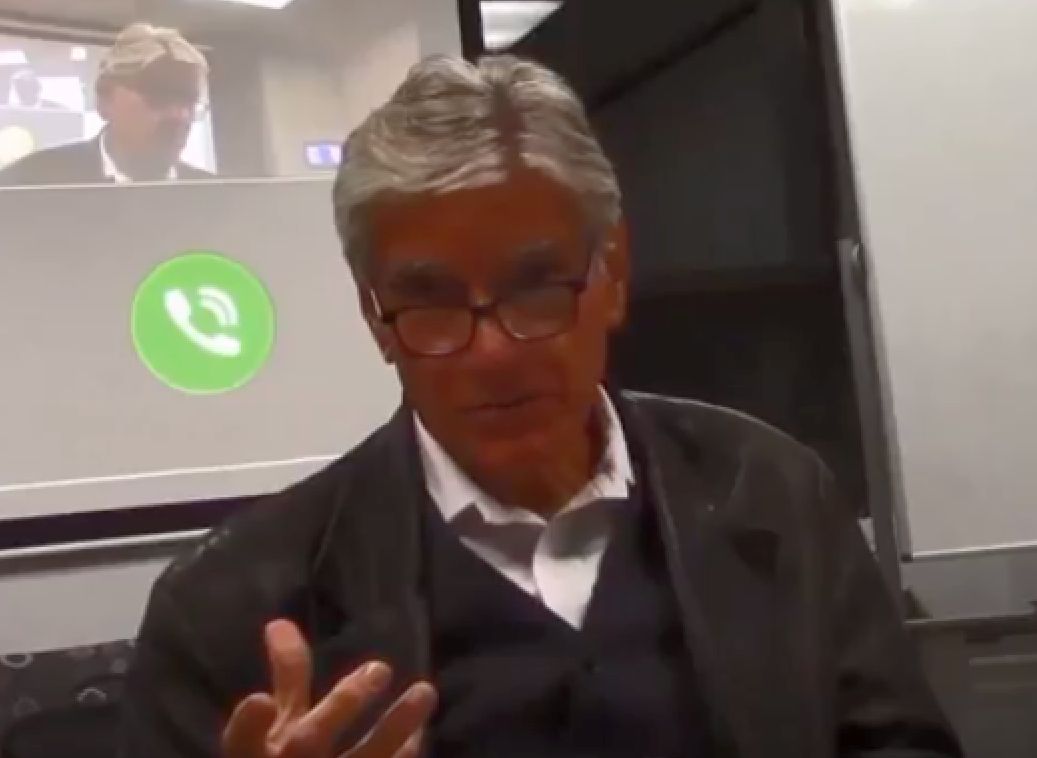
Video of Roundtable: What is Guilt?

Participants: Donald Carveth, Marcia Cavell (moderator), Michael Eigen, Jay Greenberg, Michael Lewis,

Philoctetes Center for the Study of the Imagination, New York, February 22nd, 2007

Philoctetes - What is Guilt?

Literary Review of Canada
January/February 2008
Conscience Aside: Authoritarianism in the U.S. and Canada


Note on Psychopathy


Freudian theory has tended to associate immorality with the id and morality with the superego. Though aware of its destructive role in masochistic pathology, the superego has nevertheless been viewed, especially in Freud’s (1930) sociological works, as a prosocial force defending against the antisocial id. This has resulted in our failure to grasp the tragic and ironic fact that much of the world's evil results from the superego, committed by “do-gooders” in the name of their ideals. According to Lifton (1986), many of the Nazi doctors appear to have been superego-driven ideologues who shared the racist delusion that they were serving the interests of public health. Though we would prefer (and our theory has inclined us) to think of them as sadistic, id-driven psychopaths, Lifton describes their ordinariness: "Neither brilliant nor stupid, neither inherently evil nor particularly ethically sensitive, they were by no means the demonic figures—sadistic, fanatic, lusting to kill—people have often thought them to be" (p. 5). In response to this unwanted finding a survivor friend of Lifton's remarked: “But it is demonic that they were not demonic” (p. 5).

I have argued (Carveth 2005) that psychopathy is best conceived as a dimension of human personality as such, ranging from mild to moderate to extreme along with the narcissism that is its basis, rather than as a “taxon,” a concretized entity, as when people speak of “the psychopath.” While from this point of view both id-driven and superego-driven evil-doers are destructive, and while evil is evil independent of the psychodynamics of those who engage in it, it remains important to distinguish the destructiveness of those who require social and ideological sanction from that of those who act entirely independently of group support. The latter are readily recognized and marginalized by both criminal and political gangs on the basis of their total narcissism and untrustworthiness—their inability to subordinate immediate self-interest to the needs of the group.


Life happens when the tectonic power of your speechless soul breaks through the dead habits of the mind.  Doubt is nothing less than an opportunity to reenter the present. ...  The beginning of change is the moment of Doubt.  It is that crucial moment when I renew my humanity or become a lie.


--John Patrick Shanley


"There are goods so opposed that we cannot seize both, but, by too much prudence, may pass between them at too great a distance to reach either.  This is often the fate of long consideration; he does nothing who endeavours to do more than is allowed to humanity.  Flatter not yourself with contrarieties of pleasure.  Of the blessings set before you, make your choice and be content.  No man can taste the fruits of autumn while he is delighting his scent with the flowers of the spring; no man can, at the same time, fill his cup from the source and from the mouth of the Nile."  --The Princess Nakayah.  RASSELAS by Dr. Samuel Johnson.


Question: Is it true that Melanie Klein offers us a kind of psychological analogue of

 philosophical solipsism that denies the influence of the actual caretakers in

 development, thus getting the parents off the hook as it were?

 See for yourself:


"Unpleasant experiences and the lack of enjoyable ones, in the young child, especially lack of happy and close contact with loved people, increase ambivalence, diminish trust and hope and confirm anxieties about inner annihilation and external persecution; moreover they slow down and perhaps permanently check the beneficial processes through which in the long run inner security is achieved."

                                                                                            --Melanie Klein


Freud Bashers and Freud Idolaters


According to Milton H. Horowitz, "To prove the parent a fool, to prove analysis foolish and the first analyst--Freud--a dolt is a cherished wish of the the humiliated child now grown up." The very inability of the critics of psychoanalysis to stop flogging what they insist is a dead horse reveals a neurotic compulsion to repeat. They are deeply attached to psychoanalysis; they kill it only to revive it to kill it again. This is the hate-bond maintained with the parents by the enraged child who cannot face the loneliness entailed in growing up and letting go. But while the unconscious desire for revenge against parents frequently takes the form of attacks upon the ur-father, Freud, the aggression of the Freud-bashers is matched only by that of the Freud-idolaters, who merely employ a reaction-formation against it. In this respect, both bashers and idolaters are living in the past. Fortunately, some psychoanalytic scholars do not hate their parents, and therefore Freud, so much that they have to either idealize or devalue him.


MIND/BRAIN

People often seem to assume that those who recognize a valid distinction between mind and brain and view psychoanalysis as essentially concerned with the interpretation of meaning necessarily embrace some kind of supernaturalism.

I can operate my car while knowing little or nothing about what goes on under the hood.  But my ignorance with respect to the mechanics of internal combustion engines doesn't mean I think the car is guided by supernatural forces!  I can psychoanalyze a mind while knowing little or nothing about the brain, while being perfectly aware that the former depends upon the latter.  No brain, no mind.  That's a no-brainer ... or should I say a no-minder?  Never mind.

Admittedly, If I'm unhappy with the way my car is behaving, it is helpful to know enough about the engine to be able to consider the possibility that the problem might be mechanical and not just a result of my deficient driving skills.  Conversely, and to vary the metaphor, if I'm unhappy with what I'm seeing on my TV it is useful to be alert to the possibility that the problem may not be with the set but with the script or the actors.

Not all, but many who work with the Three Worlds Hypothesis—World 1, lithosphere, pre-biological, inorganic; World 2, biosphere, biological, organic; World 3, noosphere, post-biological, superorganic—do not in any way view the superorganic as supernatural, but merely as irreducible to its biological foundation.

This is is the Emergent Evolutionary hypothesis of biologist Julian Huxley who, like his grandfather, Thomas Henry Huxley, was a Darwinist, but one who, unlike his grandfather, realized that the battle to view humans as animals had been won, so that now one could afford to recognize what strange and unusual animals we are: animals possessing not just brains, but minds that, while depending upon brains, exist (ex-ist, stand out from, or emerge) on a distinctively human level of symbolic consciousness, with all (and it's plenty!) that entails.

Continuous evolutionists who emphasize only quantitative differences of degree among species rather than the qualitiative differences of kind that emerge at critical levels seem to assume that those who, like Huxley, focus upon the differences rather than the similarities between man and other species are arguing not just for the uniqueness but for the superiority of man.  And they respond with vigorous criticism of the arrogance of such claims and point to the destructiveness of humanity toward other species and the planet as a whole. But in so doing they seem to fail to realize that they themselves are now arguing for the uniqueness of man. Although Freud and others mistakenly projected it upon the "beast" in us, the fact is that only humans are "beastly" while the beasts never are. It seldom occurs to such critics that those of us who focus upon man's uniqueness may do so in an attempt to better understand and limit our destructiveness.


Because my eyes cannot see to infinity, should I pluck them out?

Science cannot answer ALL questions, but it can answer SOME.

Between the ALL and the NONE lies the field of the SOME--where humanity lives.


Donald Carveth is Professor of Sociology and Social & Political Thought at York University, Glendon College, in Toronto.  His interdisciplinary courses draw on sociology, social psychology, psychoanalysis, existential philosophy and theology.  He is a Training and Supervising Analyst in the Canadian Institute of Psychoanalysis (IPA) and a member of the Toronto and Canadian Psychoanalytic Societies.  He serves on the faculties of the Toronto Institute of Psychoanalysis and the Advanced Training Programme in Psychoanalytic Psychotherapy of the Toronto Psychoanalytic Society.  He is past Editor-in-Chief of the  Canadian Journal of Psychoanalysis/Revue Canadienne de Psychanalyse and a member of the Editorial Boards of Psychoanalysis & Contemporary Thought,  Free Associations PSYART: A Hyperlink Journal for the Psychological Study of the Arts and the Journal of Psycho-Social Studies.


Board, Toronto Psychoanalytic Society, 1994-98


 HomePublicationsReviewsPracticeCoursesPsychoanalysisExistentialism | Religion | Values | Blues | Links  


Department of Sociology, Glendon College, York University
2275 Bayview Avenue, Toronto, Ontario, Canada M4N3M6
 Telephone: (416) 736-2100 ext. 88378   Fax: (416) 487-6850