

Linda Lipsky, former lecturer and adjunct professor in the Department of Humanities at York University, died on Nov. 18.
After earning her BA and MA at McGill University, and completing her PhD in American literature at l’Université de Montréal, Lipsky taught at Concordia University before joining York University. There she inspired generations of students through courses in English, as well as American and Yiddish literatures.
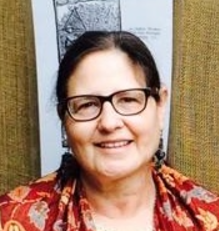
Yiddish literature was a defining scholarly focus for Lipsky. She wrote poetry and articles in Yiddish and was known as a gifted scholar, translator and educator whose work contributed meaningfully to the field. Her publications included critical appreciations of writers such as Avrom Liessin and Beyle Schaechter-Gottesman, two leading figures who shaped 20th-century Yiddish letters.
Most recently, Lipsky translated writing by Lili Berger (On the Waves of Destiny, 2025) and I.J. Singer (Willy, 2020), notable authors in post-war Yiddish literature. Her translations brought their texts to new audiences, expanding understanding of the literary richness and historical scope of 20th-century Yiddish writing.
Joshua Fogel, a York professor emeritus who collaborated with Lipsky on the translation of Willy, remembers her devotion to the field. “She was passionate about her work,” he says, noting how she went through their drafted translation three times before being satisfied. Her rigour, however, did not mean she was an inflexible or difficult collaborator. “She was a joy to work with,” he adds. “Linda was one of the kindest people I have ever known – without any exaggeration.”
For her PhD dissertation, Lipsky wrote about literary critic and poet Delmore Schwartz, examining how his poetry engages with the accessibility of lived and essential knowledge. In her dissertation, she described what she felt was his most enduring metaphor – “having snow” – by which he meant snow can be perceived, but it can never be “had". Lipsky herself embodied this insight, leaving behind work and translations that could be experienced and appreciated, yet whose full reach and impact will continue to unfold over time.