

CAIS Director: James Elder (Lassonde, Health)
James Elder is Professor and York Research Chair in Human and Computer Vision, Department of Electrical Engineering & Computer Science (LSE), Department of Psychology (Health) and Co-Director of the Centre for AI & Society (CAIS) at York University, Toronto, Canada. Dr. Elder’s research seeks to improve machine vision systems through a better understanding of visual processing in biological systems. Dr. Elder currently leads the ORF-RE project Intelligent Systems for Sustainable Urban Mobility. He holds a number of patents on attentive vision technologies and is the co-founder of the AI start-up AttentiveVision. He is appointed to the Editorial Boards of three international journals.

CAIS Associate Director: Jonathan Obar (LA&PS)
Jonathan A. Obar, PhD is an Associate Professor in the Department of Communication & Media Studies. He also serves as a Research Fellow with the Quello Center for Telecommunication Management and Law at Michigan State University, where he previously worked for four years. His teaching and research focus on information and communication policy, and the relationship between digital technologies, civil liberties and the inclusiveness of public cultures. Recent academic publications address big data and privacy, internet routing and NSA surveillance, network neutrality, and digital activism. He is co-editor of Strategies for Media Reform: International Perspectives.


Arik Senderovich
Role in CAIS:
Chair, Events Committee

Andrew Sarta
Role in CAIS:
Chair, Public Relations Committee
Email: andrew.sarta@yorku.ca / Andrew Sarta

Pirathayini Srikantha
Role in CAIS:
Lead, Smart Cities


Murat Kristal
Role in CAIS:
Chair, Commercialization and Entrepreneurships Committee
Email: mkristal@schulich.yorku.ca / Murat Kristal


Kostantinos Derpanis
Role in CAIS:
Public Relations and Events Committee
Email: kosta@yorku.ca / Kosta Derpanis


Usman Khan
Role in CAIS:
Training & Recruitment Committee
Email: usman.khan@lassonde.yorku.ca / Usman Khan
Chair:
Amir Asif, Vice-President, Research & Innovation
Vice-Chair:
Peter Park, Associate Dean, Research & Graduate Studies, Lassonde School of Engineering
Board:
Sara Slinn, Associate Dean, Research & Institutional Relations, Osgoode Hall Law School
Ravi de Costa, Associate Dean, Research & Graduate Studies, Faculty of Liberal Arts & Professional Studies
Vivian Saridakis, Associate Dean, Research & Graduate Education, Faculty of Science
Chris Ardern, Associate Dean, Research, Faculty of Health
Dirk Matten, Associate Dean, Research, Schulich School of Business
Laura Levin, Associate Dean, Research, School of the Arts, Media, Performance & Design
Members of the CAIS Inaugural Advisory Board: (listed alphabetically by last name):

Johanne Bélisle
Innovation Policy Advisor, formerly at World Intellectual Property Organization, & Former CEO, Canadian Intellectual Property Office

Casey Chisick
Partner and Chair, Intellectual Property and Entertainment, Media & Sports Law, Cassels Brock & Blackwell LLP

Sven Dickinson
Vice President/Head Samsung AI Research Center & Professor, Department of Computer Science, University of Toronto

Konstantinos Georgaras
Commissioner of Patents, Registrar of Trademarks and Chief Executive Officer of the Canadian Intellectual Property Office

Uma Gopinath
Chief Information Officer, Porter Airlines

Nadine Letson
Head of Corporate, External and Legal Affairs, Microsoft Canada

Aaron Rezaei
Chief Executive Officer at STIM Canada Inc & General Partner, Archangel Network of FUNDS

Allison Sekuler
Sandra A Rotman Chair in Cognitive Neuroscience, Rotman Research Institute; President & Chief Scientist, Baycrest Academy for Research and Education; President & Chief Scientist, Centre for Aging + Brain Health Innovation; Professor, Psychology, University of Toronto, Professor Emeritus, Department of Psychology, Neuroscience & Behaviour, McMaster University

Altaf Stationwala
President and CEO, Mackenzie Health

Elissa Strome
Executive Director, Pan-Canadian AI Strategy, CIFAR

Graham Taylor
Faculty Member & Canada CIFAR AI Chair, Vector Institute for AI; Academic Director, Next AI; Professor & Canada Research Chair, School of Engineering, University of Guelph

Julia Zhu
Executive Vice President and Chief Digital & Innovation Officer, Alectra Utilities
Listed in alphabetical order by last name


Ali Asgary
Professor
Disaster & Emergency Management, School of Administrative Studies
Email: asgary@yorku.ca / Ali Asgary

Alvine B. Belle
Assistant Professor
Electrical Engineering & Computer Science

Marcus Brubaker
Associate Professor
Electrical Engineering & Computer Science
Email: mab@eecs.yorku.ca / Marcus Brubaker

Gene Cheung
Professor
Electrical Engineering & Computer Science
Email: genec@eecs.yorku.ca / Gene Cheung

Suzanne Chiodo
Assistant Professor
Osgoode Hall Law School
Email: chiodo@osgoode.yorku.ca / Suzanne Chiodo

Murat Kristal
Professor
Schulich School of Business
Email: mkristal@schulich.yorku.ca / Murat Kristal

Giuseppina (Pina) D'Agostino
Professor
Osgoode Hall Law School


Shital Desai
Assistant Professor
School of the Arts, Media, Performance & Design
Email: desais@yorku.ca / Shital Desai

Valerio De Stefano
Professor
Osgoode Hall Law School

Kostantinos Derpanis
Associate Professor
Electrical Engineering & Computer Science
Email: kosta@yorku.ca / Kosta Derpanis

Adam Diamant
Associate Professor
Operations Management and Information Systems
Email: adiamant@schulich.yorku.ca / Adam Diamant

Elham Dolatabadi
Assistant Professor
School of Health Policy and Management
Email: edolatab@yorku.ca / Elham Dolatabadi

James Elder
Professor
Electrical Engineering & Computer Science
Email: jelder@yorku.ca / James Elder

Petros Faloutsos
Professor
Electrical Engineering & Computer Science
Email: pfal@eecs.yorku.ca / Petros Faloutsos


Marios Fokaefs
Assistant Professor
Electrical Engineering & Computer Science
Email: fokaefs@yorku.ca / Marios Fokaefs

Hany Farag
Associate Professor
Electrical Engineering & Computer Science
Email: hefarag@eecs.yorku.ca / Hany Farag


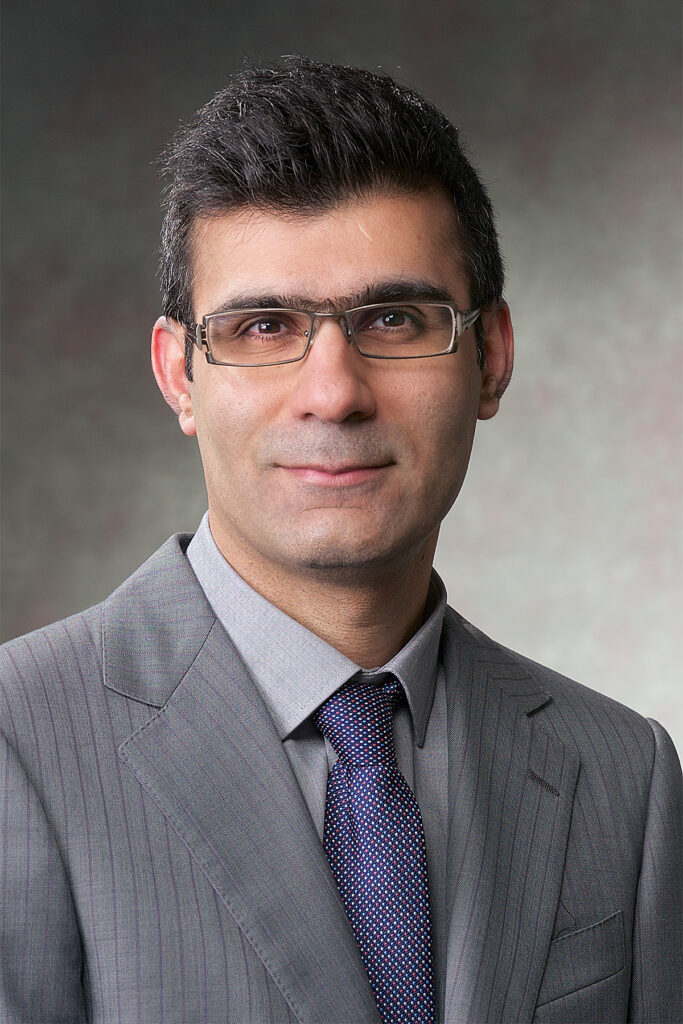
Hadi Hemmati
Associate Professor
Electrical Engineering & Computer Science
Email: hemmati@yorku.ca / Hadi Hemmati


Michael Jenkin
Professor
Electrical Engineering & Computer Science
Email: jenkin@eecs.yorku.ca / Michael Jenkin


Zhen Ming (Jack) Jiang
Associate Professor
Electrical Engineering & Computer Science
Email: zmjiang@eecs.yorku.ca / Zhen Ming Jiang

Peter Khaiter
Associate Professor
School of Information Technology


Hamzeh Khazaei
Associate Professor
Electrical Engineering & Computer Science
Email: hkh@yorku.ca / Hamezeh Khazaei

Yves Lesperance
Professor (Emeritus)
Electrical Engineering & Computer Science
Email: lesperan@eecs.yorku.ca / Yves Lesperance


Marin Litoiu
Professor
Electrical Engineering & Computer Science/Information Technology
Email: mlitoiu@yorku.ca / Marin Litoiu


Maleknaz Nayebi
Assistant Professor
Electrical Engineering & Computer Science
Email: mnayebi@yorku.ca / Maleknaz Nayebi

Jonathan Obar
Associate Professor
Communication & Media Studies
Email: jaobar@yorku.ca / Jonathan Obar

Adeyemi Olusola
Assistant Professor
Environmental & Urban Change
Email: aolusola@yorku.ca / Adeyemi Olusola

Manos Papagelis
Associate Professor
Electrical Engineering & Computer Science
Email: papaggel@eecs.yorku.ca / Manos Papagelis

Jonathon Penney
Associate Professor
Osgoode Hall Law School
Email: jpenney@osgoode.yorku.ca / Jonathon Penney

Enamul Hoque Prince
Associate Professor
Information Technology
Email: enamulh@yorku.ca / Enamul Hoque Prince


Sean Rehaag
Associate Professor
Osgoode Hall Law School
Email: srehaag@osgoode.yorku.ca / Sean Rehaag


Eleftherios (Terry) Sachlos
Associate Professor
Mechanical Engineering
Email: sachlos@yorku.ca / Eleftherios Sachlos

Ali Sadeghi-Naini
Associate Professor
Electrical Engineering & Computer Science
Email: asn@yorku.ca / Ali Sadeghi-Naini

Andrew Sarta
Assistant Professor
School of Administrative Studies
Email: andrew.sarta@yorku.ca / Andrew Sarta


Arik Senderovich
Assistant Professor
Information Technology
Email: sariks@yorku.ca / Arik Senderovich


Laleh Seyyed-Kalantari
Assistant Professor
Electrical Engineering & Computer Science
Email: lsk@yorku.ca / Laleh Seyyed-Kalantari

Shahin Kamali
Associate Professor
Department of Electrical Engineering and Computer Science (EECS)
Email: kamalis@yorku.ca / Shahin Kamali


Yan Shvartzshnaider
Assistant Professor
Electrical Engineering & Computer Science
Email: yansh@eecs.yorku.ca / Yan Shvartzshnaider


Pirathayini Srikantha
Associate Professor
Electrical Engineering & Computer Science

Ian Stedman
Associate Professor
Public Policy & Administration
Email: istedman@yorku.ca / Ian Stedman

Hina Tabassum
Associate Professor
Electrical Engineering & Computer Science
Email: hina@eecs.yorku.ca / Hina Tabassum


Gias Uddin
Assistant Professor
Electrical Engineering & Computer Science
Email: guddin@yorku.ca / Gias Uddin

Ruth Urner
Associate Professor
Electrical Engineering & Computer Science
Email: uruth@yorku.ca / Ruth Urner

Doug Van Nort
Associate Professor
Digital Media, School of the Arts, Media, Performance & Design
Email: vannort@yorku.ca / Doug Van Nort


Ping Wang
Professor
Electrical Engineering & Computer Science
Email: pingw@eecs.yorku.ca / Ping Wang


Song Wang
Associate Professor
Electrical Engineering & Computer Science
Email: wangsong@eecs.yorku.ca / Wang Song


Mohsen Javdan
Assistant Professor
School of Administrative Studies
Email: mjavdan@yorku.ca / Mohsen Javdan


Gabi Schaffzin
Assistant Professor
Arts, Media Performance & Design
Email: gabis@yorku.ca / Gabi Schaffzin

Ali Faraji is a Machine Learning Scientist specializing in spatiotemporal data analysis and the development of trustworthy AI systems. He is currently pursuing an M.Sc. in Computer Science at York University, where his research focuses on machine unlearning for mobility data, developing algorithmic techniques that enable models to forget specific training data, and aligning with privacy regulations such as the GDPR. Ali's graduate research under Prof. Manos Papagelis has led to multiple contributions in the domain of spatial-temporal learning. His recent work, TRACEHIDING, proposes a principled framework for machine unlearning in trajectory data, while TrajLearn, explores deep generative models for predicting movement patterns. He also co-developed Point2Hex, a toolchain for processing and visualizing higher-order mobility flows, presented at ACM SIGSPATIAL. Ali holds a B.Sc. in Computer Engineering and a minor in Mathematics from Amirkabir University of Technology. His undergraduate thesis focused on entity linking in Persian knowledge graphs, leveraging technologies such as BERT and Neo4j to support real-world question-answering (QA) systems in ambiguous language. Beyond research, Ali has experience as a software engineer and actively contributes to open-source projects involving scientific Python libraries.
To learn more, visit faraji.info or explore his GitHub and blog.
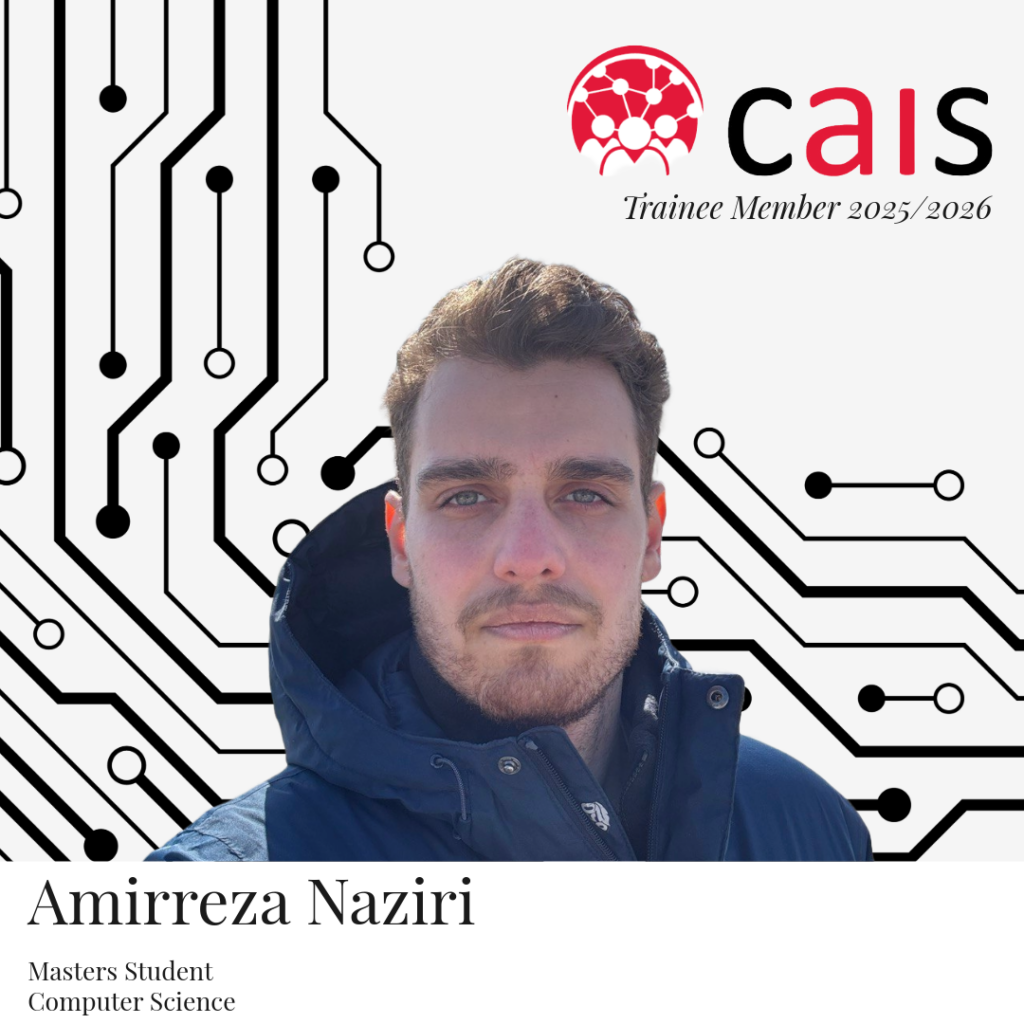
Amirreza Naziri is a Machine Learning Engineer with over two years of experience, focusing on developing and optimizing models in drug discovery, data analysis, and big data. Currently pursuing an MSc in Computer Science at York University, his work centers on machine learning solutions for drug discovery.

Andrew Fisher obtained an Honours BSc from Brandon University in 2019 and began his MSc immediately after at Lakehead University under the supervision of Dr. Vijay Mago. During his graduate studies, he was awarded funding from the Social Sciences and Humanities Research Council (SSHRC) and conducted research in the DACHB lab at Miami University with support from a Mitacs Globalink Research Award. By the time he graduated with a specialization in artificial intelligence at the end of 2020, he had published three peer-reviewed articles, with three additional publications following the next year. In January 2021, Andrew began his PhD at Saint Mary’s University, supported by a Mitacs Accelerate award and in collaboration with an industry partner in the construction field, where he developed machine learning solutions to automate time-consuming tasks in production workflows. His thesis was awarded the J. Kevin Vessey Award for the Ph.D. in Applied Science. Since July 2024, Andrew has been a Postdoctoral Visitor at York University, funded by the Connected Minds Canada First Research Excellence Fund (CFREF). His current research focuses on improving the accessibility of health information using large language models (LLMs), with an emphasis on ethical transparency, emotional sensitivity, and resource efficiency. He is developing a lightweight LLM framework for summarizing Canadian health news, incorporating multi-dimensional evaluation metrics, such as readability, semantic consistency, emotional alignment, and toxicity, to better support public understanding in complex or high-stakes communication environments.

Arash Asgari is an MSc student at York University’s Responsible AI Lab, where he researches multi-modal Retrieval-Augmented Generation (RAG) systems, integrating text and image understanding for improved reasoning. His work advances responsible AI with a focus on fairness and real-world impact, particularly in medical imaging and NLP. Arash holds a prior MSc in Computer Engineering from Sharif University of Technology, where he optimized AI inference systems for cloud deployment, showcasing his proficiency in scalable and efficient AI architectures. Arash brings a blend of academic insight and industry experience. At We Dryve Technologies in California, he engineered a vehicle segmentation pipeline that fused image enhancement with depth estimation, delivering high-accuracy outputs for automotive applications. He also led the development of an intelligent chatbot solution tailored to large car dealerships, streamlining customer interactions through natural language understanding. Previously, at the Iranian Telecommunication Company, Arash contributed to assistive technologies by building an EEG-based Brain-Computer Interface for smart home automation, designed to empower individuals with physical disabilities. His expertise spans natural language processing, computer vision, and data mining. Across both academic and professional settings, Arash demonstrates a deep commitment to ethical AI innovation—grounded in technical rigor and guided by social responsibility. With a unique ability to bridge foundational research and applied AI, he continues to drive interdisciplinary solutions that advance fairness and accessibility in intelligent systems.

Arvind Babajee is a dynamic professional with experience in regulatory compliance, legal risk management, privacy, and advisory services. He brings a global perspective to Canadian law, grounded in both civil and common law traditions from the UK and France. His career began with an education in finance and a background in law. Throughout his professional journey, Arvind has consistently ensured regulatory compliance, conducted KYC due diligence, managed compliance risks, and provided strategic legal and regulatory advice. His work has involved close collaboration with cross-functional teams, conducting risk assessments, and implementing effective compliance strategies to navigate complex regulatory landscapes. Arvind has also developed and maintained policies and procedures aligned with regulatory requirements, led negotiations and mediations, and provided compliance advice to a wide range of stakeholders.
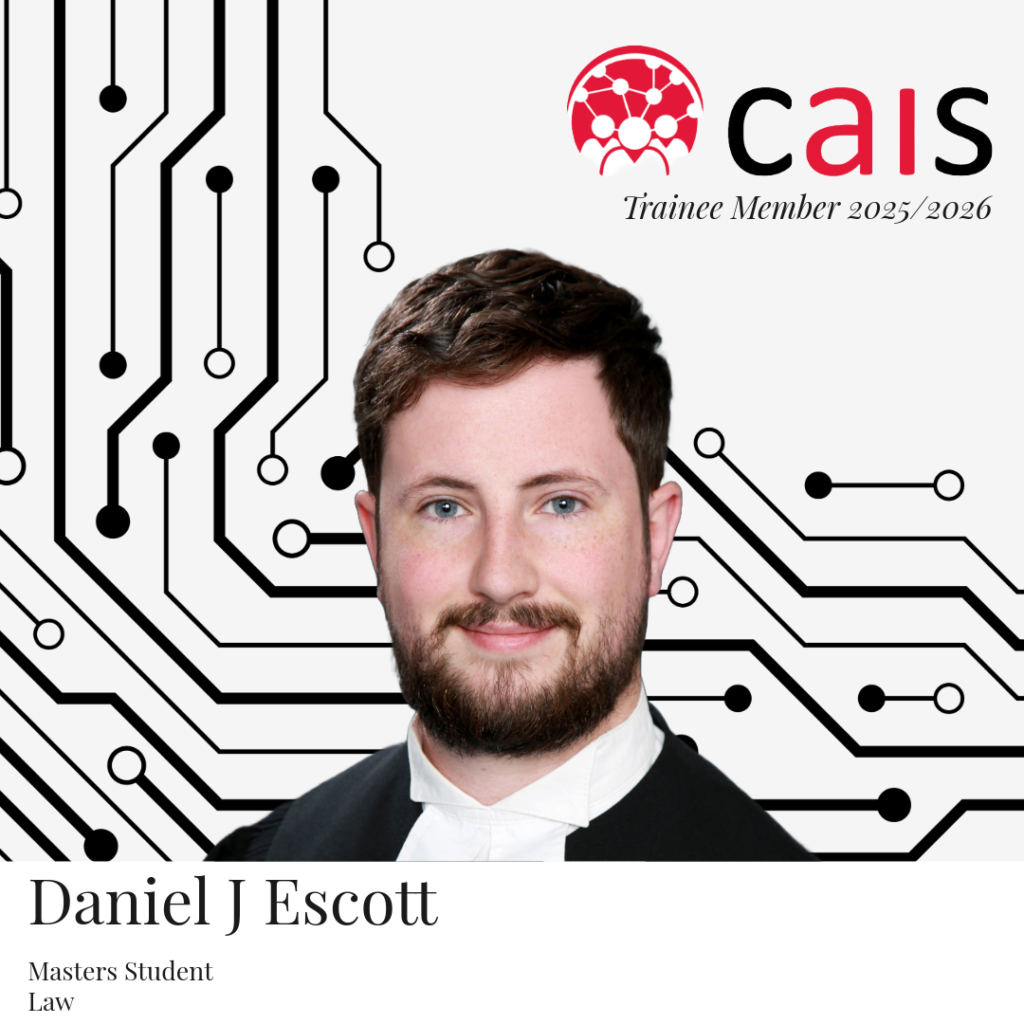
Daniel James Escott is a lawyer and legal researcher in Toronto, Ontario, specializing in the intersection of law, technology, and artificial intelligence, with a particular focus on legal process engineering, AI governance, and access to justice. He is currently completing his Master of Laws (LLM) at Osgoode Hall Law School, with a thesis examining the impact of technology in legal processes on access to justice. In Fall 2025, he will commence his PhD studies at Osgoode Hall, researching the effective and ethical integration of AI and automation within the Canadian justice system. Daniel serves as a Graduate Research Fellow at the Artificial Intelligence Risk and Regulation Lab (AIRRL) in association with the Access to Justice Centre for Excellence, and previously clerked at the Federal Court of Canada, where he contributed significantly to the court's technology and AI initiatives, including its Notice and Interim Principles on the Use of AI. His extensive background includes research roles with the Canadian Institute for the Administration of Justice (CIAJ), consulting on the use and regulation of AI in courts and law firms, and numerous publications and presentations on AI, technology, and access to justice.

Dr. Frederic Fu is a researcher at the School of Health Policy and Management at York University. His research focuses on identifying neurological and mental health risks among underrepresented populations, particularly people experiencing homelessness (PEH), through advanced computerized statistical analyses. Dr. Fu employs innovative data collection strategies—such as the Homeless Individuals and Families Information System (HIFIS) and Point-in-Time (PiT) Counts—to improve the understanding of health disparities faced by PEH. His current research interests include integrating machine-learning-enhanced statistical methods to predict health risks and inform public health interventions. By actively engaging with affected communities, including Indigenous groups and other Equity, Diversity, and Inclusion (EDI)-related populations (e.g., gender and LGBTQ2S+ minorities), Dr. Fu ensures that his research remains grounded in real-world contexts. His collaborations with nonprofit organizations and community partners aim to develop culturally sensitive and effective interventions to address neurological and mental health disparities. Ultimately, Dr. Fu’s research seeks to inform public health policies and practices, contributing to improved health outcomes for Canada’s vulnerable populations.

Grayson Richards is an academic and artist living and working in Toronto. He holds a BFA from Emily Carr University of Art + Design, an MFA in Documentary Media from Toronto Metropolitan University, and is currently a PhD candidate in Communication & Culture at York University. His interdisciplinary work moves across media theory, political economy, and critical AI studies, with a focus on the politics of generative AI and the securitization of digital infrastructures. His doctoral research theorizes 'safe' generative models as instruments of counterinsurgent control, situating them within broader histories of visuality, disinformation governance, and crisis management. Grayson’s work has been presented across Canada, the United States, and Europe, as well as South Korea and the United Kingdom. His research and creative practices have benefitted from the generous support of the Social Sciences and Humanities Research Council (SSHRC), the Ontario Graduate Scholarship, and both the Toronto and Ontario Arts Councils. Through both scholarly inquiry and artistic experimentation, Grayson's work engages with questions of power, representation, and technological mediation, aiming to foreground the political stakes (and possibilities) of contemporary algorithmic cultures.
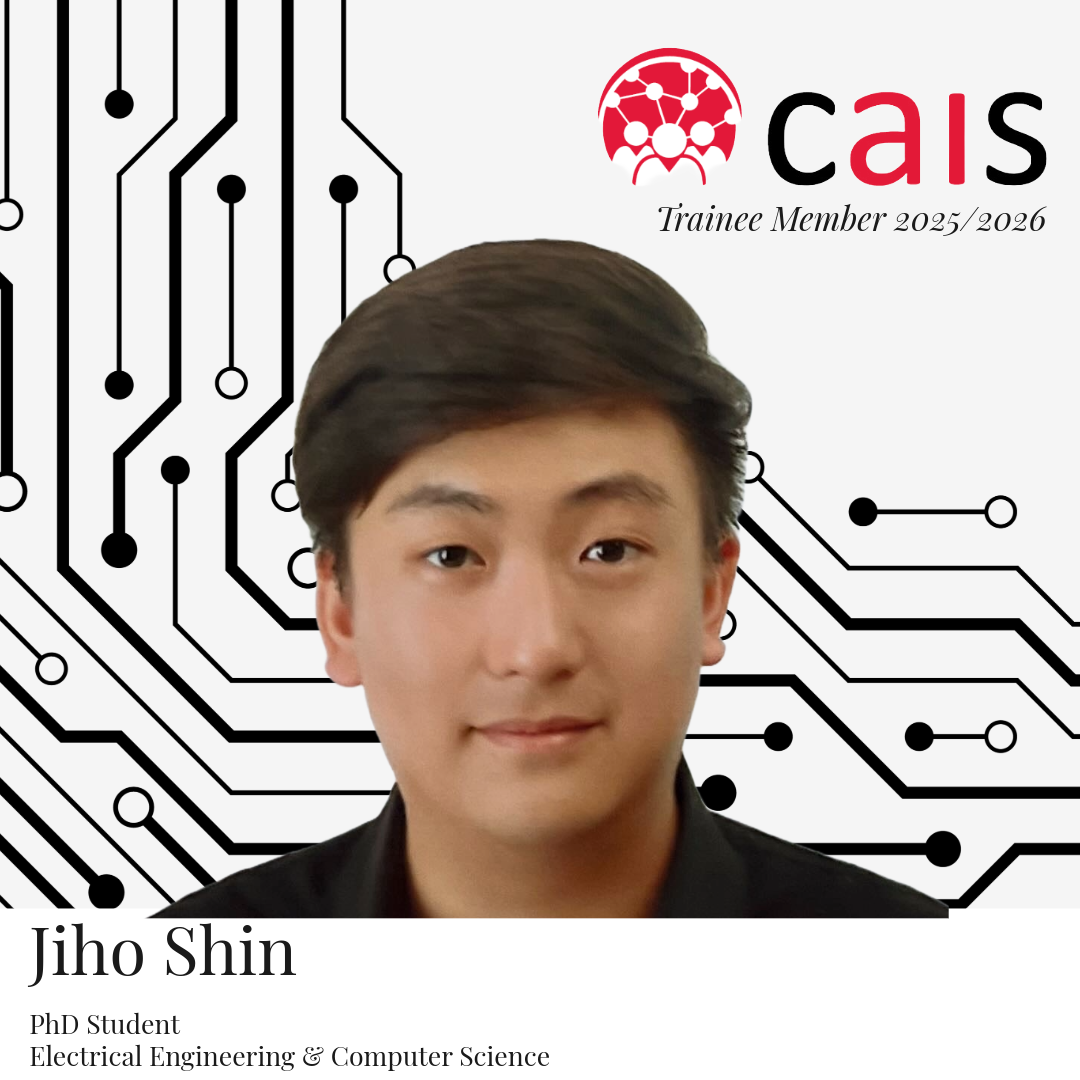
Jiho Shin is a PhD candidate in Electrical Engineering and Computer Science at York University in Toronto, Canada, supervised by Dr. Song Wang and Dr. Hadi Hemmati. His work harnesses Large Language Models to tackle core software engineering challenges—code generation, automated test creation, software security, and explainable defect prediction. Jiho has presented several empirical studies and novel frameworks: he compared prompt engineering against fine-tuning strategies to unpack trade-offs in LLM-powered code tasks; he devised retrieval-augmented and domain-adaptive test generation techniques for major machine-learning libraries; and he conducted the first systematic evaluation of neural test-oracle metrics, revealing a surprisingly weak link to execution-based adequacy. Beyond testing, he has critically analyzed the strengths and limitations of neural code generators for ML/DL workflows; and investigated the consistency of explainable defect-prediction models across diverse scenarios. Earlier in his career, Jiho produced a comprehensive survey of automatic code-generation methods and developed actionable patch-recommendation frameworks. His research appears in leading venues such as MSR, ISSTA, TSE, TOSEM, and APSEC. Jiho also contributes to the community as a reviewer and program-committee member for premier conferences and journals, and through organizing roles that support the AI4SE and SE4AI research communities.

Kathleen Cherrington is a PhD candidate at York University, where her research explores the political, legal, and ethical implications of human intimate relationships with AI sextech. Framed by posthumanist, anti-carceral, and critical disability perspectives, her work unpacks themes of consent, surveillance, desire, and the commodification of sexual labour in an increasingly technologized world. She has presented internationally on AI chatbot companions and policy at Arse Elektronika 2025 in Vienna, and at the Love and Sex with Robots Conference 2024 in Montreal. Her creative research includes a series of pop-art paintings titled Flesh Meets Machine, inspired by erotic AI intimacies and cyborgian sexualities. Kathleen was also an organizer of Beyond the Interface: Critical Perspectives of Sex Work and Sextech 2024 in Toronto, a transnational conference hosted by the Centre for Feminist Research, spotlighting cutting-edge research and creative work at the nexus of commercial sex and technology.

Parastoo ( Paris ) Mazaheri is a second-year PhD student in the Joint Program in Communication and Culture at York University. She holds a bachelor’s degree in business administration and a master’s in management and marketing from York University. With over 20 years of professional experience across various industries, including Finance and Information Technology, Paris brings a rich, multidisciplinary perspective to her academic work. In recent years, her research has focused on the fairness and transparency of AI algorithms, especially in public-sector applications, along with the intersection of AI and data privacy. Her additional research interests center on identity, displacement, and belonging issues, particularly within diasporic communities navigating transnational landscapes. Her work examines how political, social, and technological developments shape the lived experiences of diasporas, influencing their access to public services, sense of cultural belonging, and processes of social integration. She also explores the intersection of affordability and digital literacy and critical approaches to smart urbanism.

Dr. Saad Idrees is a Postdoctoral fellow in the lab of Joel. He received his PhD in Neuroscience at International Max Planck Research School in Tuebingen, Germany. His doctoral research focused on investigating the neural mechanisms underlying reduced visual sensitivity during eye movements. Currently, in his postdoc role, Saad is developing computational models of the retina by using neural biophysics and artificial neural networks and employing those models to explore visual processing under dynamic conditions of natural vision.

Shabnam Sukhdev is a multimedia artist and interdisciplinary researcher at York University. Her Connected Minds project integrates AI into a participatory performance work that explores family dysfunction, memory, and healing within South Asian diasporic contexts. Funded by SSHRC, her research-creation weaves together performance, digital storytelling, and interpretive autoethnography to examine how trauma, disability, and gendered power dynamics shape intergenerational relationships. Rooted in decolonizing and feminist frameworks, her practice bridges creative expression and academic inquiry to foster empathy, critical reflection, and community-based models of care.

Shadi Nasseri is a PhD candidate in law at Osgoode Hall Law School. Her research focuses on the legal and ethical implications of emerging neurotechnologies—such as brain-computer interfaces, neural enhancement devices, and advanced neuroimaging—through the lens of neurolaw and AI governance. Shadi’s dissertation critically examines how Canadian legal frameworks must evolve to protect mental privacy, cognitive liberty, and personhood in the face of rapidly advancing technologies. With a background in intellectual property law and deep engagement in interdisciplinary scholarship, Shadi bridges legal theory, innovation policy, and social justice. She is affiliated with several innovation incubators and research initiatives, particularly those committed to equity and inclusion in science and technology. Her leadership extends beyond academia—she is also a community advocate, and youth sports coach. At the Centre for AI and Society, Shadi brings a rigorous legal perspective to questions of AI governance, data ethics, and human rights. She is particularly interested in how law can preserve agency and integrity in technologically mediated societies, and how policy can foster inclusive and responsible innovation.

Yinghang Ma is a PhD student in Software Engineering at York University, within the Department of Electrical Engineering and Computer Science. His research centers on the application of large language models (LLMs) to software engineering tasks (LLM4SE), with a specific focus on automated program repair (APR). He explores the potential of LLMs to generate correct patches for buggy programs, aiming to improve the reliability and practicality of AI-assisted software maintenance. At YorkU, Yinghang serves as both a teaching assistant and a research assistant, supporting undergraduate education and contributing to collaborative research initiatives.

Dr. Mohammadali Tofighi is a multidisciplinary civil and environmental engineer with over 20 years of experience in computational modeling, public health research, and AI-based system design. As a Research Associate at York University’s Dahdaleh Institute for Global Health Research and ADERSIM, he integrates agent-based modeling, system dynamics, and machine learning to simulate complex interactions between humans, technologies, and environments. His work has contributed to policy-relevant AI systems addressing climate-health impacts, disease transmission in healthcare settings, and emergency preparedness in rural and Indigenous communities. Dr. Tofighi’s recent projects include modeling COVID-19 outbreaks using simulation-based contact matrices, integrating computational fluid dynamics with agent-based systems to study airborne disease in crowds, and developing decision support tools for large-scale public health interventions. His research supports AI applications that are fair, explainable, and trusted, especially in health, emergency response, and sustainability contexts. He brings deep expertise in simulation platforms (e.g., AnyLogic), cloud computing tools (such as Google Earth Engine), and geospatial analysis (ArcGIS), supported by a strong academic and consulting background in fluid mechanics, water resources modeling and engineering, and environmental engineering.

Tim Nicodemo is a scholar and artist who will be starting his third year as a PhD student at York University’s Cinema and Media Studies program in Fall 2025. His current research interests are primarily focused on the intersection and phenomenology of future cinema technologies and experimental filmmaking, as well as the examination of new medias and their transmodal properties, particularly the overlap of video game architecture and filmmaking. His dissertation will examine the films of artist Rainer Kohlberger and their implementation of artificial intelligence in generating all sounds and images, specifically analyzing their ontological properties as constituting posthumanist, ‘camera-less’ works of algorithmic art. His research and pedagogical interests and methodologies are anchored by a heavily transdisciplinary approach that often combines quantitative and qualitative frameworks, art and science, with a foundation in theories of affect and cognitivism. Tim is on the organizing committee for ELO25, an international conference for the Electronic Literature Organization, which will be jointly hosted by York University and the University of Waterloo from July 10-13, 2025. He also has a forthcoming publication in CineAction entitled 'Liquid Narratives and First-Person Perspectives: ‘Gamecore,’ or Harmony Korine’s Gamification of the Art Film.' As an undergraduate he received a gold medal in Film Studies from the University of Western Ontario, where he later also obtained his MA in Film Studies.
Alumni Trainee Members
Ahmad Salimi, Graduate Student
Amin Fadaeinejad, Graduate Student
Amir Mohammad Naeini, Graduate Student
Amirhossein Nadiri, Graduate Student
Andrea Lachmansingh, Graduate Student
Anthony Sangiuliano, Postdoctoral Fellow
Anton Machula, Graduate Student
Arian Boukani, Graduate Student
Danial Kordmodanlou, Graduate Student
Dorsa Nazari, Graduate Student
Faiz Ahmed, Graduate Student
Farnaz Niknia, Graduate Student
Ghadeer Abuoda, Postdoctoral Fellow
Guilherme Cavalcante Silva, Graduate Student
Hamidreza Dastmalchi, Graduate Student
Haoqi Huang, Graduate Student
Ibrahim Carvalho, Postdoctoral Fellow
Jasmine Madaan, Graduate Student
Junfei Wang, Graduate Student
Kasun Weerasinghe, Graduate Student
Laine McCrory, Graduate Student
Matthew Kowal, Graduate Student
Melika Sepidband, Graduate Student
Mohammadhossein Naderi, Graduate Student
Muhammad Bilal, Graduate Student
Mykelle Pacquing, Graduate Student
Niels Bracher, Graduate Student
Omid Shakiba, Graduate Student
Saba Asaad, Postdoctoral Fellow
Saghar Bagheri, Graduate Student
Sara Richards, Graduate Student
Shraddha Kunwar, Graduate Student
Siavash Barqi Janiar, Graduate Student
Simon Wallace, Graduate Student
Somang Nam, Postdoctoral Fellow
Viet Ho Tam Thuc Do, Graduate Student
Zahra Hosseini, Graduate Student
To request membership, please complete the form found here: CAIS Membership Application Form
Membership Categories:
There are three categories of CAIS membership:
Faculty Members. These are research-stream faculty at any campus of York University who are actively engaged in AI-related research.
Associate Faculty Members. These are research- or teaching-stream faculty at any campus of York University who are interested in AI-related research and would like to stay abreast of CAIS developments and participate in some CAIS events.
Trainee Members. These are graduate students and postdoctoral fellows who are actively engaged in AI-related research. While they will typically be supervised by a CAIS member, this is not a requirement of membership.
Members apply with an online form. Applicants are admitted if they meet the criteria above. This is decided by the Co-Directors for Associate Faculty and Trainee Member applicants, and by the CAIS Executive for Faculty Member applicants.
Faculty Members are required to contribute to CAIS activities, including committees and events, and to complete annual reports.