
York U researchers develop new technique to measure previously undetected airborne PFAS
A large percentage of PFAS are not being accounted for in the air, while PFAAs have accumulated in sometimes surprising amounts over 50 years in the high Arctic.

A large percentage of PFAS are not being accounted for in the air, while PFAAs have accumulated in sometimes surprising amounts over 50 years in the high Arctic.
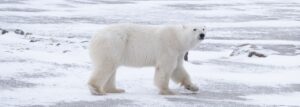
Studying polar bears just became a lot easier with new “burr on fur” trackers which confirmed scientists’ belief that subadult and adult males spend most of their time on land lazing around, conserving energy until the ice returns.
TORONTO, Oct. 27, 2021 – How are warming temperatures and a loss of sea ice affecting polar bears and their marine mammal prey in the Arctic? A York University-led research team used a novel approach to the question by monitoring what polar bears eat across Nunavut and where they are catching their prey.
TORONTO, April 20, 2021 — With Earth Day 2021 on the horizon, York University researchers in the areas of environment and climate change are available to discuss the world’s ecosystems, emerging green technologies and innovative thinking – the key elements of this year’s theme, Restoring Our Earth. Kathy Young is a geography professor in the […]
TORONTO, May 14, 2020 – An international environmental agreement to regulate the use of chemicals depleting the ozone layer may have inadvertently allowed higher levels of other harmful chemicals to flourish, new research co-led by York University and Environment and Climate Change Canada has found. The 1987 Montreal Protocol on Substances that Deplete the Ozone […]
TORONTO, Tuesday, July 24, 2018 – Mercury can show up in pristine High Arctic environments from as far away as China, and as the Arctic warms, more of that mercury can find its way into lakes, endangering people and wildlife, a York University geography professor has found. “Mercury in certain forms is highly toxic to […]
TORONTO, Tuesday, July 24, 2018 – Mercury can show up in pristine High Arctic environments from as far away as China, and as the Arctic warms, more of that mercury can find its way into lakes, endangering people and wildlife, a York University geography professor has found. “Mercury in certain forms is highly toxic to […]
TORONTO, Wednesday, April 26 – As the race for underwater resource extraction clashes with regional and international security, militarization and boundary claims, a workshop at York University will debate the issues and develop a framework for future negotiations. The day-long Geotechnical Politics of Ocean Frontiers: The Canadian North & the Indo-Pacific interdisciplinary workshop on peace […]