
Faculty of Science

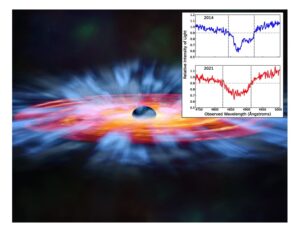
Black hole wind is speeding up, new study finds
Clouds of gas in a distant galaxy are being pushed faster and faster out among neighbouring stars by blasts of radiation from the supermassive black hole at the galaxy’s centre, a discovery that helps illuminate the way active black holes can continuously shape their galaxies by spurring on or snuffing out the development of new stars.

Canada announces $6.1M for York-led international research collaborations
Three New Frontiers in Research Fund-International grants, with additional $3.2 million from partner countries, to support climate change adaptation and mitigation research in Global South, Scandinavia and Canadian Arctic
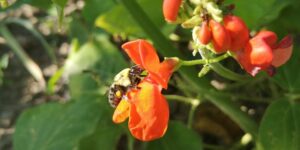
Wild pollinators and plants evolved to rely on each other could face uncertain future
The loss of even one wild bee species can disrupt the reproductive success of certain plants resulting in fewer vegetables, fruits and flowers, say York University researchers who studied how pollinators and plants rely on each other, specifically in Indigenous gardens in the Great Lakes Region.

Sun bursts, geomagnetic storm could create conditions to see aurora borealis
At least five coronal mass ejections – bursts of plasma coming off the sun – have occurred recently prompting the first severe G4 Geomagnetic Storm Watch issued since January 2005, says York University astronomy Professor Elaina Hyde.
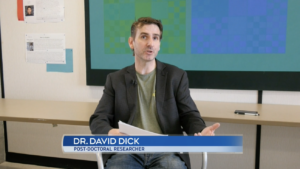

COVID-19 booster immunity lasts much longer than primary series alone, York-led study shows
A new study coming out of York University’s Centre for Disease Modelling in the Faculty of Science shows that immunity after a COVID-19 booster lasts much longer than the primary series alone. These findings are among other, sometimes “unintuitive,” revelations of how factors like age, sex and comorbidities do and don’t affect immune response.

The life aquatic: a game changer for frog vision, but little difference between night and day, York-led study finds
Frogs display a remarkable diversity of species as a whole, but does the same hold true for their visual abilities? A new study led by York’s Faculty of Science sought to answer this question by collaborating with researchers in Australia, Belgium, Brazil, Cameroon, Ecuador, Equatorial Guinea, French Guiana, Gabon, Seychelles, Sweden, United Kingdom and the United States, to get a sample of a diverse array of frogs to study the visual pigments found in their eyes.
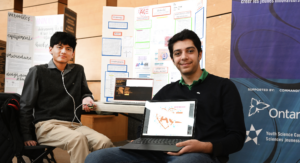
Media invited to see the next generation of STEM researchers compete for top prize
Improving the quality of life of Alzheimer’s patients, how artificial intelligence can battle wildfires and dual defense systems to tackle auto theft are some of the STEM projects young scientists will show off at the York Region Science and Technology Fair (YRSTF) this Saturday, April 6. Top projects will receive gold, silver and bronze medals and secure the honour of representing York Region at the Canada Wide Science Fair in Ottawa this year.

York University and UNITAR tackle global water challenges on UN World Water Day
What will it take to ensure that the two billion people currently without access to clean water around the world are not left high and dry? With York University as the academic lead, the UNITAR Global Water Academy is mobilizing the scientific community and forging collaborations to address water scarcity and lack of access.