
As an artist and print technician, Daryl Vocat has long used layered imagery to explore personal and social themes.

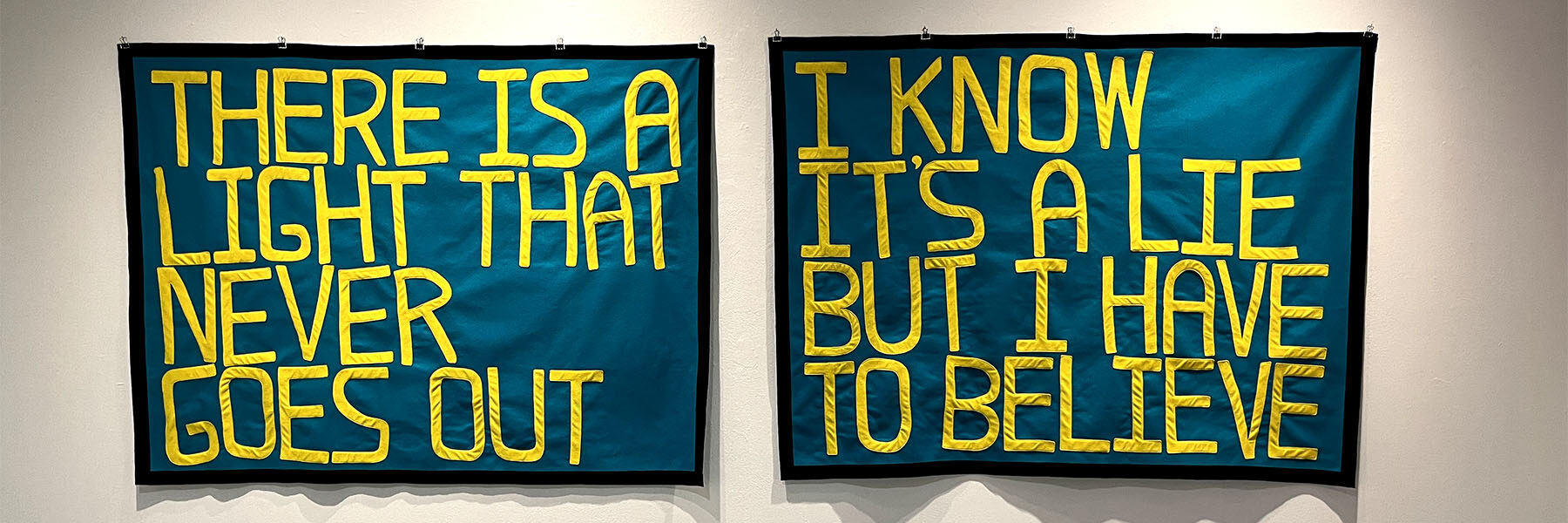
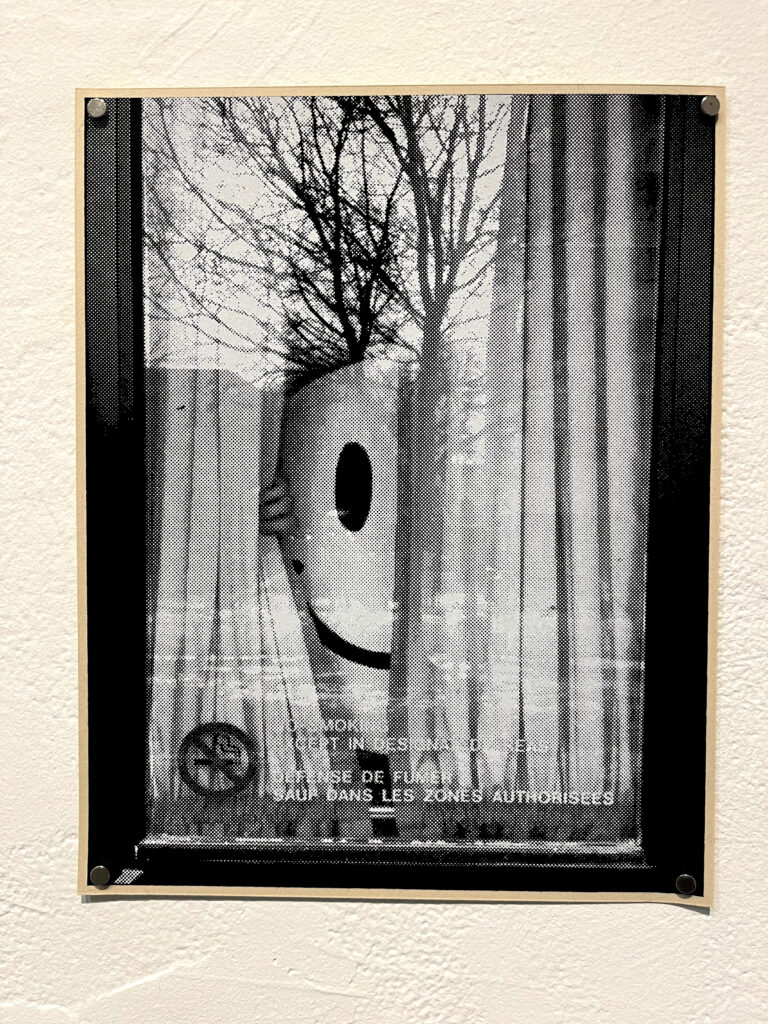
His recent body of work, developed during the pandemic and shaped by months of isolation and virtual learning, turns a reflective lens on mental health using felt and screen-printed textiles to express grief, confusion and the search for connection.
Vocat’s work draws on years of experience as both an artist and as a print technician in the Department of Visual Art in York University's School of the Arts, Media, Performance & Design.
“I started this work when classes were still online,” Vocat says, reflecting on the move to virtual learning during the pandemic. “Some of the images were just trying to make sense of what was going on, to capture elements of grief, loss and confusion.”
He recently sparked discussions about mental health through an exhibit at the Special Projects Gallery at York’s Goldfarb Centre for Fine Arts, which features art from York community members.
The exhibition “Regular Sadness” gathered screen‑printed textiles and sewn felt pieces that read like visual diary entries, each exploring questions and emotions that surfaced during months of isolation, virtual learning and shifting community.
It reflected on disruptions in campus life and the awareness about well‑being that followed.
Whether working with felt, textiles or paper, Vocat favours a layered approach, describing the process as “flexible enough for all sorts of imagery and styles. Breaking things into shapes and layers helps me test what an image can carry.”
That process is not only technical; for Vocat, who earned a BFA in Regina and MFA at York in 2001, it lies at the heart of what the exhibit set out to do – create work that holds difficult questions and encourages open dialogue.
“Much of art is about starting a dialogue, or exploring ideas,” he says. “If someone sees part of their own experience here, that’s enough to start a conversation.”
This collaborative spirit also shapes Vocat’s role in York’s studios, where technical skill and creative exploration are closely linked.
“Exhibiting keeps my technical skills alive,” he explains, “but it also lets students see that process isn’t just instruction. It’s about searching, trying methods, making mistakes and moving through them.”
As both artist and print technician, he has seen how students use art to share their experiences with mental health – not as therapy, but as honesty and expression. The emphasis is on connection and communication rather than on art as a solution.
“Struggling with mental health can leave people feeling isolated, even when it’s common on campus,” he says. “Art is a way to be honest. If someone sees that and connects, maybe it’s catharsis, maybe it’s just sharing something real.”
In “Regular Sadness,” Vocat offered a space for honest expression, making mental health and personal experience visible through art.