
Can VR and AI help anxious people cope?
By: Wendy McCann

A York University researcher is creating simulated universes using virtual reality (VR) technology to help people cope with anxiety and health conditions that bring on anxiousness, including epilepsy.
Professor Lora Appel is producing 360-degree experiences that simulate environments that make people anxious, then leveraging VR to immerse them in those situations in a controlled way, allowing the person to confront and overcome their fears in a safe space.
The scene could be a party, a busy shopping mall, a bus or the subway where someone with epilepsy might worry they will lose control if they have a seizure. It could be a podium in a packed lecture hall where an anxious student is expected to present a paper.
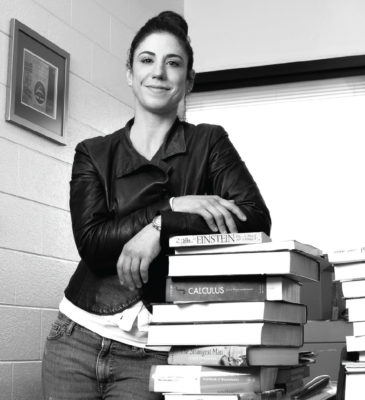
“If something causes anxiety in an individual, exposing them to this scenario gradually allows them to habituate and get used to it so that they can manage their emotions and deal with the situation,” says Appel of York’s School of Health Policy & Management, Faculty of Health.
“More and more, we’re considering health to be the ability to manage with your current situation. You might have cancer or you might be bipolar, but if you are able to manage your condition well, you can describe yourself as healthy – that’s the best-case scenario.”
With her team at York’s PrescribingVRx lab, Appel piloted a VR exposure therapy program for people with epilepsy and completed a randomized controlled trial at Toronto Western Hospital. The same platform is now being provided to people with dementia, including Alzheimer’s disease, experiencing anxiety, apathy and aggression. For older adults with mental health issues, Appel is leading a University Health Network team to create soothing or engaging experiences patients can access through VR to improve their well-being.

The benefits for VR therapy are substantial and their potential applications enormous, says Appel.
VR can also be a valuable addition to clinical therapy and serve as a drug-free alternative treatment. It has the potential to be self-administered, a game changer in a health-care environment where people with mental health issues can wait months or years to see a therapist. VR can recreate anxiety-producing worlds for people with post-traumatic stress disorder that would be unsafe for them to return to. For example, rescue missions led by firefighters and first responders, and conflict zones experienced by soldiers.
If the anxiety can be controlled, says Appel, a world of new possibilities opens up for people who often avoid situations that are fear-inducing for them. Otherwise, they can become isolated from life, sometimes missing out on job and life experiences that would be rewarding.
Appel says artificial intelligence (AI) has the potential to combine with VR to generate customized exposure therapy.
“As AI advances and VR headsets become more affordable, I can imagine a world where the technology would create customized videos for people to upload from their personal library, put on their headsets and use them for self-therapy,” says Appel.
York’s anxiety research is supported by Beneva, a Canadian mutual insurance company focused on anxiety prevention.
Read more
The Biophysics of age-related visual brain diseases
Innovative technique will bring to light new treatments and diagnostics for vision-related diseases

Research for a better future
Creating positive change in areas related to decolonization; the integration of AI in healthcare; mitigating racism in classrooms; sustainable arts; and inclusive health care
Full Circle: Alum partners with Cinespace studios and creates student opportunities
Partnership will let students experience behind-the-scenes of a billion-dollar film industry