
Current projects · Resources for classrooms and families
Material Literacy for Youth
Games, picture books, and guides that help children understand the materials in their everyday lives: what things are made of, what they do, and where they go afterwards. The aim is knowledge and agency, not fear or blame.
The approach
Three questions for any object
Nothing is good or bad just because of what it is made from. Every material is taken from somewhere, used, and goes somewhere afterwards, and harm can happen at any of those steps. So instead of asking “plastic or paper?”, the resources teach children to ask:
1
What are you made of?
2
What’s your job?
3
Where do you go after?
The useful question is “what does this do, and where does it go?”
Games
Learn by sorting
Two free browser games, no download or account needed, that turn sorting into play. Both use the same material families, so what children learn in one carries over to the other.
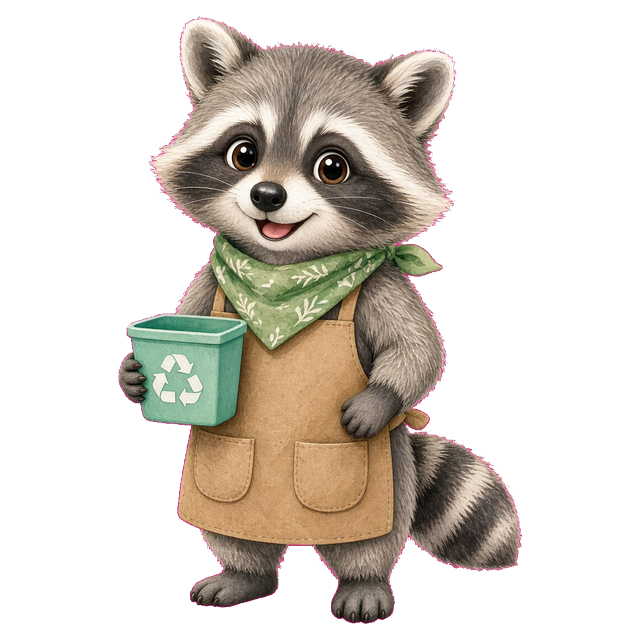
Browser game · free
Sortify
A match-three puzzle game in which tiles match by material family, not colour. Paper is not cardboard, PET bottles are not glass, and aluminum cans are not steel tins, so lookalikes do not match.
Bags, foam, and landfill items never match and jam the sorter. Each new material asks whether it belongs in recycling, organics, or trash, and a built-in guide explains what newsprint, PET, and aluminum actually are.
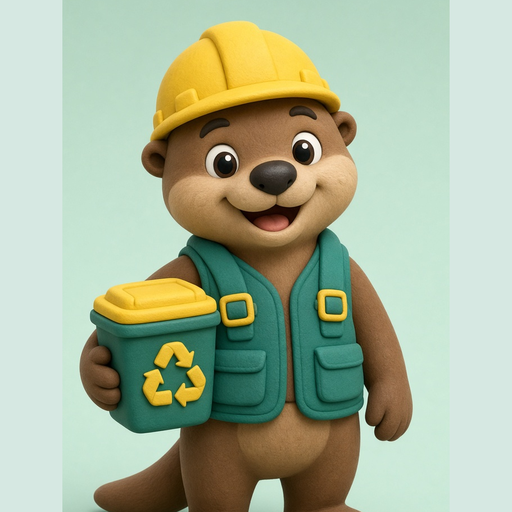
Browser game · free
Stackify
Otto’s falling-waste dock. Players steer each falling item into the right bin; correct sorts build clean stacks, while wrong ones contaminate the stack so it cannot go out on the truck.
Short early levels (five clean sorts to clear Level 1) make it easy to start. The game reinforces that rules vary by town, and that soft bags and foam are trash because they jam recycling machines.
Books
Stories that start conversations
Illustrated picture books for elementary-age children, each with a note for grown-ups and a classroom activity. They are material agnostic: they do not promote or disparage any material, and they do not hide the parts of the system that don’t work.
Nell
and the Worry Made of Everything
Created by Dr. Calvin Lakhan
Picture book
Nell hears about the environment from everywhere at once, and her worry grows until it is made of everything. With her Auntie Jo, she learns to sort a worry by who can act on it: Mine (things I can do today), Ours (things we can do together), and Too Big for One (things already being worked on, where a child can help but is not responsible).
Includes a note for grown-ups on eco-anxiety, the three circles and three questions, and “The Three Questions Detective,” a game for the classroom or kitchen table. You can care without carrying everything.
Five Lunches
Created by Dr. Calvin Lakhan
Picture book
Ada counts what is left to throw away after lunch each day of the week: seven things, then five, two, and one. Along the way she discovers that reduce, reuse, recycle are not three equal options but a hierarchy, and that recycling still matters, but you don’t start there.
Includes a note for families and teachers on the waste hierarchy and why a chasing-arrows symbol does not mean an item is recyclable, plus a week-long “five lunches” activity and three discussion questions.
For grown-ups
From Eco-Anxiety to Agency
Children’s environmental worry is shaped by the institutions around them: how schools, municipalities, and governments communicate risk, and whether they offer credible ways to act. This research-informed policy primer is written for school boards, municipalities, health agencies, emergency managers, and senior governments in Canada and the United States.
It treats eco-anxiety as a governance signal rather than a private clinical problem, and names the awareness–agency gap: institutions have become very good at raising awareness of environmental risk and far less good at providing credible, visible, and equitable ways to act. It sets out six pillars (validate, inform, connect, prepare, participate, transform) and five priority actions, starting with auditing communications and curricula for messages that raise alarm without offering a way to act.
A working draft, circulated for community input. It is a policy primer, not a clinical guideline.
Contribution to the community
Knowledge children can act on
Children hear about the environment from films, posters, the news, packaging, and each other, and much of it ends the same way: it’s up to you. The result is worry without direction, and often misinformation about which materials are “good” or “bad.” These resources pair accurate information about how materials and waste systems actually work with a clear sense of what a child can do, what we can do together, and what is already being worked on by others.
Because the games are free and browser-based, and each book comes with ready-to-use classroom activities, the resources are designed to be easy for teachers and families to pick up without special equipment or training. They are part of the Hub’s Plastics with Purpose youth material literacy program, developed with the Vinyl Institute of Canada and being piloted in classrooms from fall 2026.
Explore more of our work
See the Hub’s other active research projects, or browse our full list of publications.