

Research in Focus is a YFile series that explores the vibrant research landscape of York University’s Organized Research Units (ORUs).
These centers of research excellence serve as dynamic hubs where interdisciplinary experts collaborate with partners to tackle some of the globe’s most pressing challenges. Each edition invites readers to explore the transformative work undertaken at York University through a Q-and-A with ORU directors.
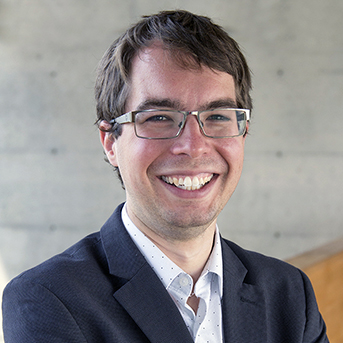
This edition explores the mission and impacts of York Emergency Mitigation, Engagement, Response, and Governance Institute (Y-EMERGE) and features director Eric Kennedy, a professor in the School of Administrative Studies within the Faculty of Liberal Arts & Professional Studies.
Q: What is the mission of your ORU and its core areas of research?
A: Y-EMERGE has a clear mission: to support our local, national and global communities in reducing disaster risk, preparing for emergencies and creating a more equitable and resilient society in the face of tomorrow’s hazards. We do so by bringing together a rich, interdisciplinary set of experts from across York whose research addresses disaster mitigation, preparedness, response and recovery. At Y-EMERGE, researchers and trainees are working on almost every different hazard – from catastrophic flooding to cyber security.
Q: How does your ORU foster collaboration and partnerships to enhance research impact?
A: We think about collaboration and partnerships on many different scales. Perhaps most importantly, Y-EMERGE is fundamentally an action-oriented research centre: we care about addressing real-world problems with practitioners on the ground, at the frontlines of disaster mitigation and response. We work closely with local, provincial and federal governments; with small scale and global non-governmental organizations; and with businesses working to address – or simply prepare for – hazards in their own work. We also try to break down conventional silos in disaster studies, bringing together researchers and trainees from different hazards to work together and learn from each other. We cross disciplinary boundaries as well, bringing together mathematics and psychology, philosophy and engineering to address hazards in a holistic way.
Q: What real-world challenges is your ORU working to address and how does it align with York’s institutional priorities?
A: Unfortunately, every year there seem to be many new reminders that disasters are on the rise. Whether it is wildfires or flooding across Canada, the emergence and re-emergence of different viral pathogens, or societal instability, the impact and frequency of disasters is growing. As a result, you’ll find our researchers on the front lines working to reduce these impacts on communities: working in disease modelling to support public health programs; working with meteorologists to improve evacuation planning; or working with fire managers to protect communities and ecosystems at the same time. This is exactly the kind of research that York is famous for – work that supports our communities, understands the human dimensions of complex challenges and works to build a more just and healthier tomorrow.
Q: What innovative approaches or methodologies distinguish your ORU’s research?
A: The heart of what we do at Y-EMERGE is collaborative, use-driven and co-created research. We believe in tackling real-world questions that matter to communities, disaster survivors, emergency managers and other stakeholders in the hazard world. By centring their questions and their priorities, research can actually make a difference day-to-day. This commitment to communities and practitioners is key.
We also emphasize research that is “fit for purpose.” Because Y-EMERGE is such an interdisciplinary group, we’re able to leverage expertise from every Faculty across York. This means being able to broaden questions in helpful and productive ways: layering in social dimensions and cognitive factors, developing engineered solutions and thinking about the historical, legal and institutional contexts.
Q: What accomplishments or upcoming projects can you highlight and how do you see your ORU shaping the future?
A: One accomplishment for our ORU was bringing the Canadian Journal of Emergency Management to York University. This fully open access (free to both read and publish) journal embodies our approach to research: it is written for both researchers and practitioners alike, it includes case report formats where practitioners can share their experiences, and every article is translated into both official languages to encourage uptake. It is an attempt to do academic publishing differently – to focus on collaborative, impactful research rather than profits.
We’re also building out significant supports for early career researchers, trainees and all York researchers. This year, we’ll be running a full gamut of offerings, from writing workshops to reading groups to professional development sessions to a weekly seminar series. We’d encourage anyone interested in this field to access these opportunities and join our action-based and collaborative approach to disaster research.
Learn more about Research & Innovation at York University.