
Connected Minds is delighted to welcome five outstanding new Research-Enhanced Hires (REHs) who have joined our community this term. These dynamic scholars bring world-class expertise, bold ideas, and a shared commitment to interdisciplinary, socially engaged research. Their arrival marks an exciting new chapter for Connected Minds as we deepen our impact across research, teaching, and community collaboration!
Through this program, Connected Minds provides enhancements to these researchers to establish and grow their new research programs at York. Our REH program is a cornerstone of Connected Minds’ long-term vision, one that bridges disciplines and institutions to tackle the most pressing questions at the intersection of brains, machines, and society. REHs play a critical role in advancing this work: they co-supervise trainees, launch interdisciplinary projects, lead inclusive research programs, and help shape the future of our three key pillars: 1) Society, 2) Neuroscience and Behaviour, and 3) Intelligent Technologies.
With their feet on the starting line, our new REHs are poised to launch bold collaborations across departments and institutions, infusing the Connected Minds community with fresh perspectives and innovative momentum. Whether designing more equitable technologies, exploring the ethical dimensions of AI, or advancing our understanding of the human brain, their work reflects the spirit of Connected Minds: bold, inclusive, and impact-driven.
We look forward to sharing more about their research journeys in the months ahead and to seeing how their contributions will enrich our network of scholars, trainees, and community partners.
Learn more about each of these exceptional researchers below and join us in welcoming them to the Connected Minds community. They’re helping to power our next chapter, and we’re thrilled to have them on board!

Danica Pawlick-Potts
Assistant Professor, Faculty of Liberal Arts & Professional Studies at York University
Danica Pawlick-Potts joined York University as a Research Associate in the Department of Communication and Media Studies in July 2024 and began her appointment as an Assistant Professor in July 2025. Danica’s research focuses on supporting the development of data infrastructure that affirms and respects Indigenous data sovereignty and expanding our knowledge of the implications of emerging data and technologies for Indigenous peoples. Danica works closely with the First Nations Information Governance Centre’s Data Sovereignty Research Collaborative and is a member of the National Indigenous Knowledge and Language Alliance. She also holds expertise in broader issues in AI and data ethics and data literacy such as trust and public perceptions of AI and received the Association of Information Science and Technology’s SIG AI 2021 Publication of the year award for her co-authored publication “Algorithmic Literacy and the Role for Libraries”.

Ines Arous
Assistant Professor, Lassonde School of Engineering at York University
Artificial Intelligence - Robotics
Ines began her role as an Assistant Professor in the Electrical Engineering and Computer Science department at York University in July 2025. Her research is dedicated to advancing the field of human-centered natural language processing (NLP). As a Postdoctoral Researcher at the Mila-Quebec AI Institute and McGill University, she is leading projects on optimizing the usage of human feedback in language models to improve their explainability and trustworthiness. Her work focuses on designing frameworks that leverage human intelligence to enhance NLP models and tailoring them for applications with significant societal impact. Ines got her Ph.D. from the University of Fribourg, specializing in human-AI collaborative approaches for data curation. She developed hybrid human-AI approaches for data collection, evaluation, and model explanation. Her work has been accepted and presented at top conferences, including the Web Conference, AAAI, and ACL. During her doctoral studies, she completed an internship at Alexa Shopping, Amazon Research. In recognition of her outstanding research, Ines received the prestigious Dimitris N. Chorafas Award for excellence in scientific research in November 2023.

Aimi Hamraie
Associate Professor, Faculty of Liberal Arts & Professional Studies at York University
Aimi has started their new role as an Associate Professor in the Department of Social Science (LAPS) as of September 2025. Aimi is the Director of the Critical Design Lab, a collaborative of disabled designers, artists, and researchers who approach accessibility through the frameworks of disability culture. They are also the author of Building Access: Universal Design and the Politics of Disability, a 2022 United States Artists Fellow in Media, and a public member of the U.S. Access Board.
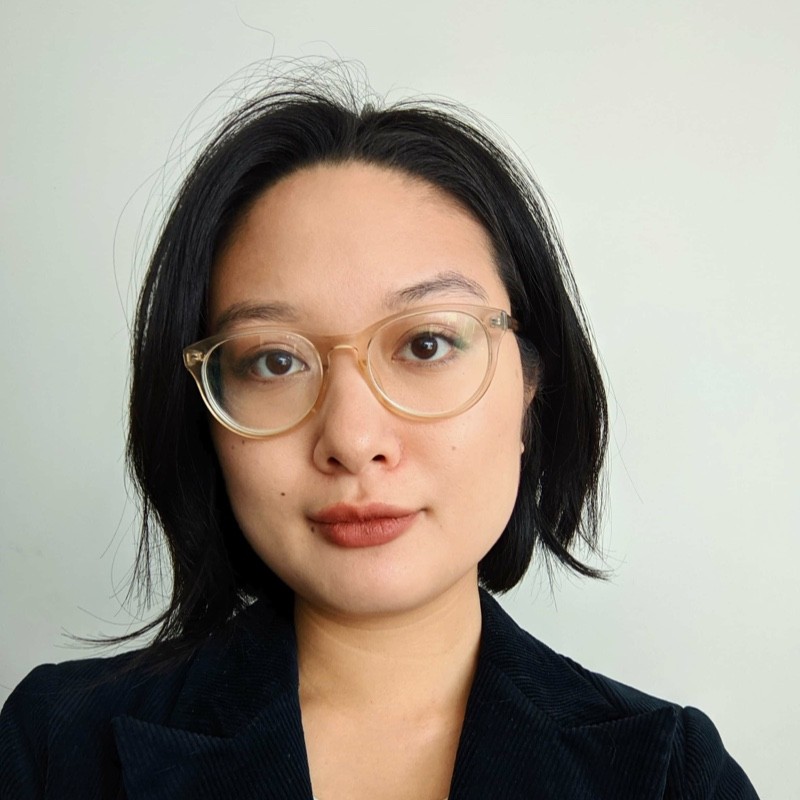
Sze Yuh Nina Wang
Assistant Professor, Glendon Campus York University
Cognitive Science of Language and Communications
Nina joined Glendon Campus in July 2025 as an Assistant Professor in Psychology. Their research centers around misinformation, political polarization and how these phenomena play out in online environments and discourse. Her work leverages techniques from computational social science in combination with experimental methods from social psychology. They are particularly interested in how emotion and moralization affect spreading and believing misinformative and polarizing content and in turn fuel polarized attitudes and extremist behaviours, and how the incentives of social media platforms shape our information ecosystems. She obtained her doctorate from the University of Toronto and completed a postdoctoral fellowship at Cornell University.

Hannah Tarder-Stoll
Assistant Professor, Glendon Campus York University
Social Cognition/Social Cognitive Neuroscience
Dr. Hannah Tarder-Stoll joined York’s Glendon Campus in July 2025 as an Assistant Professor of Psychology, specializing in cognitive neuroscience. Her research investigates memory, with a focus on how we build structured knowledge about the world and use this knowledge to support adaptive behaviour. She studies how memories guide prediction, attention, and decision-making, and how different types of memory, such as episodic and schematic, interact and transform over time to support everyday cognition. Her work combines behavioural experiments with neuroimaging (MRI, MEG), immersive virtual reality, and computational tools to study memory in naturalistic contexts. By integrating multiple methods and levels of analysis, Dr. Tarder-Stoll seeks to uncover how the brain’s memory systems support flexible, goal-directed, and adaptive behaviour. She earned her PhD from Columbia University and completed postdoctoral training at the Rotman Research Institute in Toronto.