

October 6, 2025
Between the human and the technological lies a space of both promise and uncertainty. The 2025 Connected Minds Conference stepped into that space, bringing together researchers and community voices to explore how innovation becomes most meaningful when it is guided by human needs, values, and experiences.
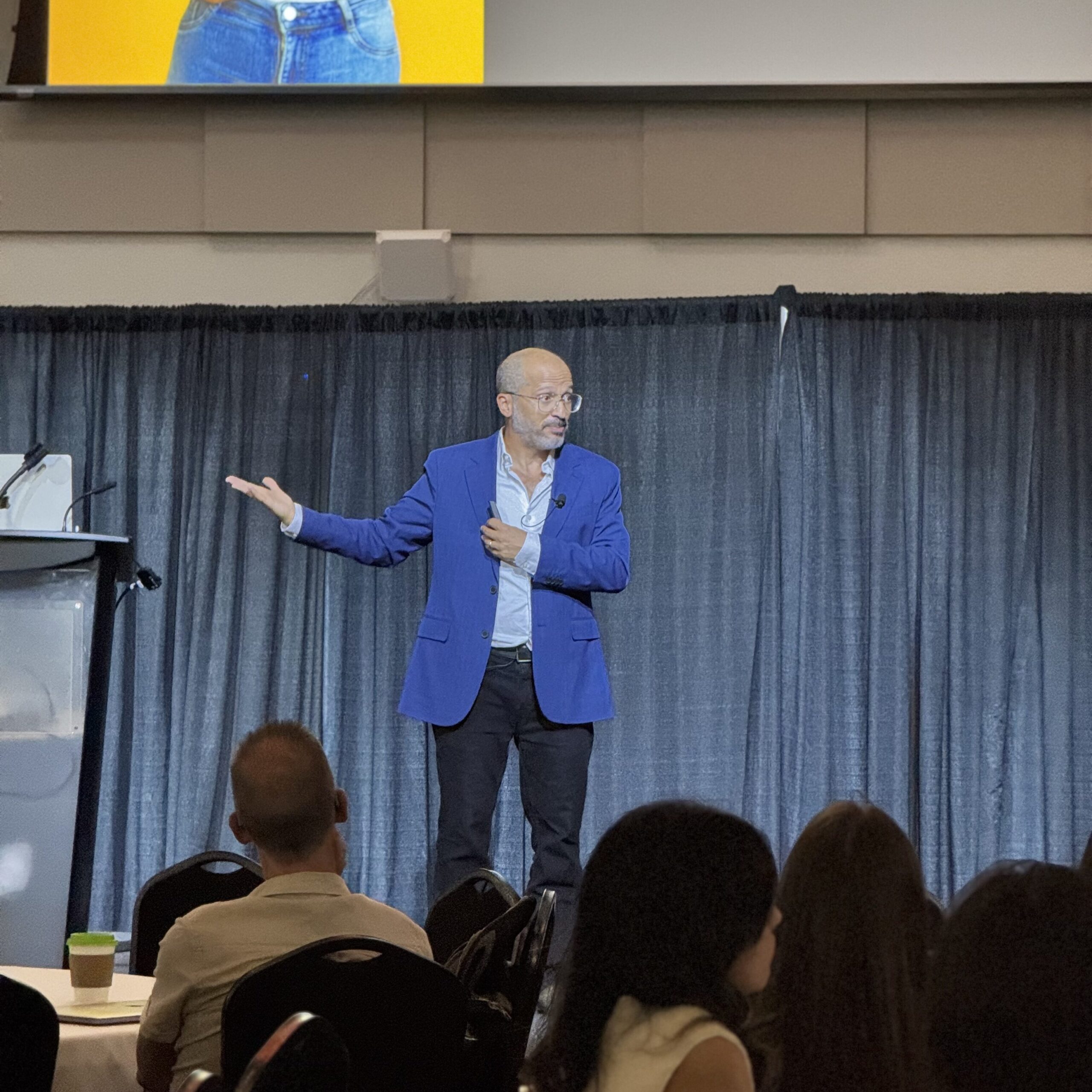
The tone for the conference was set by a keynote from Michael Inzlicht, who invited the room to imagine a future where machines don’t simply detect emotion but engage with it in ways that feel deeply personal. In his talk, In Praise of Empathic AI, he explored a growing trend in the world around us. More and more people are turning to AI systems for moments of comfort and understanding, especially as access to mental health care remains strained and social empathy feels increasingly fragile.
Drawing on research where ChatGPT’s responses were rated as highly empathic, Dr. Inzlicht encouraged the audience to pause and consider what it means when people look to AI for emotional support. His reflections highlighted both the appeal of these systems and the risks that come with leaning on them too heavily. While AI may offer a sense of being heard, it cannot carry the full weight of human connection or the complexities of shared lived experience.
His message resonated with the purpose that guides Connected Minds. Innovation must be shaped with care, reflection, and awareness of the human stakes involved. Dr. Inzlicht’s talk reminded us that the choices we make today will influence whether emerging technologies deepen our capacity for connection or slowly erode it.
October 7, 2025
The conference opened with remarks from Dr. Pina D’Agostino, Scientific Director of Connected Minds and Associate Vice-President Research at York University, and Dr. Rhonda Lenton, President of York University.

“When I think about where Connected Minds began and where we’re headed, I’m more convinced than ever that the government was right to fund us. We’re tackling the pressing questions emerging from our techno-social collective, the growing intermingling of humans and machines. There’s great promise here, but we must stay ahead of potential harm to ensure no one is left behind.”
- Pina D'Agostino
Dr. D'Agostino emphasized that Connected Minds is not only about advancing knowledge but transforming how research itself is done.
“We’ve already seen this approach in action,” she said, noting that the program has recently awarded $7.5 million in interdisciplinary team grants, pushing the frontiers of how we imagine new technologies, health, and society.
Dr. Lenton echoed this spirit of collaboration and impact. “AI is one of the most salient topics of our time,” she said.
“Connected Minds represents the largest research grant in York’s history, but more importantly, it represents a shared vision between York and Queen’s, a collaboration across institutions that shows what’s possible when we unite disciplines and sectors to create real societal impact.”


The first day of the conference grounded big ideas in real-world experience. The session on Brain-Computer Interfaces and Society, co-chaired by Susan Boehnke and Michael Kalu, reflected the very heart of Connected Minds, where neuroscience, engineering, ethics, and lived experience come together in a single conversation. Mariska Vansteensel, Ian Burkhart, and Anna Wexler offered a rare look at where BCIs truly stand today. Ian, one of the first individuals to receive an implantable device, shared reflections from years of participating in trials, giving the room an honest window into life with a direct brain–machine interface. The discussion returned repeatedly to one central idea that end-users must be partners at every stage of development. Co-design, early engagement, and thoughtful attention to autonomy and data stewardship are not optional additions. They shape whether BCIs become tools that genuinely serve the people who rely on them.
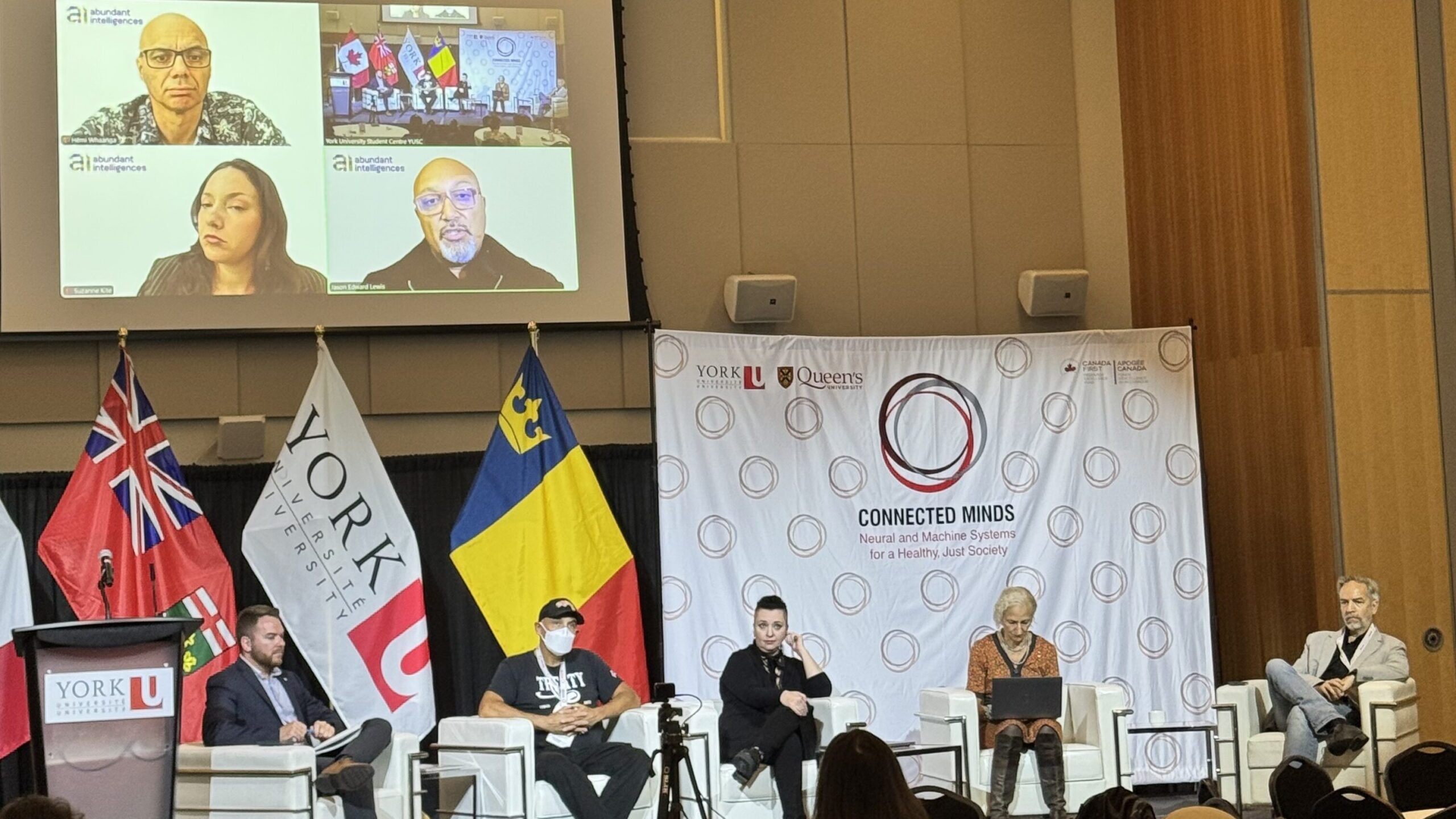
An Indigenous-led panel titled Indigenous Data Sovereignty in the Techno-Social Age, chaired by Sean Hillier, Associate Director of Connected Minds, shifted the conversation toward community, story, and responsibility. With insights from Jason Edward Lewis, Hēmi Whaanga, Suzanne Kite, and Sara Diamond of Abundant Intelligences, joined by Maya Chacaby, Archer Pechawis, and Andrew McConnell, the panel explored what it means to create technology rooted in Indigenous knowledge systems. Rather than adapting community values to fit technological frameworks, they asked what it would look like to build technology from those values in the first place. Abundant Intelligences, an Indigenous-led research program that conceptualizes, designs, develops, and deploys AI grounded in Indigenous Knowledge systems, offered a powerful illustration of this approach. Their dialogue highlighted data sovereignty as both an ethical obligation and a pathway forward, emphasizing that intelligence is not a scarce resource manufactured by machines. It exists in relationships, language, land, and community.

The session on Social Media, AI, and Mental Health, co-chaired by Jonathan Obar and Anita Tusche, turned to the emotional landscapes where many of our daily lives now unfold. Speakers S. Shyam Sundar, Munmun De Choudhury, and Emma Duerden examined how online spaces can offer connection and support while also amplifying stress, comparison, and vulnerability. They explored how self-disclosure online can feel grounding and cathartic, yet the very same environments can intensify anxiety, particularly for young people. Rather than moving too quickly toward technical fixes or policy responses, the panel called for a deeper understanding of the emotions and behaviours that shape our relationship to these platforms. The conversation echoed a core Connected Minds belief that meaningful change begins with understanding how technology feels and not only how it functions.
The day closed with Remote Health and Embodiment, a session co-chaired by Matthew Pan and Nikolaus Troje that returned to one of the most urgent questions in health innovation, how digital tools can expand access to care while preserving the humanity at the heart of the clinical encounter. Alan Kingstone, Karon MacLean, and Ivar Mendez reflected on the realities of providing care in a country where nearly half of Canadians lack a primary provider. They showed how remote technologies can bridge distance and inequity, creating space for patients to take a more active role in their own care. While no digital tool can replicate the nuance of face-to-face connection, the discussion underscored how technology, when thoughtfully designed, can strengthen relationships rather than strain them.

October 8, 2025
The second day began on a note of reflection and purpose. Dr. Amir Asif, Vice-President Research and Innovation at York University, spoke to the spirit of the conference and the vision that drives Connected Minds. He reminded attendees that the conversations unfolding across disciplines were more than academic, they represented a model for how innovation and society can move forward together.
"This conference embodies our shared vision that technology must be developed with society and for society. At Connected Minds, we’re seeing curiosity turn into collaboration, and ideas transform into solutions."
- Amir Asif

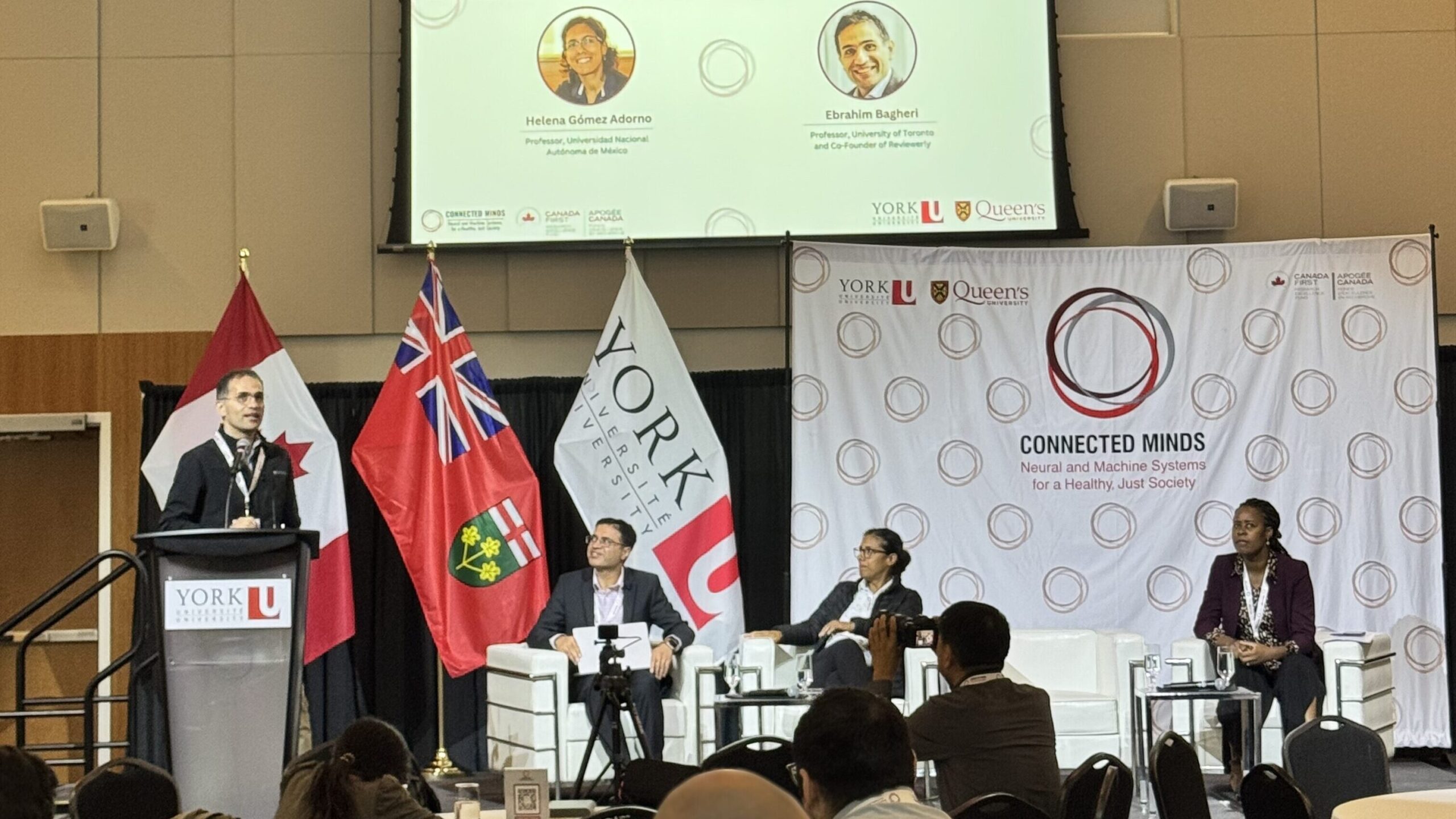
The day’s first session, Applications and Risks of LLMs, turned attention to one of the most influential technologies shaping our moment. Helena Gómez Adorno and Ebrahim Bagheri, in a conversation co-chaired by Alvine Boaye Belle and Vijay Mago, offered a clear-eyed look at how large language models are already being used in hospitals, courtrooms, classrooms, and public services. They explored the ways these systems can broaden access for speakers of non-English languages and support both education and healthcare, while also acknowledging the real risks they pose, including bias, misinformation, and the silencing of minority voices. The session emphasized the importance of transparent, community-driven, interdisciplinary development so that LLMs expand human possibilities rather than narrow them.
Mobility and Accessibility took on a broader meaning in the next session, chaired by Shital Desai and Manos Papagelis. David Lepofsky, Jennifer Campos, and Ron Buliung reframed mobility as an issue rooted in power, belonging, and justice. They reminded the room that much of the built world still assumes a single way of moving through space, and that this assumption continues to exclude disabled people in profound ways. True accessibility, they argued, begins long before infrastructure is built or technologies are deployed. It starts with how professionals are trained, how systems are designed, and whose needs are recognized as legitimate. Their message came through with force and clarity, inclusion must begin at the design table, not at the end of the process.
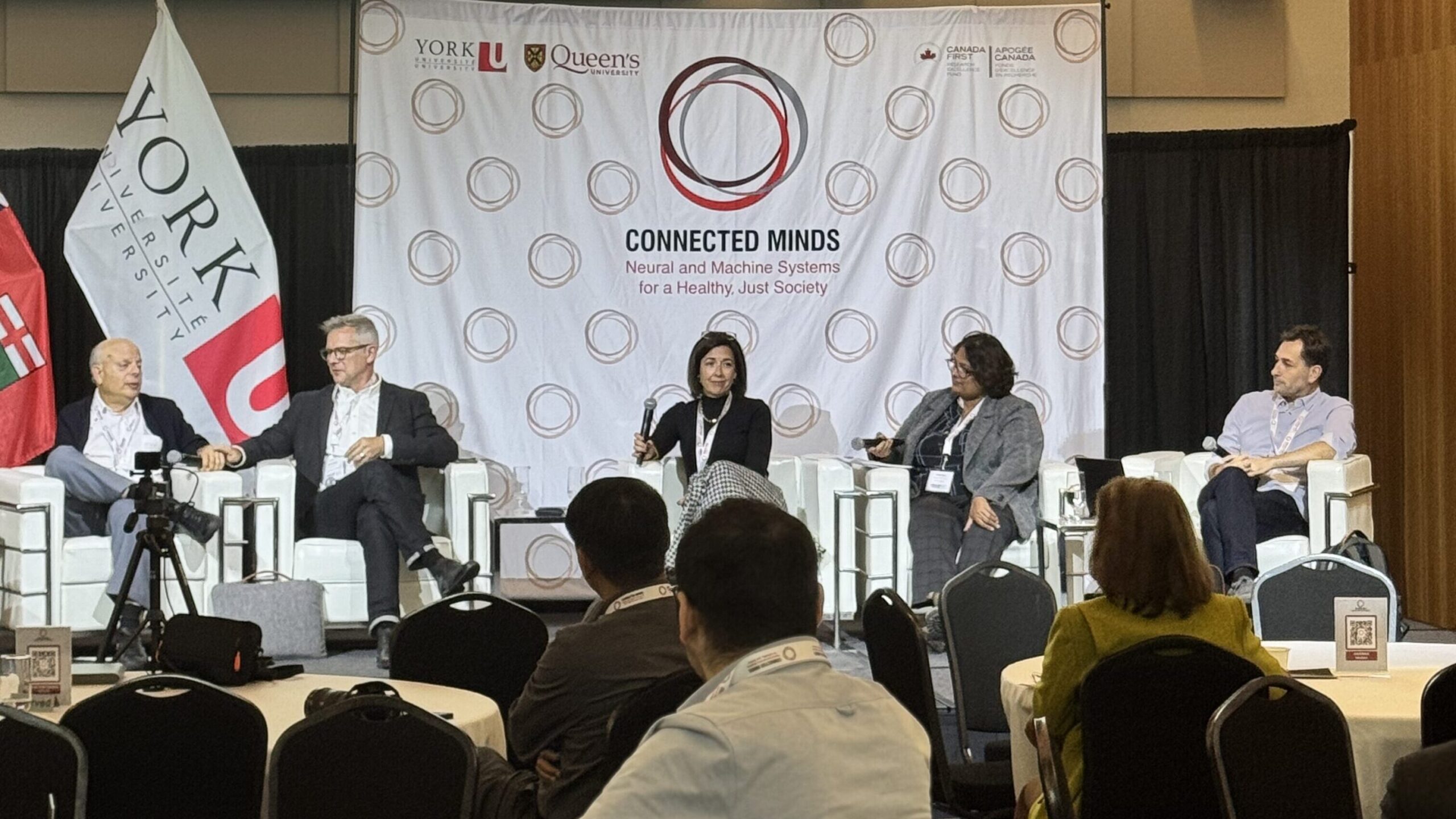

Themes of agency and care continued into the session on Social Robots in Health, co-chaired by Michael Jenkin and Amy Wu and featuring Goldie Nejat and Maja Matarić. Rather than speculating about distant futures, the panel stayed grounded in the realities of today’s clinics and rehabilitation centres. They discussed how robots can support physical therapy, cognitive health, and emotional well-being, not by replacing human caregivers but by working alongside them. Their conversation highlighted the importance of balance as automation becomes more sophisticated. Technology should strengthen care and help people regain independence while keeping empathy and human connection at the centre.

When the panel discussions wrapped up, the conference shifted into a different kind of exchange. The poster session brought a burst of energy and movement into the space as researchers from York, Queen’s, and partner institutions gathered around one another’s work. Conversations unfolded quickly and generously, stretching across disciplines and sparking unexpected connections. Students, faculty, and collaborators compared methods, questioned assumptions, and imagined follow-up projects on the spot. The session captured something deeply characteristic of Connected Minds, a reminder that discovery happens in conversation and that innovation grows when ideas travel between people who do not usually work side by side.
The conference drew to a close with an evening that felt both celebratory and reflective. The closing banquet brought together researchers, artists, policymakers, and community members in a space that mirrored the spirit of Connected Minds itself, collaborative, curious, and grounded in shared purpose.

The closing banquet offered a thoughtful ending to the two days. It brought researchers, artists, policymakers, and community members together in a room that reflected the collaborative culture we have been building.
Judy Illes, Chair of the Connected Minds External Advisory Board, opened the evening by acknowledging the collective work that makes this program possible and speaking to the importance of keeping creativity, ethics, and impact in balance as we move forward.


The evening’s keynote was delivered by The Honourable Marshall Rothstein, Former Puisne Justice of the Supreme Court of Canada, who brought a legal and ethical lens to themes that had surfaced throughout the conference. He spoke to the responsibility that comes with developing technologies that influence society at such scale, emphasizing that frameworks for justice, transparency, and accountability must evolve just as quickly as the tools we create.
His reflections served as both a grounding reminder and an invitation to think beyond the conference, underscoring that innovation carries obligations and that institutions like Connected Minds have an essential role in shaping how technological change unfolds.
The final moments of the evening carried a sense of purpose. There was celebration, but also a shared understanding that the work ahead is significant and deeply important. The conversations that began here did not end here, they marked the starting point for the next chapter of collaboration, inquiry, and responsibility.