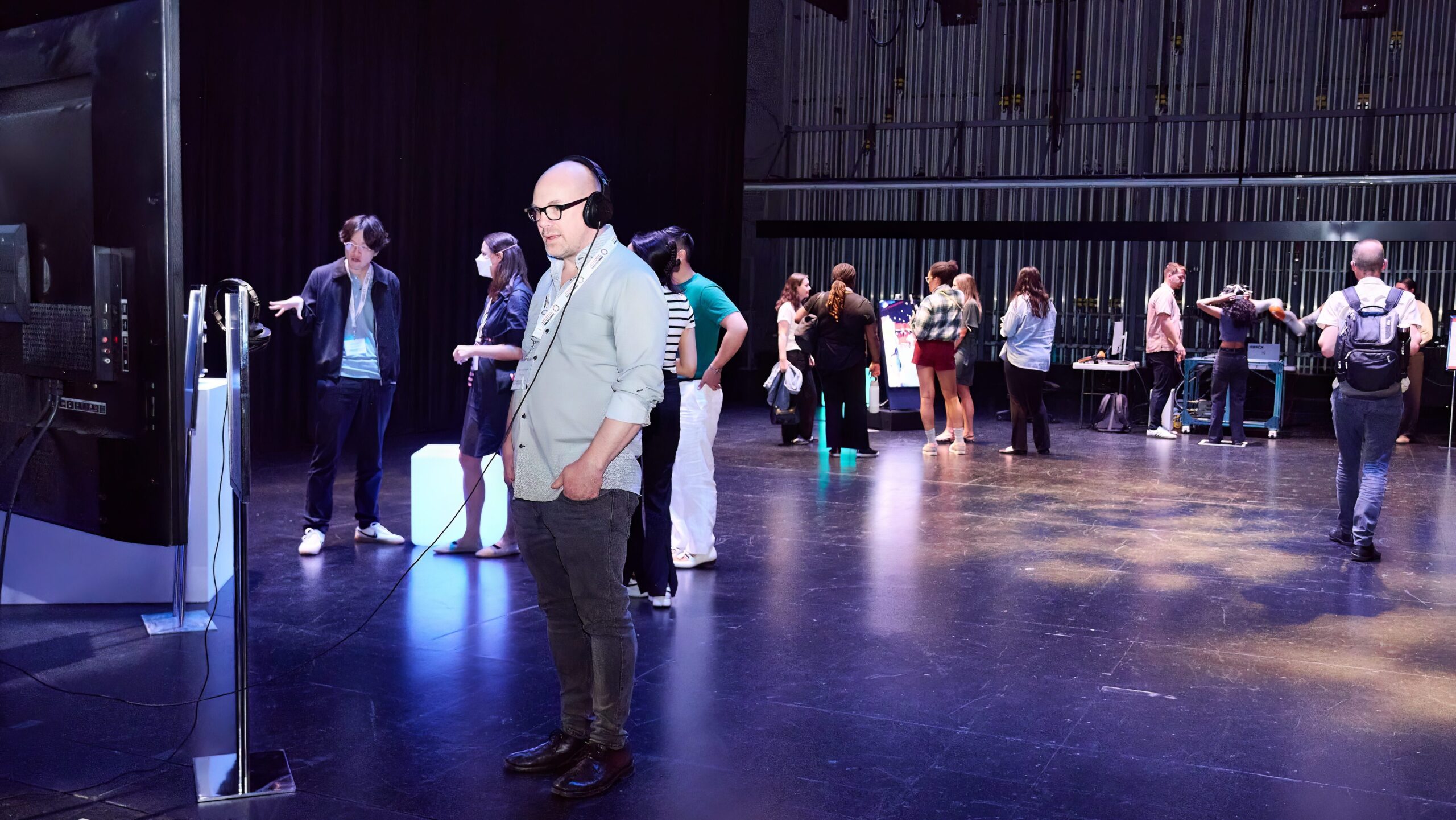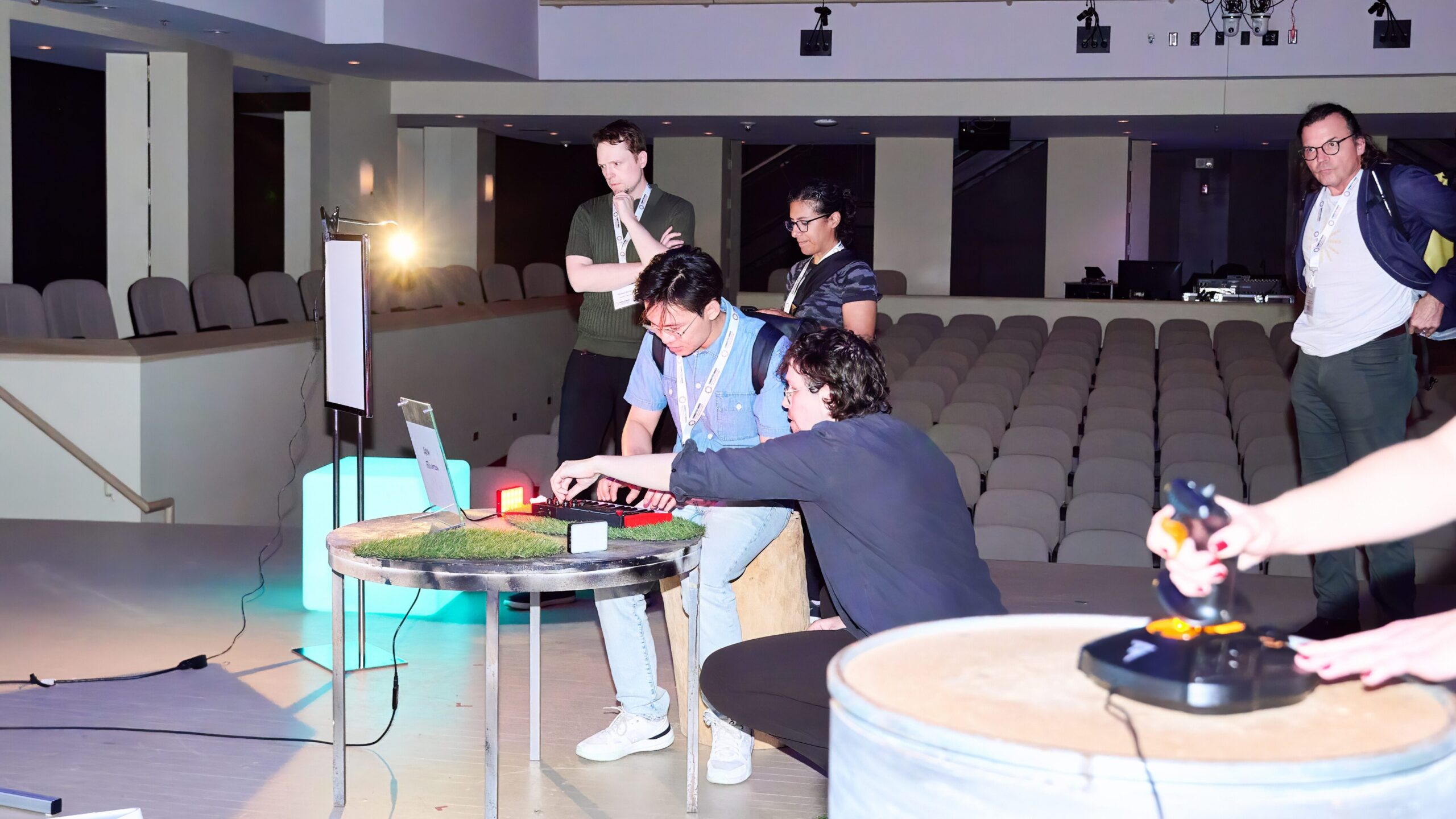

The Connected Minds 2025 Arts Reception was a clear demonstration of how art can shift our understanding of emerging technology. Through visual art, storytelling, and interactive installations, our community engaged with technology as something that lives inside the human experience.
At its core, Connected Minds is about fostering environments where different ways of knowing can meet, influence one another, and spark new forms of understanding. The Arts Reception offered a vivid expression of that mission, bringing our artistic and research communities into the same creative space and revealing how practice in the arts can surface questions, insights, and perspectives that traditional research alone might miss. The works on display showed why supporting artists matters so deeply to Connected Minds. Their creative approaches help us understand how technologies are felt, how they shape everyday life, and what kinds of futures they make possible. By investing in this work, we broaden who participates in knowledge-making and strengthen our commitment to inclusive, interdisciplinary exploration.
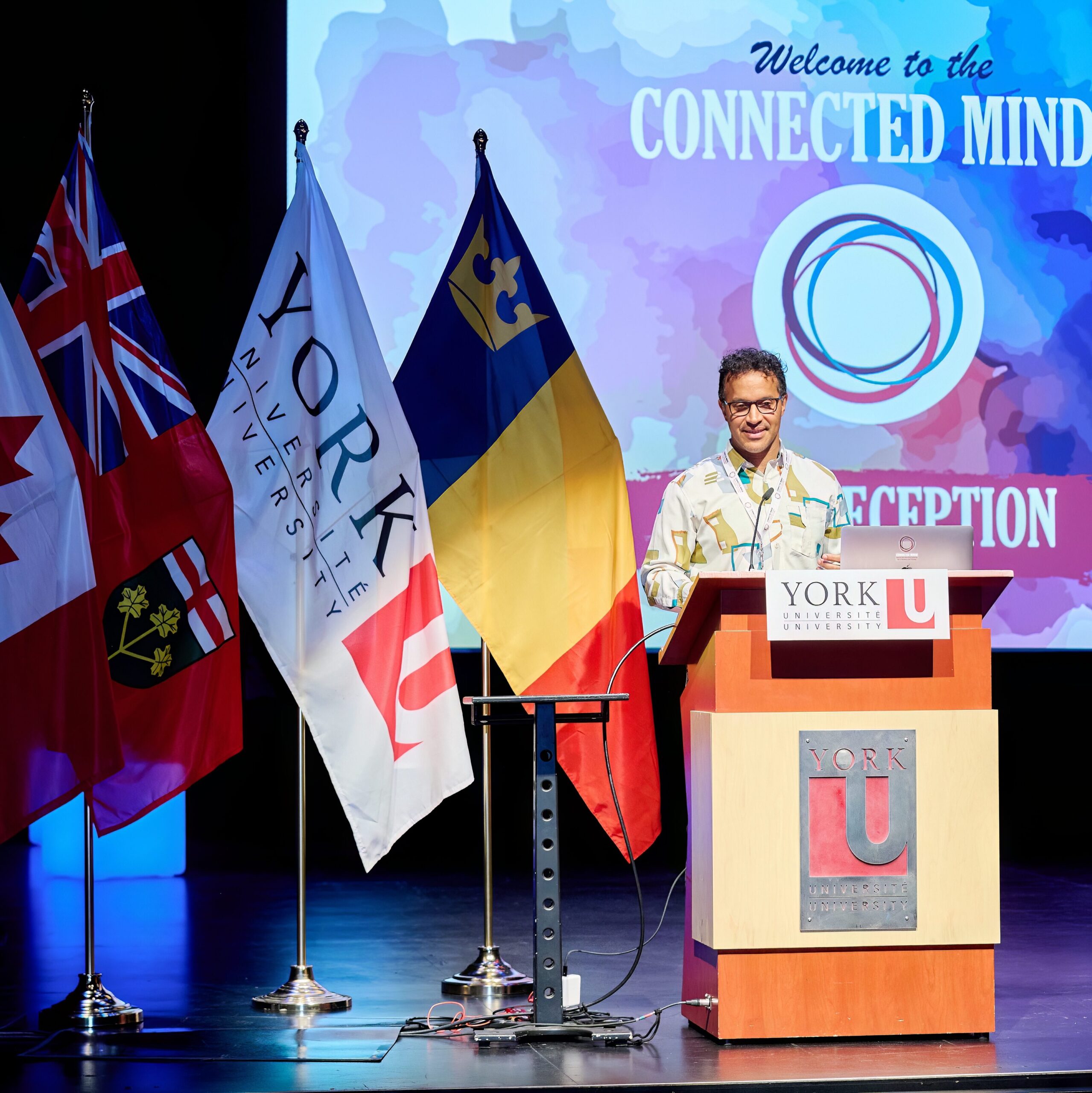
The evening also made space for thoughtful reflection. Michael Murray, CEO of the Ontario Arts Council, spoke about the realities facing artists today and how rapidly evolving technologies are reshaping the conditions in which creative work happens. He reminded us that supporting the arts means supporting the people behind them, especially at a time when digital tools and platforms are transforming how artists create and sustain their practise. His message underscored that the future of innovation must include the futures of artists, whose work helps society make meaning in an increasingly technological world.
We also heard from Margaret McGuffin, CEO of Music Publishers Canada, and Steven Smith, Vice-Principal Research at Queen’s University, who echoed these sentiments. They reflected on how a program like Connected Minds demonstrates what can happen when the arts are not placed on the periphery of innovation, but at its center. Both emphasized that creativity fuels discovery, and that the integration of artistic thinking within research and technology is essential for building a more inclusive, imaginative, and forward-looking future.
Connected Minds Artists-in-Residence Ar Ducao and Gala Hernández López brought the creative heart of Connected Minds to the forefront, reflecting on what becomes possible when artistic practise is immersed in research and technological inquiry. Their stories revealed how interdisciplinary collaboration continues to stretch and deepen their work.
Below is a closer look at the installations that animated the evening.

Mark-David Hosale, Alan Macy, Alysia Michelle James
The body in/verse
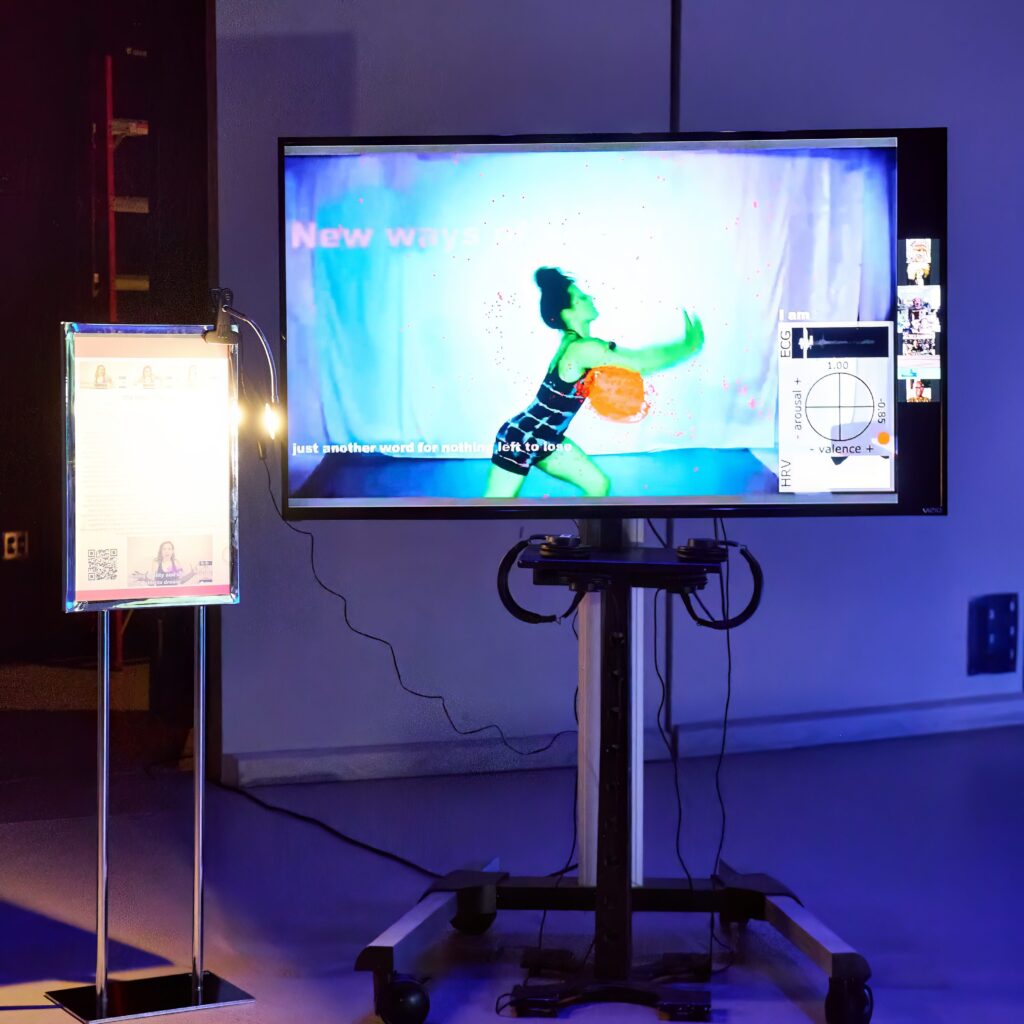
The body in/verse is an online, interactive performance that combines biophysical sensing, emotive state sonification and visualization, and generative poetry. Audience members participated in focused conversations about technology’s impact on our essential rhythms. These emotional states were then interpreted and visualized in real time, creating a layered experience that blurred the line between auditory, visual, and physical interaction.
Michael Wheeler, Matthew Pan, Eric Godden, Jacquie Groenewegen, Sayed Tabatabaei, Marcel Stewart, Adrienne Wong
Meta Physical Theatre (Alpha)
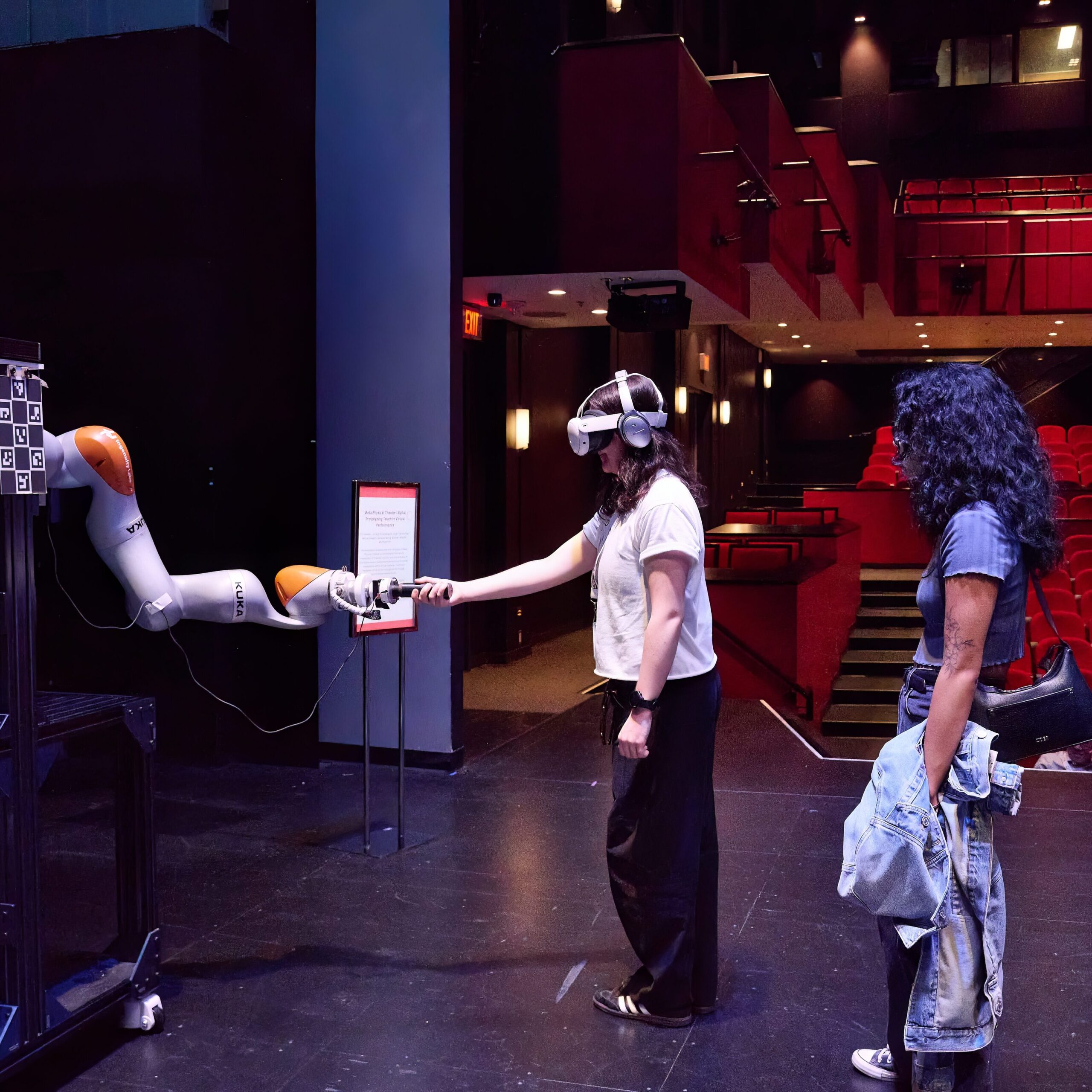
This installation presented the first prototype of Meta Physical Theatre, an emerging art form that lives at the intersection of theatre, robotics, and VR. Audience members experienced experimental interactions with a virtual character, such as a handover or a fist bump, brought to life through synchronized robotic touch. By reintroducing physical sensation into digital performance, the project explored how touch can deepen realism and connection in virtual spaces.
Dolleen Tisawii’ashii Manning, Christina Dovolis, Jorge De Oliveira, Luka Kuplowsky, Mary Bunch
Particulate Matter / Midge Swarm
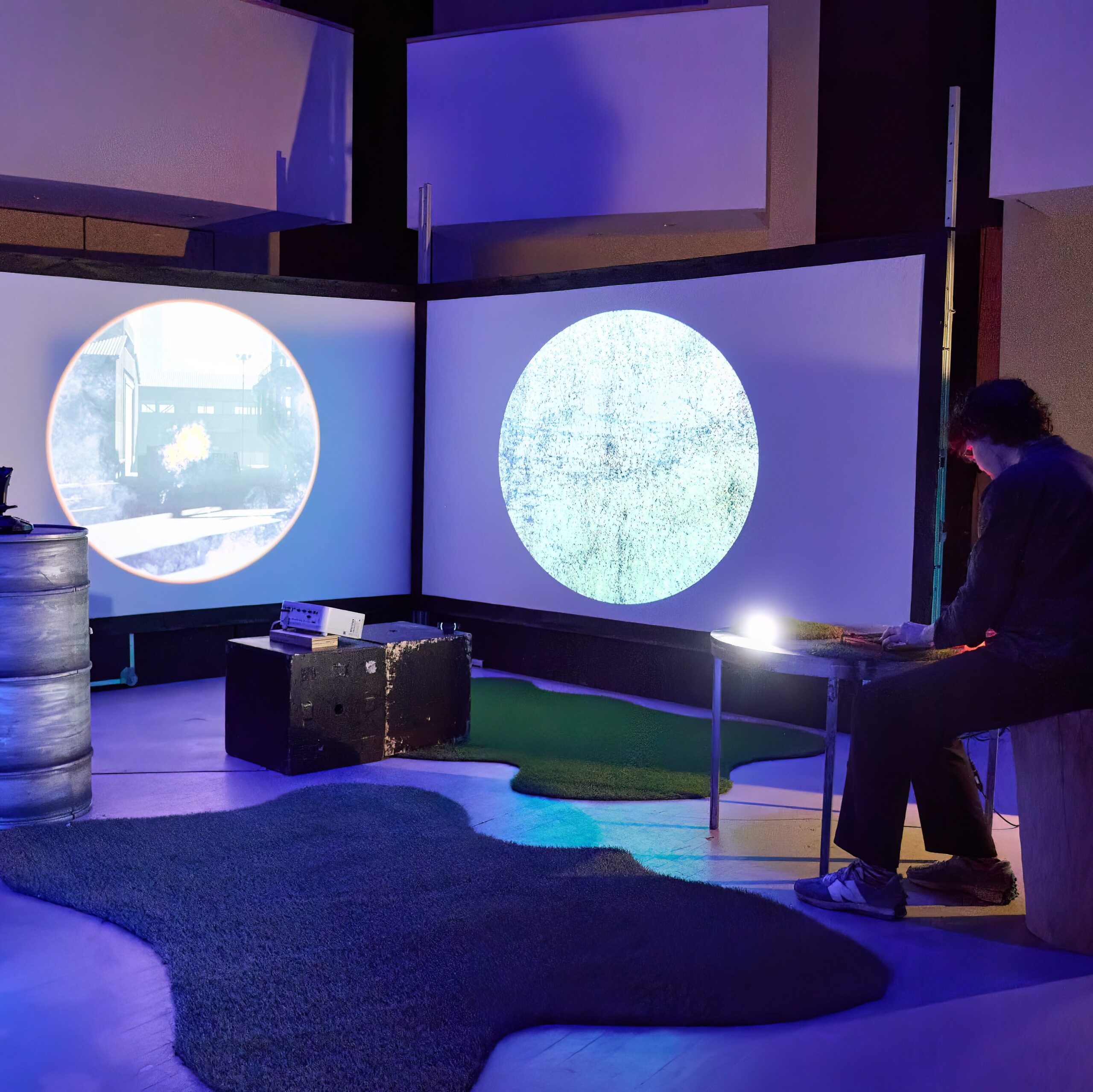
Two environments appeared side by side: a swirling particulate cloud over Chemical Valley in Sarnia/Aamjiwnaang First Nation and a wetland with swarming insects. As visitors moved through the space, shifting soundscapes of environmental noise and newscasts created a dialogue between human & more-than-human voices. It invited people to linger in both a thriving ecosystem and a toxic landscape, revealing the intertwined forces of capitalism, colonialism, and environmental harm.
Dolleen Tisawii’ashii Manning
Miiwaajimo (Tells a good story)
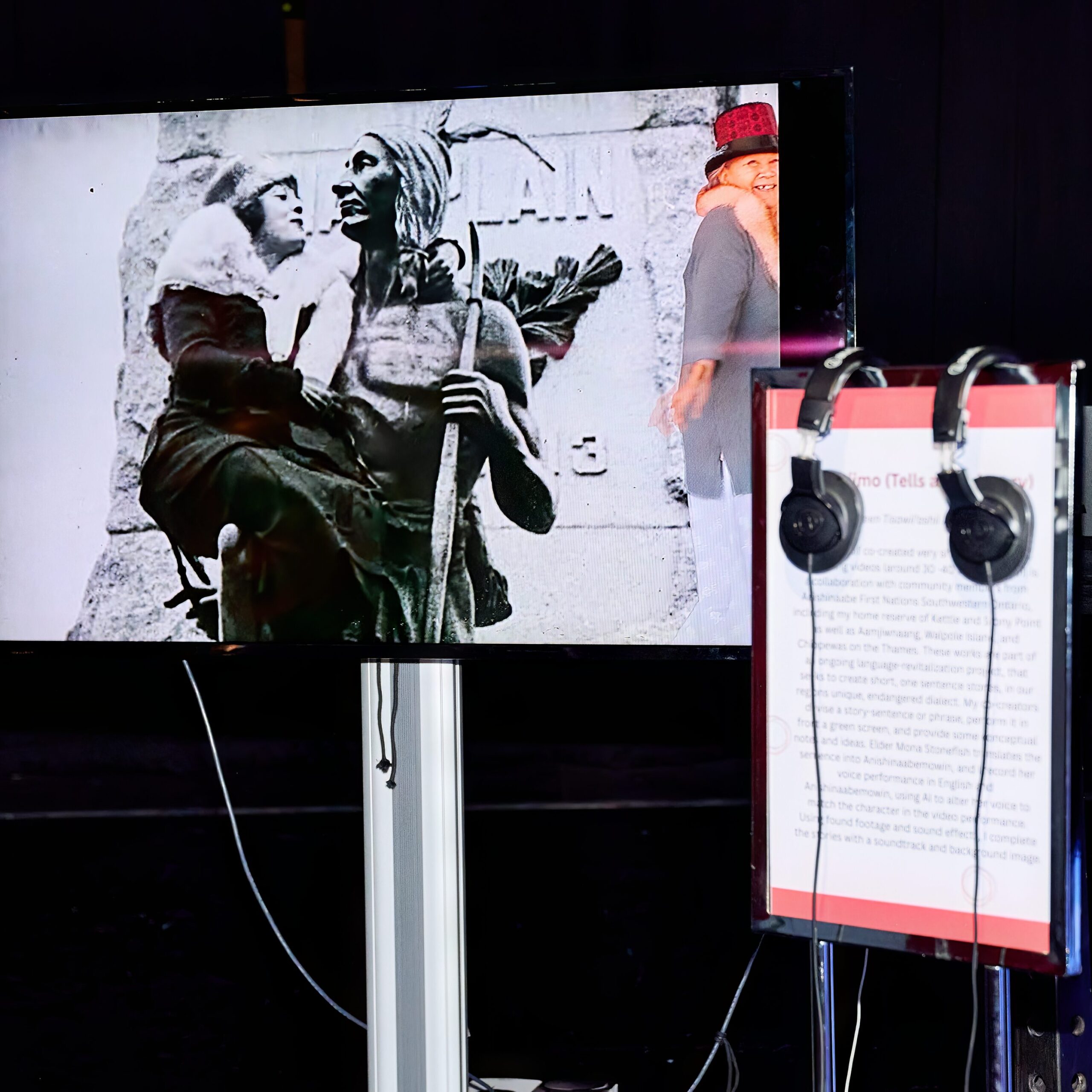
This series of co-created green screen videos is part of a language revitalization project with Anishinaabe First Nations communities in Southwestern Ontario. Community members devised and performed short stories in their endangered regional dialect. Elder Mona Stonefish translated & voiced these narratives in Anishinaabemowin, with AI helping match her voice to the characters. The result is a powerful fusion of language, tech, and community storytelling.
Sihwa Park
Diffusion TV

Using a nostalgic CRT television, Diffusion TV invited audiences to explore the hidden processes of AI diffusion models. By adjusting knobs and antennas, participants navigated three channels, Past, Present, and Future, featuring extinct species, endangered animals, and speculative AI-generated creatures. The work prompted reflection on what is preserved and what is lost as technology reshapes our relationship with the natural world.
Taien Ng-Chan, Carmela Laganse
You Are What We Eat
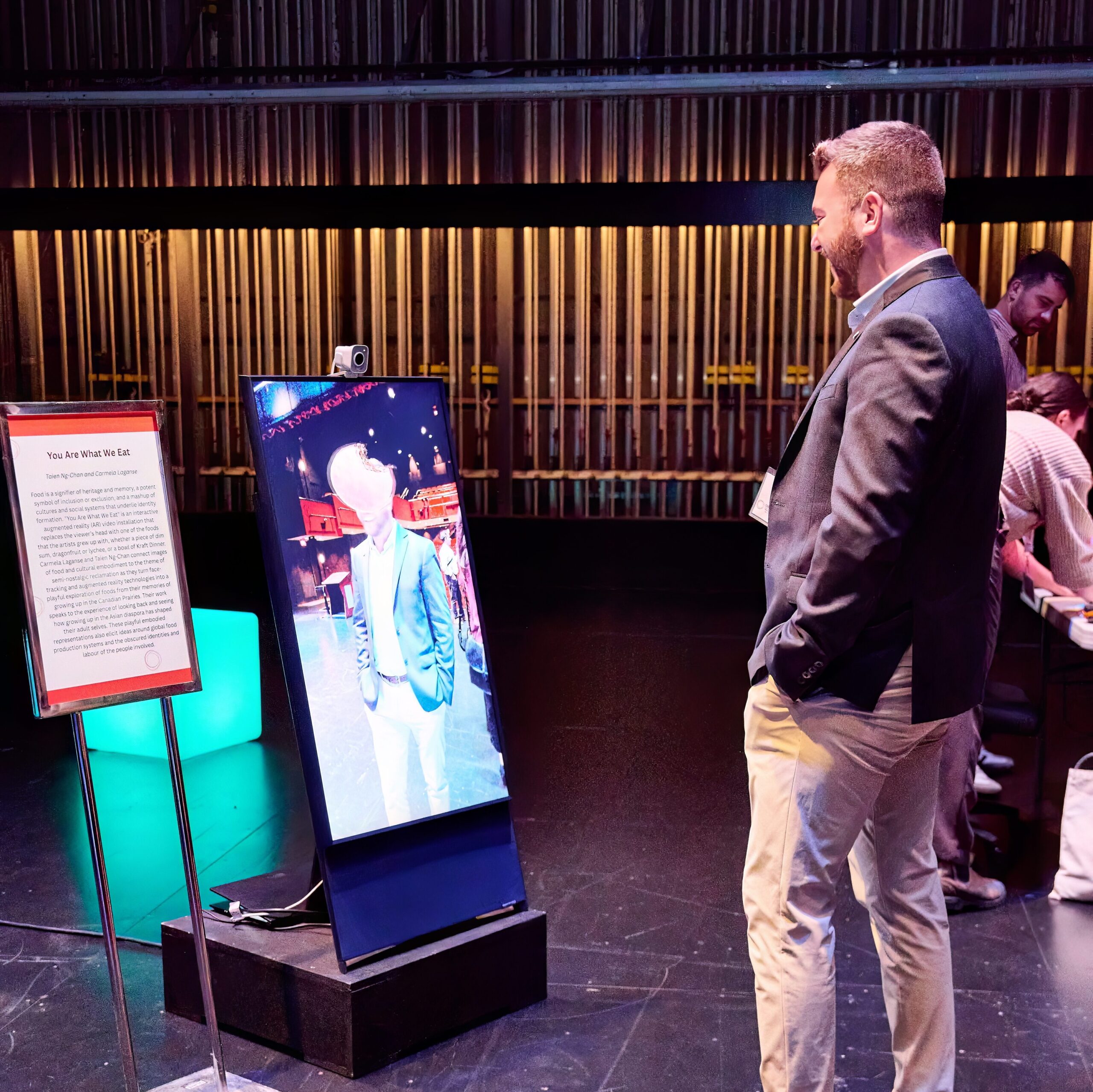
This playful and thought-provoking interactive AR installation replaced viewers’ heads with foods from the artists’ childhoods, from dim sum and lychee to Kraft Dinner. Through augmented reality, the work explored how food reflects heritage, memory, and identity, while also pointing toward the often-invisible global systems and labour behind what we eat.
Gunnar Blohm, Kai Zhuang, Rebecca Caines, Nora Rosenthal, Natalie King
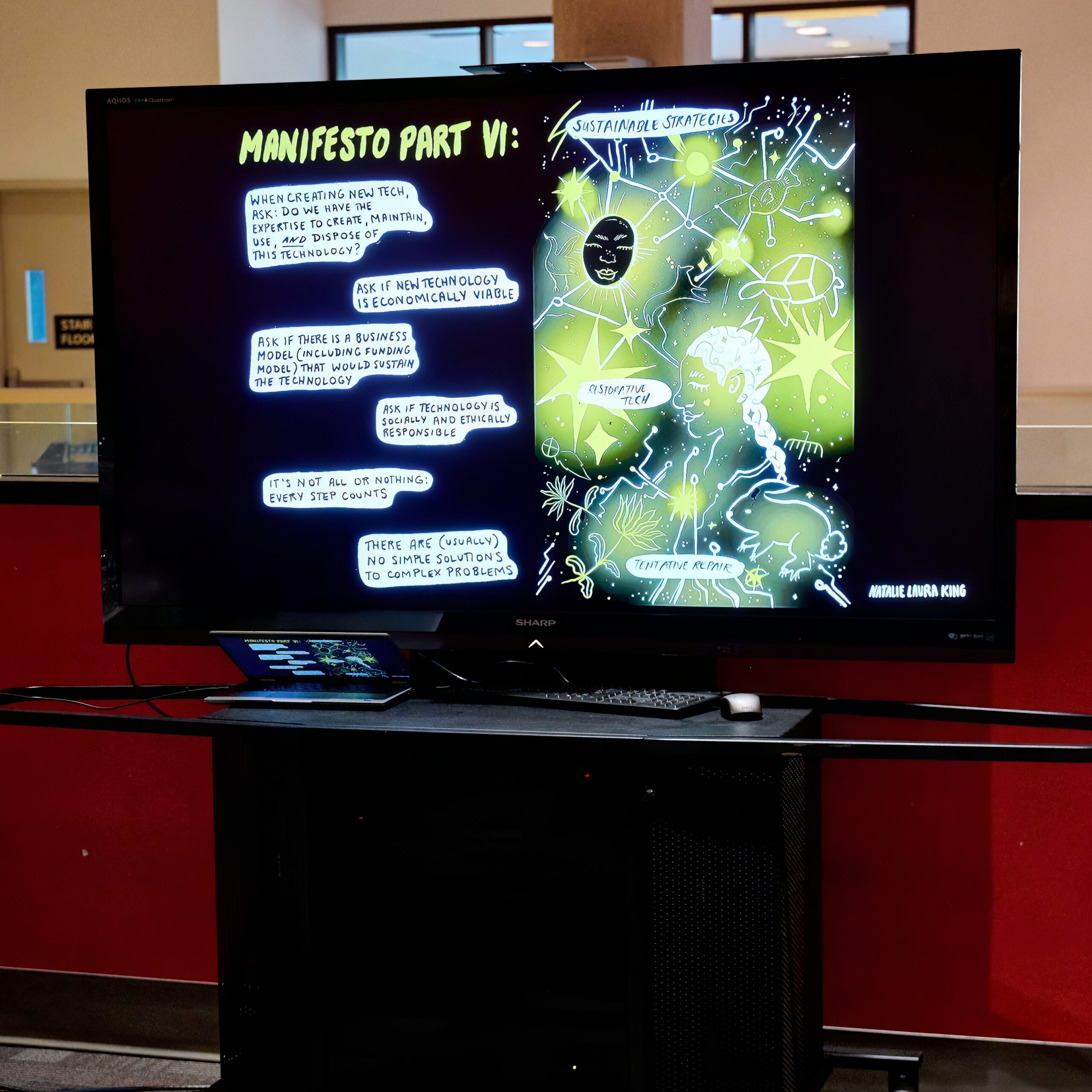
The Lizard Tech Manifesto [Work-in-Progress]
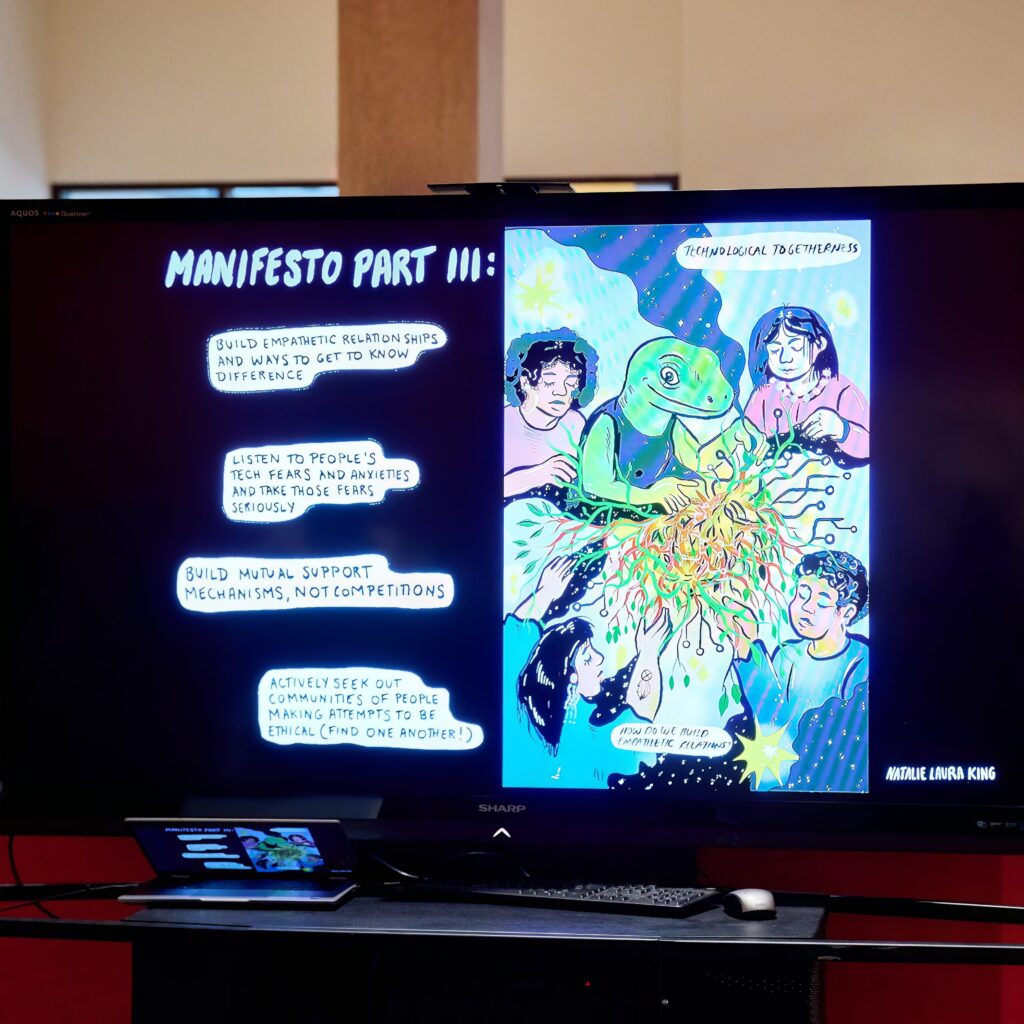
This collaborative project displayed digital progress images from a forthcoming full-length graphic novel, created by neuroscientists, engineers, and artists. The work examines the ethics of AI and neural-machine interfaces through the language of comics, showcasing interdisciplinary collaboration as both artistic method and subject.
Throughout the night, the reception embodied what Connected Minds strives for every day: creating spaces where boundaries dissolve and ideas move freely between disciplines. Our researchers work with AI, neuroscience, and emerging technologies to push boundaries, not just technically, but creatively, using these tools to tell stories, express identity, and imagine new ways of understanding the world. Through interactive installations, VR experiments, Indigenous storytelling, and AI-generated art, the evening revealed that technology is not only about systems and data, but about creativity, culture, and connection. Each work offered a glimpse into how Connected Minds researchers are shaping a more human-centered vision for innovation.
The reception offered a clear glimpse of what Connected Minds is building. When artists and researchers work side by side, new ways of understanding technology emerge, ways that center people, context, and lived experience. The evening reaffirmed that creativity is one of our program’s strongest tools for imagining responsible futures, and that our community thrives when ideas move freely across disciplines. It was a moment that brought the Connected Minds vision into focus and reminded us why this work matters.