
Post
Published on September 16, 2019
The 11th European Congress on Tropical Medicine and International Health (ECTMIH) will include a presentation titled Chemical water quality in inpatient therapeutic feeding centres: Potential risks to paediatric severe acute malnutrition patients and proposed management strategies. The presentation is based on research led by Research Fellow Syed Imran Ali, in partnership with an international team of researchers and practitioners.
This is the latest in a host of knowledge dissemination initiatives related to the project Chemical Water Quality & Malnourished Child Health (CWQ+SAM), including:
16th Annual Commonwealth Association Of Paediatric Gastroenterology & Nutrition Scientific Meeting (CAPGAN)
Upcoming
Dr. Ali will present a poster at this event which brings together pediatricians, gastroenterologists, nutrition experts and NGO’s to foster collaborative research, share and promote cutting edge knowledge and training in these fields.
Emergency Environmental Health Forum (EEHF)
Jeff Fesselet presented a poster titled Chemical Water Quality In Intensive Therapeutic Feeding Centres at the invitation of event organizers.
Médecins Sans Frontières (MSF) Scientific Days
Technical Advisor Matt Arnold presented a poster titled Electrolyte & mineral water quality in intensive therapeutic feeding centres: informing standards development.
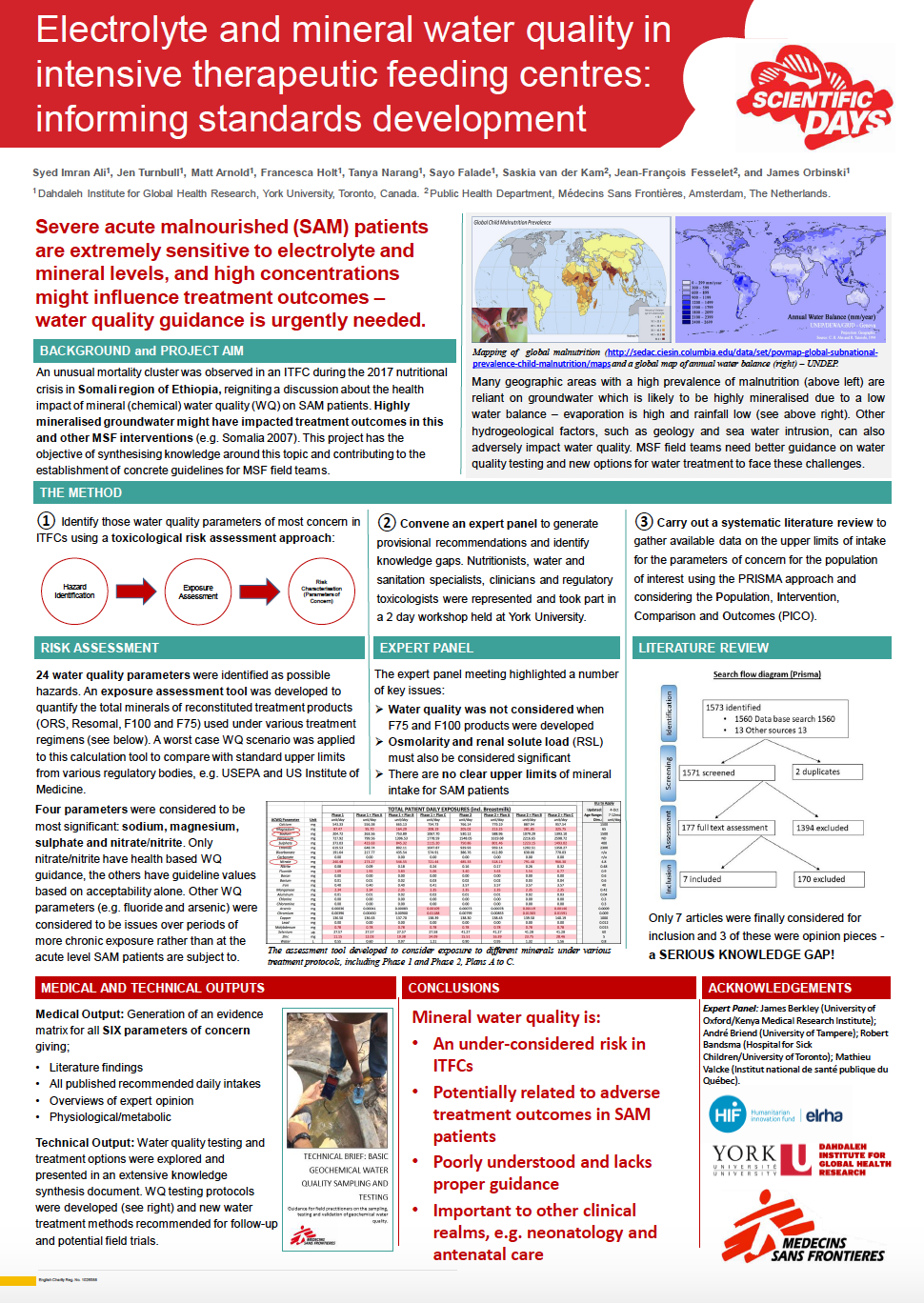
Poster presentation prepared for MSF Scientific Days 2019. Click to download.
Médecins Sans Frontières (MSF) Paediatrics Day
Team member Saskia van der Kam presented Chemical water quality risk assessment for pediatric severe acute malnutrition patients in inpatient therapeutic feeding centres.
International Association of Hydrogeologists (IAH) – Geochemistry and Health Seminar
The day offered six oral presentations on a range of different aspects of geochemistry and health and a space to exhibit posters to the audience during a dedicated session and other breaks in the main event. The CWQ+SAM project produced an A1 sized poster, and this generated considerable interest and questions from the attendees. As most of the presentations were about trace elements in water this was a unique opportunity to get this group to think about issues related to some of the major constituents and their impact on a particularly vulnerable sub-population. These are problems that they might not have to consider in the places they live and work. It also served as a reality check in terms of the treatment options that might be more logistically feasible in some settings, even in development contexts, as compared with the places that MSF works in during emergency interventions.
Themes | |
Status | |
Related Work |
Electrolyte and mineral water quality in intensive therapeutic feeding centres: informing standards development | Library, Research
Chemical Water Quality & Malnourished Child Health | Project, Research |
Updates |
N/A
|
People |
Syed Imran Ali, Research Fellow, Global Health and Humanitarianism - Active
Matthew Arnold, Technical Advisor, Safe Water Optimization Tool - Alum |