Skip to main content Skip to local navigation
Home » Page 22

Inclusion and exclusion in global production networks: The case of Myanmar migrant seafood processing workers in Thailand

The COVID-19 pandemic has exposed the vulnerability of global production networks (GPNs). Throughout the pandemic, GPNs have experienced disruptions as manufacturing facilities have closed and consumers have been placed under lockdown. The impacts of such disruption have led to the reduction in wages and unemployment of millions of factory workers across South and Southeast Asia, […]
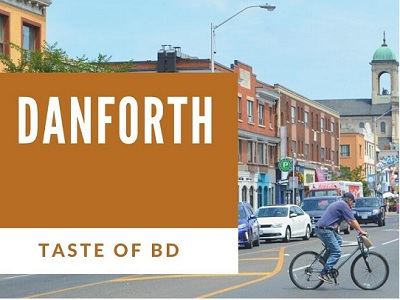
Civic diasporic organizations, cyberspace, and superdiverse locales: Bangladeshis in Toronto

The pandemic has altered the way civic diasporic organizations operate, with a recent rush towards digitized collaborations, activities, and service delivery. These unique multiscalar organizations have been an important part of the lives of residents in large cities across North America in recent decades, particularly in superdiverse migrant receiving neighbourhoods, vis-a-vis physical locations e.g., community […]

YCAR celebrates its 20th anniversary and Asian Heritage Month this May

This year, the York Centre for Asian Research (YCAR) marks a significant milestone: its 20th anniversary! YCAR was launched in 2002 to support and promote research that bring a multi-disciplinary perspective to the study of Asia (and its component nations) and Asian diaspora (in Canada and elsewhere). Through the activities of all our members, we have accomplished […]

Integrating UN Sustainable Development Goals in university curriculum, research, and partnerships

How have universities integrated the United Nations Sustainable Development Goals (UNSDGs) and what lessons might be learned and applied therein? This is the key question that Nicole Arsenault, MES alumnus and Program Director of York’s Office of Sustainability, sought to address in her MES Paper on The Role of Universities Towards a Sustainable Future: Integrating […]

Exploring and recreating ecologies that take shape between plants and people

At the ArtworxTO Hub West, 250 the East Mall, Etobicoke, a display is growing, quite literally, that looks to educate visitors on the relationship between the migrations of people and plants to the Toronto area.  The installation is primarily sound-based and draws on award winning artist and PhD candidate Alexandra Gelis’ research on plants and […]

York-produced data helps to tell impactful stories

Fifty years ago the Club of Rome called for a transition from growth to equilibrium, as they demonstrated through The Limits to Growth that humanity could not sustain another hundred  years of growth in material consumption, pollution, and population.  Since then, humanity’s Ecological Footprint has doubled and overshot the planet’s carrying capacity. York University’s Ecological […]

Eco-modulation: What is it, does it work, and how can it apply to packaging waste?

Calvin Lakhan, PhD and Co-Investigator, Waste Wiki Project Eco-modulation is a term that is gaining significant traction in recent legislative discussions surrounding extended producer responsibility for packaging waste. While eco-modulation is not a new concept, its application to managing end of life packaging waste is still in its relative naissancey. This article attempts to shed […]

In communication with Semaa: Exploring floral nectar secretion in Nicotiana rustica

by Kennedy Halvorson My MES research partnered with Semaa (Nicotiana rustica; Goodspeed, 1954), a species of wild tobacco, to better understand the dynamics of their nectar secretion and reveal potential pollinator associations. This research is part of Finding Flowers, an interdisciplinary project of Drs. Lisa Myers and Sheila Colla that integrates art, ecology and education […]

Everyday politics of migrant women at the Mexico-Guatemala U.S. proxy border

How is violence targeted at people leaving Northern Central America to southern Mexico gendered? How do migrant women navigate and contest this violence? And what is the relationship between spectacularized representations of displaced peoples’ lives, bodies and actions and conventional geopolitics of displacement in the Americas? These are questions that SSHRC and GFAD doctoral candidate […]