Skip to main content Skip to local navigation
Home » Posts tagged 'About EUC' (Page 33)

About EUC

EUC Research Update - September 2022

Welcome to the September 2022 edition of the EUC Research Update  - bringing you highlights from research activities at York's Faculty of Environmental & Urban Change. We invite you to view our past updates on our Research News page. Research Spotlights This month’s Research Spotlights feature EUC undergraduate students who were awarded NSERC & EUC […]

Understanding the historical, cultural, and political relevance of Indigenous Treaty Rights

by Trevor Doe This summer I was honoured to be one of four undergraduate students within the Faculty of Environmental and Urban Change to receive an inaugural EUC Undergraduate Research Award (EUCURA). This award allowed me to work directly with Professor Martha Stiegman on her “Polishing the Chain: Treaty Relations in Toronto” seminar series, as […]

Cormorant sourcing of anthropogenic nest material in Tommy Thompson Park

by Ashraf Hutchcraft Learning that I was selected for one of EUC's Undergraduate Research Awards (EUCURA) to work with Professor Gail Fraser on research of cormorants was a welcome surprise!  I went into this project with no previous experience in field work, and an expectation of what it would be like.  Throughout the summer months that we were […]

Market ‘correction’ provides opportunity for GTA housing policy reset

The housing “crisis” has created an opportunity of a “reset” to stabilize the Greater Toronto Area’s housing market and development pathway. by Mark Winfield A defining feature of discussions around housing in the Greater Toronto Area over the past few years has been the notion of an affordability ‘crisis,’ as housing prices rose dramatically. Spillover […]

Testing a rapid laboratory method for tracking permafrost thaw slump activity

by Claire O'Hagan Permafrost is permanently frozen ground, and is critical to the ecosystem health and function in northern landscapes. It is important for maintaining the stability of the soil, as well as the welfare of the organisms that inhabit northern areas. Permafrost thaw, ongoing as a result of anthropogenic climate change, has increased the […]

HONOREBEL

ZigZag Gallery, opening September 8, 2022 An exhibition in celebration of Honor Ford-Smith on her retirement, featuring visual art by her former students Anique Jordan, Charmaine Lurch, Mosa McNeilly, Nastassia Pratt, Shuxia Tai and Camille Turner. Retiring EUC Professor Dr. Honor Ford-Smith has worked at the crossroads of performance, politics and Caribbean culture for decades. […]

EUC Research Update - August 2022

Welcome to the August 2022 edition of the EUC Research Update  - bringing you highlights from research activities at York's Faculty of Environmental & Urban Change. We invite you to view our past updates on our Research News page. Research Spotlights Roger Keil on how COVID-19 lockdown measures — and their outcomes — varied in […]

All about bees: Common misconceptions, helping pollinators and how to actually ‘save the bees’

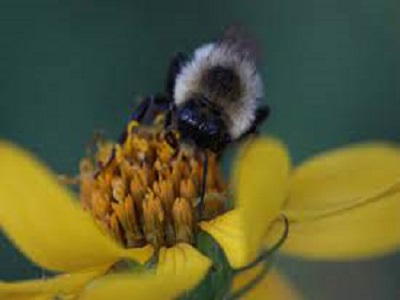
A Garden for the Rusty-Patched Bumblebee: Creating Habitat Gardens for Native Pollinators is an inspiring and practical guide that will help gardeners create habitats full of life and learn about what is needed to take action to support and protect pollinators  By Lorraine Johnson and Sheila Colla Native, or “wild” bees — that is, bees that occur naturally […]

Professor honours the citizen-taxpayer with enduring gesture

Faculty of Environmental & Urban Change Professor L. Anders Sandberg has taken an unusual step to install a commemorative bench on York University’s Keele Campus as a way to highlight the important role of citizen-taxpayers in society. Sandberg says he was inspired to sponsor a bench that is situated on the Harry W. Arthurs Common at the […]

Mobilizing the Arts for Change

The arts, culture and the humanities offer creative ways to understand, question, and change, the relationship between human societies and the natural environment. EUC researchers are exploring how we think about the natural world through alternative, and especially Indigenous, forms of environmental knowledge; how scientific and cultural knowledge can work in unison; and how racialized, […]