

kristin.ciupa@uregina.cahttps://www.uregina.ca/arts/sociology-social-studies/directory/faculty/ciupa-k.html
Kristin Ciupa
Kristin Ciupa is an Associate Professor in the Department of Sociology and Social Studies at the University of Regina. Her research explores the intersection of law, markets, technology and power relations, and how they shape contemporary forms of extractive capitalism. She is the author of The Political Economy of Oil in Venezuela: Class Conflict, the State and the World Market (Brill, 2026) and co-editor with Jeffery R. Webber of The Labor of Extraction in Latin America (Rowman and Littlefield, 2024).

Jorge.Vasquez@uregina.cahttps://www.uregina.ca/arts/sociology-social-studies/directory/faculty/vasquez-j.html
Jorge Daniel Vasquez

Dolores Figueroa Romero
Generally speaking my academic interests are focused on the gender politics of indigenous movements, the political participation of indigenous women in the public realms and the subjective construction of indigenous leaders as mediators of their communities in different levels of governance.
My analytical work is located at the intersection of debates on indigenous women’s identity politics in Latin America, transnational feminism, and the politics of the adoption of human rights discourse at global and local levels. I have been interested during the last years on exploring the correlation of Indigenous women transnational activism and the proliferation of learning experiences for building leadership capacities. In particular I analyze the structure of opportunities that have forged the networking process of indigenous women at the continental level and how the political leverage of indigenous women leaders has been instrumental in its consolidation. In the context of Mexico I have been involved in process of strengthening capacities of local women leaders who want to participate in electoral and community politics alike.
Country(ies) or Region(s) of Specialization: Mexico, Nicaragua and transnational spaces created to consolidate Indigenous women´s regional organizations
Keywords: Gender, human rights, justice, indigenous identity politics, transnational activism and political participation

Department Head and Associate Professor of Politics and International Studies at the University of Regina
Simon.Granovsky-Larsen@uregina.cahttps://www.uregina.ca/arts/politics-international-studies/directory/granovsky-larsen-s.html
Simon Granovsky-Larsen
Dr. Simon Granovsky-Larsen is Department Head and Associate Professor of Politics and International Studies at the University of Regina. His interdisciplinary research is situated within critical development studies, and explores environmental conflict, social movements, and political violence in Central America. Simon is an Associate Fellow of York University’s Centre for Research on Latin America and the Caribbean, and he collaborates frequently with universities and social movements in Costa Rica, Guatemala, Mexico, and Panama.
Secretary
Patricia Harms
My research focuses on women and gender in Latin America with a particular emphasis on Guatemala and Central America. I am intrigued by people’s attempts to radically transform their societies and why and when these efforts succeed. I am particularly interested in the role of gender and political power and how these ideas are used to sustain or transform socio-political systems.

Adjunct Professor (professeure associée) in the Department of History at the Université du Québec
Rachel Hatcher
Rachel Hatcher is an Adjunct Professor (professeure associée) in the Department of History at the Université du Québec à Montréal and co-director of the Réseau d’Études Latino-américaines de Montréal (RÉLAM). Her research explores questions related to transitional justice, the antidemocratic right, human rights, and memory in Central America. Her most recent research analyses Guatemala's Fundacion contra el Terrorismo, an important actor in processes of democratic erosion and the capture of the country’s judicial system. She researches the Fundacion’s on- and off-line activities and the ways the organization dehumanizes and others human rights defenders and anti-impunity actors. Her research has appeared in the Journal of Politics of Latin America, the Journal of Perpetrator Research, the Public Historian, and the Canadian Journal of Latin American and Caribbean Studies, among others.

Research Fellow, Toronto Metropolitan University, Canada
John Hayes
John P. Hayes, PhD, is a Political Scientist interested in the renewable energy transition, the extractive industries, and environmental politics. He is currently a Postdoctoral Research Associate at the University of Calgary.

Luisa Isidro Herrera
Luisa Isidro-Herrera is a PhD candidate in Social Anthropology. Her doctoral research focuses on the feminized and peasant-driven struggle of ex-FARC-EP women, examining how their search for missing persons in the Colombian post-conflict era constitutes a form of historical meaning-making in the current transitional process. Her research aims to demonstrate how ex-combatant women function as crucial historical agents, challenging systemic silences and generating alternative epistemologies of conflict, memory, and social transformation in post-conflict Colombia. Drawing upon anthropology of revolution, historical memory, and feminist decolonial approaches such as Body-Territory, she traces how these women embody personal and collective experiences around land and insurgency into powerful narratives of resistance.
Her research interests include the aftermaths of revolutions, historical memory, forensic anthropology, Andean epistemologies, and the embodiment of lived experiences.

Associate Professor, Department of History, University of Calgary, Canada.
Amelia Kiddle
Dr. Kiddle is Associate Professor of Latin American history and Associate Dean, Research in the Faculty of Arts. She specializes in the political and cultural history of Mexican foreign relations and received the Killam SSHRC Emerging Research Leader Award from the University of Calgary in 2014. She is the co-author of the Historical Dictionary of Mexico (Rowman & Littlefield, 2024) and she has published articles in the Journal of Latin American Studies, ISTOR. Revista de Historia Internacional, The Oxford Research Encyclopedia of Latin American History, The Jahrbuch fur Geschichte Lateinamerikas - Anuario de Historia de America Latina, The Latin Americanist, and Mexican Studies/Estudios Mexicanos. Her co-edited volume with María L.O. Muñoz, Populism in Twentieth Century Mexico: The Presidencies of Lázaro Cárdenas and Luis Echeverría was published by the University of Arizona Press in 2010. Her first monograph, Mexico's Relations with Latin America during the Cárdenas Era, which is based upon her University of Arizona doctoral dissertation (winner of the 2010 Premio Genaro Estrada from the Mexican Ministry of Foreign Affairs) was published by the University of New Mexico Press in 2016.
As an outgrowth of this project, she developed an interest in the Mexican oil expropriation of 1938's place in inter-American affairs. She and her colleague in Mexico, Cecilia Zuleta published an anthology of newspaper articles from Latin America reacting to the expropriation and she is completing a book tentatively titled The Mexican Oil Expropriation of 1938 and the Roots of Resource Nationalism in Latin America, a project which is supported by an Insight Grant from the Social Science and Humanities Research Council of Canada. Dr. Kiddle spent 2017-2018 working on this project as a fellow of the Calgary Institute for the Humanities. http://arts.ucalgary.ca/cih/ Her most recent edited volume, Energy in the Americas: Critical Reflections on Energy and History, which was the result of a SSHRC-supported conference of the same name held in 2014, was published in 2021 by the University of Calgary Press.
As well as supervising undergraduate and graduate students in Latin American history at the University of Calgary, she welcomes Latin American students to work with her in Calgary through the Mitacs Globalink Research Internship Program https://www.mitacs.ca/en/programs/globalink/globalink-research-internship and the Government of Canada's Emerging Research Leaders in the Americas Program (ELAP) http://www.scholarships-bourses.gc.ca/scholarships-bourses/can/institutions/elap-pfla.aspx?lang=eng

Assistant Professor, Department of Political Science, University of Toronto, Canada
Ex-Officio
donald.kingsbury@gmail.comhttps://www.politics.utoronto.ca/people/directories/all-faculty/donald-kingsbury
Donald Kingsbury
Donald Kingsbury studies and teaches Latin American Politics, Extractivism, and Political Ecology. He is author, most recently, of Populist Moments and Extractive States in Ecuador and Venezuela: The People’s Oil? with Teresa Kramarz (Palgrave, 2021) as well as articles on decarbonization in the Americas. Don’s current research examines the politics of lithium mining and energy transitions in the Americas.

Ph.D Candidate in Politics, York University, Canada
Chris Little
Chris Little is a PhD candidate in the Department of Politics at York University. His doctoral dissertation research looks at transnational processes of agrarian change and agricultural labour migration between Guatemala and Canada. The work is rooted in labour-centred field research with migrant farmworkers, so as to foreground their perspectives on agriculture and their role within it, both in Canada and back home in Guatemala. His most recent publication is a chapter entitled 'The Extraction of Migrant Labor-Power' in the edited volume The Labor of Extraction in Latin America, published by Rowman and Littlefield. He is an Assistant Editor at the Socialist Register.

Associate Professor, Department of Sociology, Wilfrid Laurier University, Canada.
Ex-Officio
Lucy Luccisano
After receiving my PhD in Sociology from York University in 2002, I joined the Sociology and Anthropology Department at Wilfrid Laurier University in 2002. I teach courses in the undergraduate program, including Introduction to Sociology, Gender and Development, Poverty and Social Inequality as well as courses in the sociology graduate program.
My research falls within the areas of political sociology, international development and gender, Mexican social policy and comparative urban policy and security in North America. My initial research on conditional cash-transfer program examined Mexican social policy as an example of global poverty alleviation trends. My later research examined the ways in which poverty programs were experienced by poor women and how social policy was intertwined with practices of clientelism and citizenship. My SSHRC Insight Development grant is a collaborative project with Paula Maurutto (University of Toronto), Laura Macdonald and Jill Wigle (Carleton University) which compares urban social policies and security Mexico City, New York City and Toronto.

Chancellor's Professor, Department of Political Science, Carleton University, Canada.
Ex-Officio
Laura Macdonald
Laura Macdonald is a Chancellor’s Professor in the Department of Political Science and the Institute of Political Economy at Carleton University, where she has taught since 1990. She has published numerous articles in journals and edited collections on such issues as the role of non-governmental organizations in development, global civil society, citizenship struggles in Latin America, Mexican politics, theories of regionalism, Canadian development assistance, the political impact of North American integration and the rights of temporary foreign workers in Canada. She has edited six books and is author or co-author of two books. She currently has a grant from Social Sciences and Humanities Research Council of Canada to study transnational activism in North America, with a special focus on labour rights, migrant rights, and human rights in Mexico. Other recent work looks at Canada’s role in Latin America, policies to reduce crime and violence in Mexico City, and gender and trade. She is currently President of the Canadian Association of Latin American and Caribbean Studies.

PhD Candidate in Sociology (Social Justice), University of Windsor
Laisa Massarenti Hosoya

Director, Institute of Feminist and Gender Studies Associate Professor, School of Political Studies Faculty of Social Sciences
Vice-President
Marie-Josée Massicotte
Marie-Josée Massicotte is associate professor at the School of Political Studies. Her main fields of research include social mouvements and collective action, international political economy and alternative economies (diverse, solidarity economies), globalization, power and global governance, food politics, as well as social and environmental justice. She is director of the new Laboratory for the Interdisciplinary Study of Food at the Faculty of Social Sciences. She is pursuing her research analyzing Brazilian and Mexican peasant movements and agricultural trade politics. Marie-Josée is also interested in questions related to methodologies linked to research action, the interaction between theory and practice, and knowledge production emerging from activist practices at multiple scales, like with the World Social Forum processes since 2001 www.massicotteresearch.com

Assistant Professor of Sociology at the University of Calgary
Laura Montes de Oca
In 2025, I became an assistant professor of sociology at the University of Calgary. Between 2013 and 2024, I worked as a full-time research professor with the Institute of Social Research at the National Autonomous University of Mexico.
As a teacher and researcher, I am committed to constructing and sharing knowledge with students, colleagues, and the broader community. My research has focused on three main topics: non-profit organizations and participatory governance in Mexico, collective action and social change in contemporary societies, and Latin American women in Canada.

Adjunct Faculty Fellow, Schulich School of Business
Jean-Jacques Rousseau
Keywords: Artificial Intelligence, Inclusive Innovation, Epistemology, Philosophy of Science, Mathematics Education
Associate Professor, Faculty of Liberal Arts and Professional Studies
Vice-President
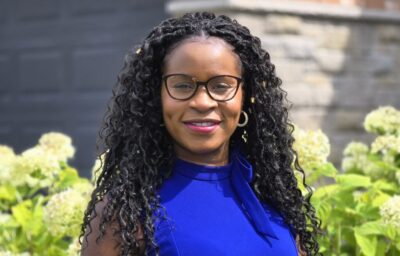
Tameka Samuel-Jones
Dr. Tameka Samuels-Jones is an Associate Professor at York University and Co-Director of York University’s Centre for Research on Latin America & the Caribbean. She teaches Corporate Social Responsibility & Sustainability and Justice, Governance & Accountability in the Global South. Her research interests include Canadian extractivism in the Caribbean, environmental crime & (in)justice, and Afro-Indigeneity in the Caribbean. She is dedicated to research which emphasizes inclusivity in the development of environmental policies and laws particularly in Afro-Indigenous countries in the Global South. Dr. Samuels-Jones has received numerous awards for her work in equity including the Canada Research Chairs' Robbins-Ollivier Award for Excellence in Equity. Dr. Samuels-Jones’ work has been published in various academic journals and presented at international conferences.