
Complex Communities is a specialized unit within the Community Safety Department. It collaborates with internal and external partners, including community agencies, York's Community Safety Officials, and departments across York University’s campuses to develop and implement a trauma-informed, collaborative engagement strategy for responding to homelessness and mental health crises on our campuses. The unit’s central aim is to enhance engagement with marginalized communities, foster trust, and inform safety policies that reflect and advance the University’s commitment to equity, diversity, and inclusion goals.
As part of the Community Safety Department’s shift toward a more community-centred safety model, the unit focuses on three core areas of work:
- Respond to immediate needs
- Capacity building in the York community
- Provide education & awareness
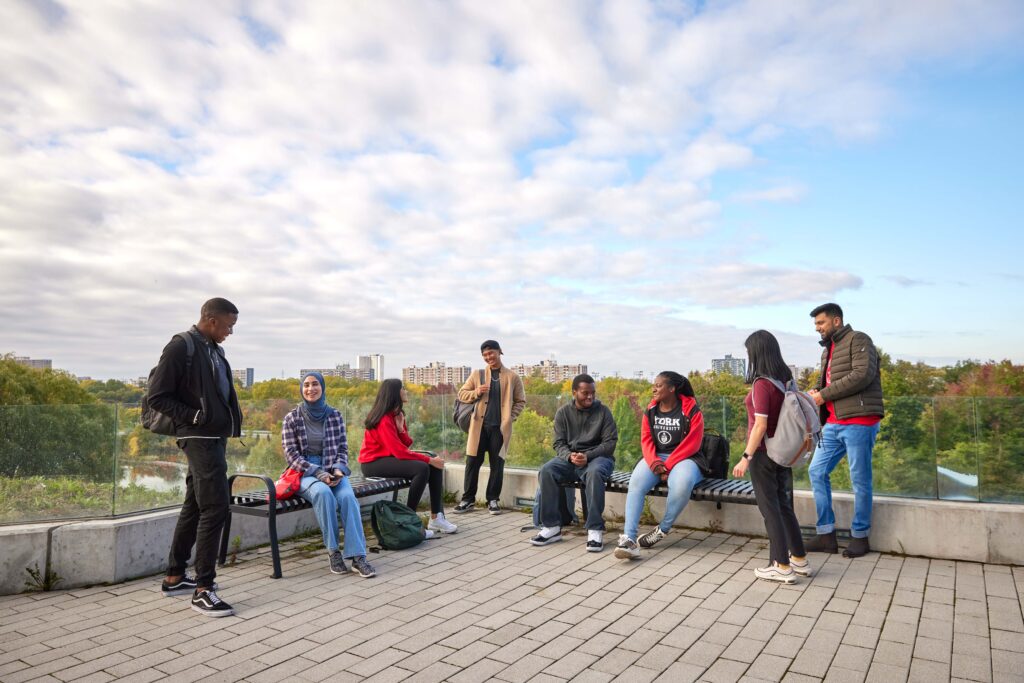
Building Capacity and Empowering Safety Awareness on Campus
Wanting to learn more about how to support someone in crisis on campus? Request a training for your team or department!
Complex Communities Manager Andrea Westbrook can join your team, virtually or in-person, for an interactive session focused on strengthening community safety through education, collaboration, and trauma-informed engagement. This training will equip participants with practical tools to recognize signs of distress, respond safely, and connect with campus resources — fostering a safer, more inclusive campus for all.
For more information email Complex Communities (ComplexC@yorku.ca)
New report - Post-Secondary Student Homelessness in Canada (2025)
New research published by the Post-secondary Student Homelessness/Housing Research Network indicates that up to one in four post-secondary students in Canada may experience homelessness at some point during their studies, while many more face housing precarity, couch surfing, unsafe accommodations, or the constant risk of losing housing.
Key Messages from the Research:
- Across Canada, up to one in four post-secondary students willexperience homelessness, yet the crisis remains widely overlooked.
- Students from marginalized groups are most affected, under scoring the need for immediate institutional action.
- Post-secondary student homelessness is associated with a wide range of harms, from shame and isolation to domestic violence and interrupted studies.
- The most common cause of homelessness for post-secondary students is financial precarity, which means it—and its associated harms—can be prevented by improving student financial stability.
- The second leading cause is domestic violence, which shows how homelessness intersects with another key institutional priority.
- Post-secondary students who have experienced homelessness and institution staff agree that increasing awareness of existing resources is the most important step in combatting student homelessness. (Homeless Hub, 2025)
How do I connect with Complex Communities?
You can connect with Complex Communities in the following ways, depending on your need:
Concerned about someone on campus who is unhoused?
- Call the Security Control Centre (416-650-8000) and request Complex Communities to come out to your location to meet with someone.
- If someone from Complex Communities is not available or it is after business hours, York Security Services can respond and/or if you are a member of the York community (staff, faculty, student) you can submit a request through the Complex Communities Referral Link with as many details as you can about the person you are concerned about.
Looking to consult around an issue, get some information, or ask a question about anything related to homelessness, mental health, and crisis support?
- Email Complex Communities (ComplexC@yorku.ca) your question, consultation request, or to request a time to connect to discuss your inquiry.
Resources

(updated Fall 2026)


Contacts
Krystle Skeete: Director, Community Safety Services
kskeete@yorku.ca
416-736-2100 x55258
Andrea Watters Westbrook: Manager, Complex Communities
andreaww@yorku.ca
General information
ComplexC@yorku.ca