



Date & Time
- DATES: DEC 2 | JAN 6 | FEB 3
- Time: 11:00 AM - 12:30 PM EST;
12:00 PM - 1:00 PM EST;
12:00 PM - 1:30 PM EST - Location: VIRTUAL (ZOOM WEBINAR)
Register
Participants at a minimum of 50% of sessions will receive a certificate of attendance from CIFAL York
BACKGROUND
The menstrual cycle is a natural occurrence experienced by billions of individuals. Despite its commonality, the proper and respectful management of it still poses difficulties for many. This underscores the importance of menstrual equity, guaranteeing that all individuals have consistent access to essential items such as pads or tampons, precise reproductive health information, and secure amenities. According to the government of Canada, menstrual equity means making sure everyone who menstruates has access to the products, education, and support they need to manage their period with dignity. It is progressively acknowledged not only as a matter of cleanliness but as crucial to well-being, respect, and fundamental human rights, including access to healthcare, education, employment, and sanitation.
A significant challenge is the issue of period poverty, referring to the inadequate or non-existent access to menstrual products, suitable facilities, and education, often stemming from financial difficulties, societal taboos, or inadequate infrastructure. On a global scale, a vast number of individuals lack the means to effectively address menstruation-related needs.
Lacking menstrual equity significantly harms both physical and mental health. Without access to clean products and sanitation, individuals face increased risks of reproductive and urinary tract infections due to unhygienic practices and inadequate facilities. Poor menstrual health management and stigma create significant psychological stress, shame, and anxiety. The inability to manage menstruation hygienically and with dignity, compounded by secrecy and poverty, contributes significantly to negative mental health outcomes. Period poverty is linked to higher rates of anxiety and depression, reflecting the chronic stress of inadequate resource management.
Situations of crisis such as natural disasters or human conflicts serve to worsen the issue of period poverty significantly. Emergencies result in damage to WASH infrastructure, displacement without necessary provisions, disruption of economic activities and supply chains, and overburdening demand on social support systems, severely hindering individuals' capacity to address menstrual needs. Disasters intensify existing vulnerabilities associated with poverty and gender disparities, highlighting the urgent need for menstrual equity to be a key focus in humanitarian contexts and to be integrated into disaster response and recovery frameworks. Despite growing awareness, menstrual health remains an overlooked aspect of public health equity. We explore how modern technologies from mobile apps and wearable sensors to AI-driven health platforms are being leveraged to improve access, education, and care in menstrual health particularly
GOALS AND OBJECTIVES
The key goals and objectives of the webinar series are to:
- Understand period poverty and the range of social impacts
- Understand the pivotal role of education and awareness in combating and addressing menstrual stigma and shame.
- Develop the ability to articulate the intricate relationship between menstrual stigma and period poverty.
- Cultivate the capacity to engage in informed and constructive discussions on various aspects of menstruation.
- Understand how various social identities such as gender, sex, race, ethnicity, etc. intersect and the disproportionate impacts of period poverty among marginalized groups.
- Understand how disasters exacerbate menstruation-related challenges and how menstrual equity is connected to human rights.
- Understand common WASH infrastructure deficiencies in disasters and their impact on menstrual hygiene management (MHM).
- Discuss the links between inadequate MHM facilities, lack of privacy, and heightened risks, including gender-based violence.
- Understand best practices for an effective MHM response based on international guidelines and standards.
- Demonstrate practical challenges and response strategies.
- Compare and contrast different MHM supply distribution methods and best practices in disaster contexts.
- Discuss strategies to address MHM challenges in disaster and emergency contexts and how they can be implemented in the response and recovery frameworks of humanitarian programs.
- Understand physical health impacts of inadequate access to MHM supplies such as infection, Toxic Shock Syndrome, adverse reproductive health outcomes, and menstrual cycle disruptions from disaster-related stress.
- Understand psychosocial and mental health impacts of MHM challenges and disaster-related stress.
- Understand public health impacts and the potential links to negative outcomes due to inadequate access to MHM supplies.
- Identify the key physical health impacts associated with inadequate Menstrual Health and Hygiene (MHH).
- Recognize the mental health impacts of inadequate MHH and stigma.
- Engagement of wider society and in particular men and boys in menstrual equity.
- Identify vulnerable populations disproportionately affected by lack of menstrual equity.
- Identify potential strategies and interventions for advancing menstrual equity, including policy actions, NGO programs, and community initiatives.
- Identify the increasing role of AI and Technology for health equity and menstrual health.
- Understand how AI can address key barriers to menstrual equity, including period poverty, educational gaps, stigma, and lack of access to care.
- Identify and address ethical and privacy concerns when using AI in healthcare.
TARGET AUDIENCES
- Emergency Managers
- Humanitarian Aid Workers
- Government Policy Makers
- Public Health Workers
- Emergency Responders
- Feminist Researchers
- Humanitarian Program Managers
- Sexual and Reproductive Health Providers.
- Doctors and other Health Workers
- Education in Emergencies Educators
- Protection Officers
- Shelter Staff
- Supply Chain Managers
- Community Leaders
- Tech innovators
MENSTRUAL EQUITY 101 WORKSHOP: TUESDAY DECEMBER 2 11:00AM-12:30PM (EST)
WORKSHOP ABSTRACT
Menstrual Equity 101 (ME101) is an interactive and transformative workshop hosted by Free Periods Canada designed to equip you with the tools to fight period poverty, challenge the stigma surrounding menstrual health, and become a confident advocate for menstrual equity.
In this workshop, participants will:
- Gain a deepened understanding of period poverty and the intersection of social identities and their disproportionate effects on marginalized groups
- Learn about the relationship between menstrual health, stigma, and period poverty
- Build skills to participate in and navigate conversations about different facets of menstruation, tailored to the communities you support
Menstrual health is a public health and human rights issue that affects women, girls, Two-Spirit, non-binary, trans, and intersex folks around the world. We welcome all people, whether you menstruate or not, to join us in this experience.
Moderator: TBD

Facilitator: Lilaani Thangavadivelu (she/her)
Bilingual Workshop Facilitator, Menstrual Equity Education Program, Free Periods Canada; Master of Public Health Student, Epidemiology, Dalla Lana School of Public Health, University of Toronto

Facilitator: Qwisun Yoon-Potkins (she/her)
Sexual Health Educator, Menstrual Equity Education Program, Free Periods Canada

Facilitator: Priya Hiebert (they/them)
Bilingual Facilitator, Menstrual Equity Education Program, Free Periods Canada
WORKSHOP 2: TUESDAY JANUARY 6 12:00PM-1:00PM (EST)
Moderator: TBD

Speaker: Dr. Christo El Morr
Director, Centre for Feminist Research, York University; Professor, Health Informatics, York University
Topic: Health Impacts of menstrual inequity and inadequate access to MHM supplies and resources
WORKSHOP 3: TUESDAY FEBRUARY 3 12:00PM-1:30PM (EST)
Moderator: TBD

Speaker: Dr. Ali Asgary
Director, CIFAL York, York University; Professor, Disaster and Emergency Management, York University
Topic: Impacts of Disasters and Emergencies on MHM and equitable access to healthcare
Moderator: TBD
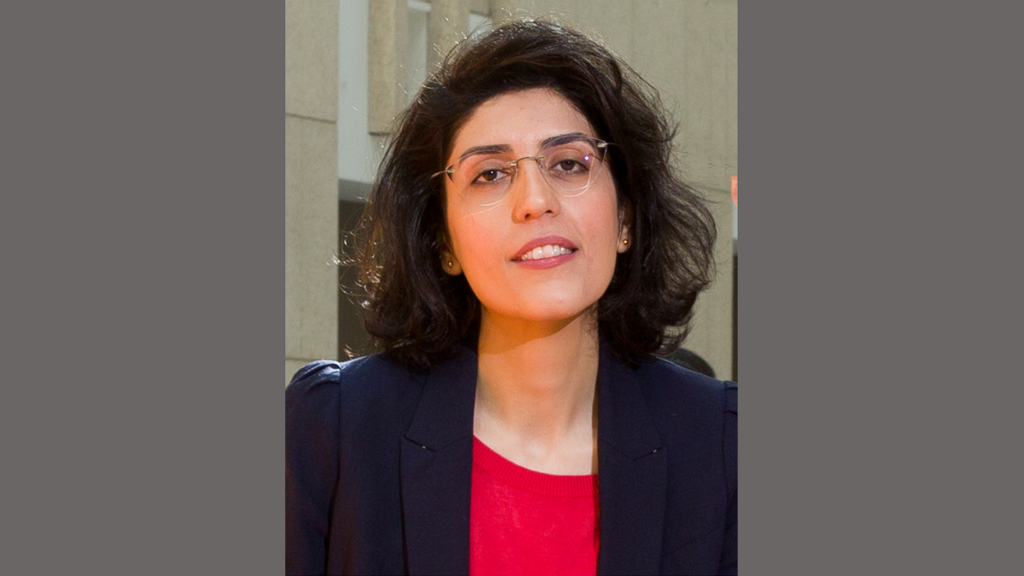
Speaker: Dr. Maleknaz Nayebi
Associate Director, CIFAL York, York University; Professor, Computer Science and Electrical Engineering, York University
Topic: Advancing Menstrual Health Equity Through Modern Technologies
Register
Organizers
CIFAL York is part of UNITAR's global network of training centres for knowledge-sharing, training, and capacity-building for public and private leaders, local authorities, and civil society. CIFAL Centres are local and regional hubs for innovative, participatory and co-creative knowledge exchange opportunities to support decision-making processes, build capacity, and accelerate the implementation of Sustainable Development Goals. Established in 2020, CIFAL York started its operation in June 2021 as the first CIFAL Centre in Canada. Health and Development training and knowledge sharing is among the key focusing areas of CIFAL York.
For more information or questions please contact: cifaldirector@yorku.ca
The Centre for Feminist Research / Le centre de recherches féministes promotes feminist activities and collaborative research at York University by consistently, working to establish and maintain research linkages between York scholars and local, national, international and transnational communities. Feminist research in it's broadest term may be conceived, as being concerned with issues of women, gender, class, race, sexuality, ability and feminism.
The CFR continues to welcome feminist initiatives from the arts, social sciences, sciences and engineering - bring your scholarship, creative works, policy papers, and ideas to share with like-minded colleagues! We especially welcome margin-to-centre feminist perspectives.
Free Periods Canada is a non-profit organization that is on a mission to make menstrual health equitable in Canada. We work with various organizations in an effort to break taboos and end the stigma surrounding menstruation. Since 2024, Free Periods Canada has hosted over 50 menstrual equity workshops to 500+ youth service providers and individuals across Canada.
Coordinator
Mx. Francesco del Carpio, CIFAL York - fdcarpio@yorku.ca