
Post
Published on November 7, 2024
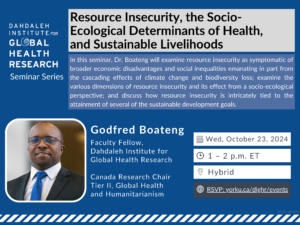
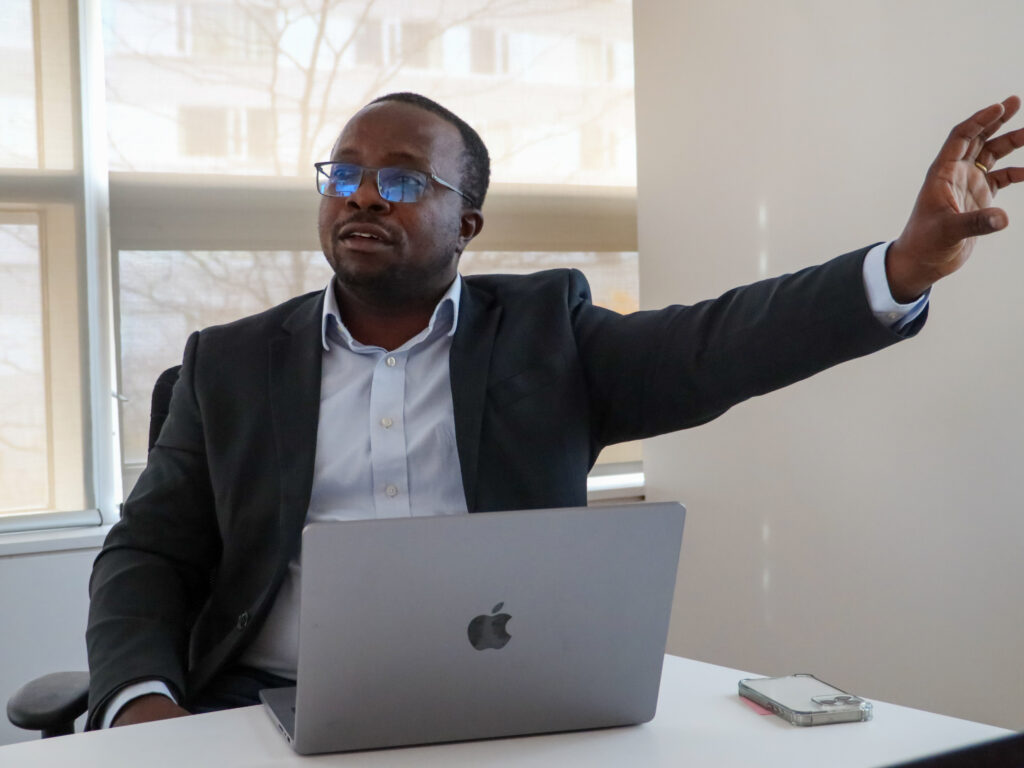
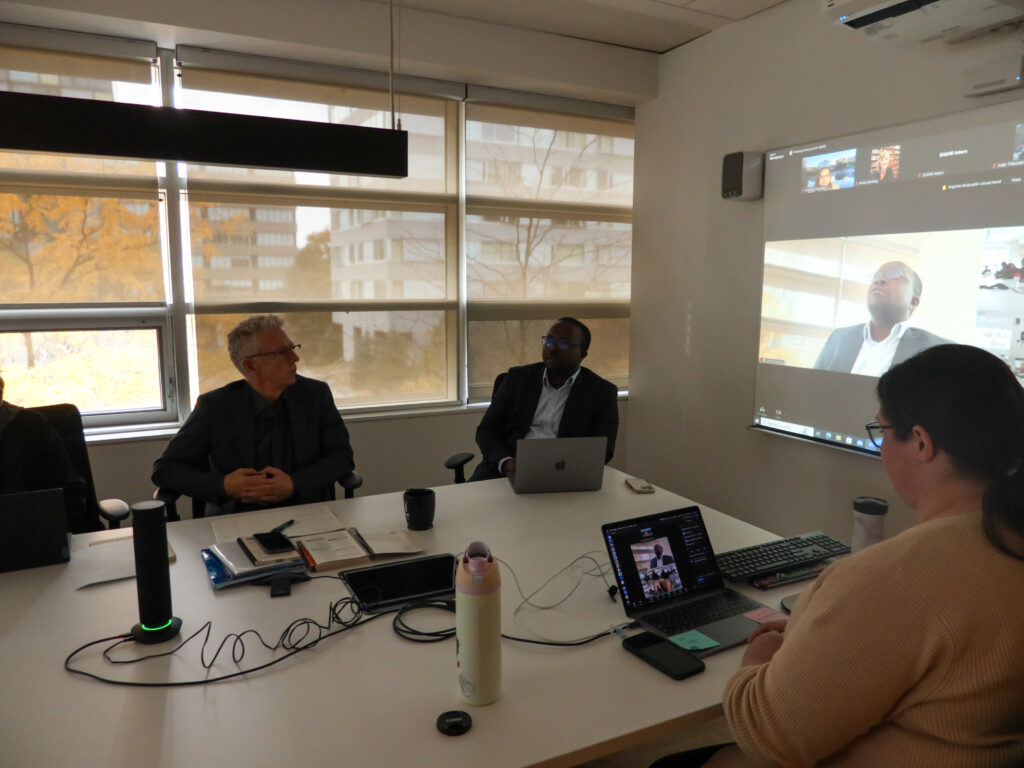
On October 23, Dahdaleh faculty fellow Professor Godfred Boateng examined how interconnected systems such as food, water, energy, and housing insecurity impact public health, particularly within vulnerable communities. Professor Boateng used the analogy of blind people describing different parts of an elephant to illustrate the multifaceted nature of resource insecurity. Just as each person perceives only a part of the elephant, researchers often address isolated aspects of complex health issues. Professor Boateng argued that without a comprehensive view, solutions remain incomplete and lack systemic effectiveness. He emphasized the importance of systems thinking in identifying relationships between various determinants and formulating sustainable interventions. This approach considers all the interconnected factors, aiming to understand how elements like resource availability and environmental change interact locally, nationally, and globally.
Most of the seminar focused on sustainable livelihoods linking resource availability with health outcomes. Professor Boateng explained that resource scarcity is not only an issue of individual access but is also influenced by economic and policy structures. He pointed out the direct health consequences of resource insecurities, especially in aging adults in an understudied demographic such as the Global South. His work considers resource insecurity's impact on cardiometabolic health, a growing concern as older populations in vulnerable regions face mounting health and socioeconomic pressure.
Professor Boateng's research goes beyond traditional problem identification by incorporating community-specific interventions, such as agroecological approaches prioritizing local biodiversity and water purification projects powered by solar energy. For instance, his collaboration on UV-emitting devices to disinfect community water highlights his commitment to practical solutions rooted in sustainable development principles. Professor Boateng also emphasized the role of culturally relevant methodologies in understanding and addressing health disparities. His approaches are especially valuable in a global health landscape where one-size-fits-all solutions often fall short.
The seminar presented an important evaluation of current health challenges and advanced the Dahdaleh Institute's mission of "critical problem solving" for health equity. Professor Boateng's focus on sustainable and context-specific solutions was especially relevant, as he highlighted that interventions should not merely address immediate needs but also create resilience and long-term health improvements in vulnerable communities. Through this seminar, Professor Boateng offered a model for understanding and mitigating health inequities, highlighting the need for integrated, systems-based approaches in global health research and practice.
Watch the seminar presentation below: https://www.youtube.com/watch?v=B5LZ1Fe4LyM
Connect with Godfred Boateng.
Themes | Global Health & Humanitarianism |
Status | Active |
Related Work |
N/A
|
Updates |
N/A
|
People |
You may also be interested in...
Dahdaleh Institute’s Safe Water Optimization Tool Helps Address Gaza’s Water Crisis
A new report highlights the vital role the Safe Water Optimization Tool (SWOT) can play in protecting drinking water during humanitarian emergencies. The findings come as Gaza faces nearly two years of siege and bombardment ...Read more about this Post
Recap – Innovative Approaches to Target HPV-Vaccine Accessibility and Cervical Cancer in Sub-Saharan Africa
On November 22, 2023, Dahdaleh graduate scholar Eric Asempah addressed the urgent global health issue of preventing human papillomavirus infection (HPV) related cervical cancer through prophylactic vaccines in low and middle-income countries. Cervical cancer claims ...Read more about this Post
Hot off the Press — Low-Cost Technology for Safe Drinking Water
A new Value for Money evaluation has been published by Grand Challenges Canada regarding the Safe Water Optimization Tool (SWOT). The SWOT is a low-cost digital platform developed by the Dahdaleh Institute, in partnership with ...Read more about this Post