
Post
Published on February 6, 2025
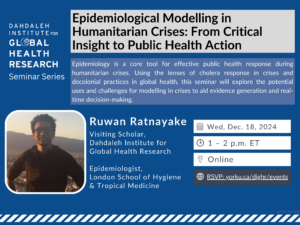
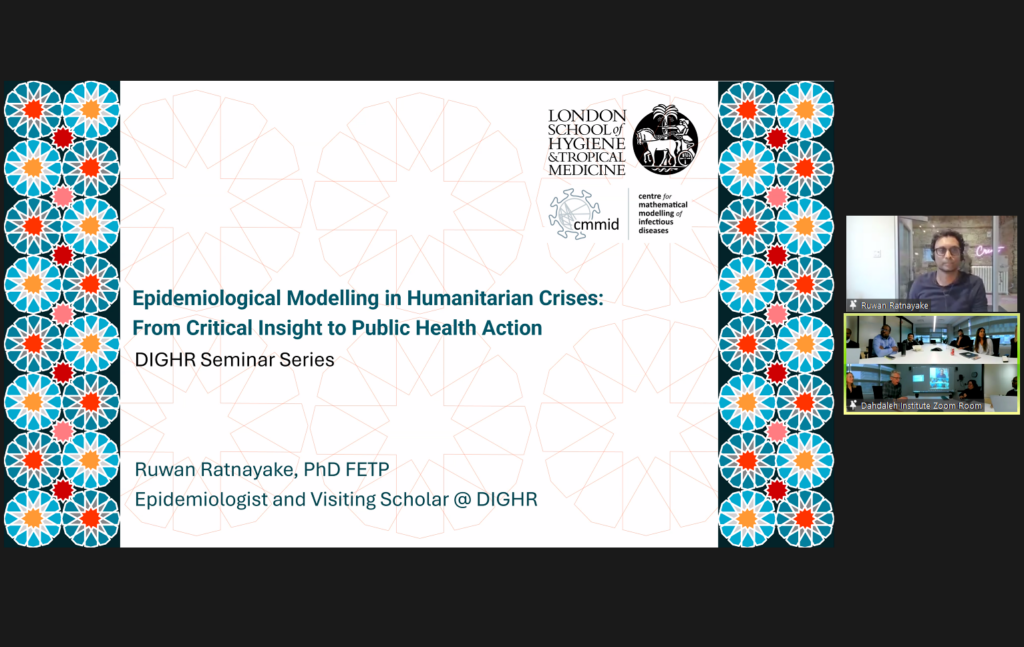
On December 18, Dahdaleh visiting scholar Dr. Ruwan Ratnayake emphasized the important role of epidemiology in public health responses during humanitarian crises. The seminar highlighted the increasing integration of modern analytical methods such as mathematical modeling, into the epidemiological toolbox.
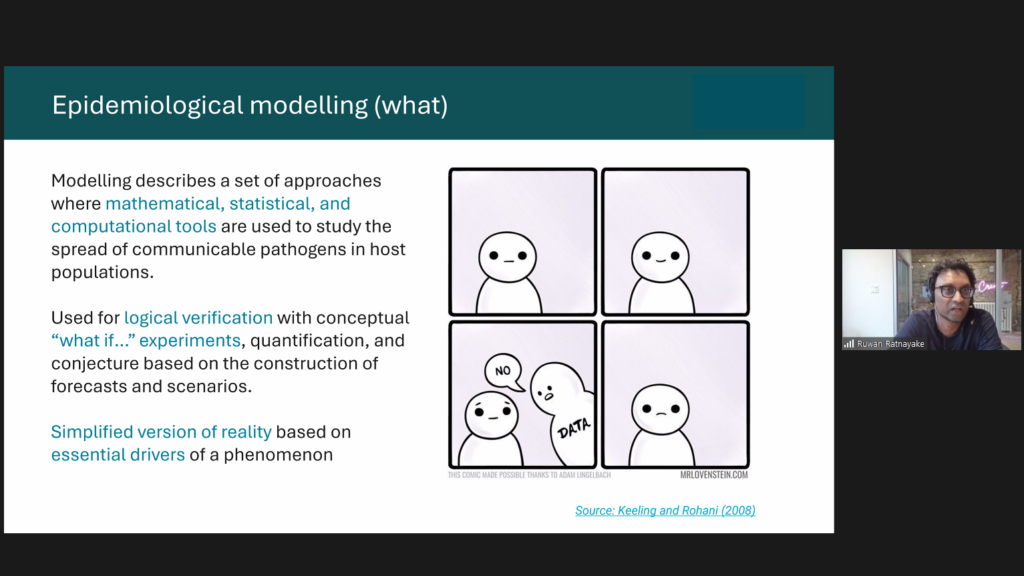
Dr. Ratnayake detailed how modeling is used to describe the epidemiology of communicable diseases, convert transmission dynamics and simulate effective public health interventions in crisis affected populations. The seminar explored these concepts through the lens of cholera response, using case studies to illustrate the utility and challenges of modeling in real time decision making.
The cholera response in the Democratic Republic of the Congo provided a clear example. Dr. Ratnayake explained how Case Area Targeted Interventions (CATI) were employed to rapidly address cholera outbreaks within localized high risk zones. Spatial modeling demonstrated that CATI, combined with single dose cholera vaccines and water treatment, effectively contained outbreaks within 60 days while utilizing fewer resources compared to mass interventions. The study underscored the value of modeling in optimizing interventions in resource constrained settings.
Dr. Ratnayake also introduced a conceptual framework linking direct and indirect health effects of crises such as injuries, mental health conditions and preventable diseases to outcomes and broader public health impacts. He emphasized how modeling can enhance early warning systems, improve risk assessments and facilitate better resource allocation.
The seminar concluded with a discussion on the challenges of modeling in crises including data scarcity, the need for decolonial practices in global health and building sustainable modeling capacities in affected regions. Dr. Ratnayake highlighted the potential of modeling to help with evidence generation and drive real time public health actions, explaining its importance as a transformative tool in humanitarian contexts.
Watch the seminar presentation below: https://www.youtube.com/watch?v=Z8S_7W_9Xjk
Connect with Dr. Ruwan Ratnayake.
Themes | Planetary Health |
Status | Active |
Related Work |
N/A
|
Updates |
N/A
|
People |
You may also be interested in...
Recap – Climate Change Threatens to Cause Greater Resource Insecurity, Greater Poverty, and Poor Health Outcomes
On February 1, over 40 attendees were introduced to Godfred Boateng's research programs – he discussed some examples of current global environmental changes that have destabilized the earth's climate and threaten to cause resource insecurity, ...Read more about this Post
York University Presents 15 York Research Chairs
Fifteen York University researchers have been named new York Research Chairs (YRC), an internal program that mirrors the national Canada Research Chairs (CRC) program which recognizes world-leading researchers in a variety of fields. “The York ...Read more about this Post
Digital Wellbeing Hub
With funding from Heritage Canada’s Digital Citizen Contribution Program, this project worked together with youth and community partners in the unique co-development of Canada's first comprehensive Digital Wellbeing Hub as a safe online space for ...Read more about this Project