
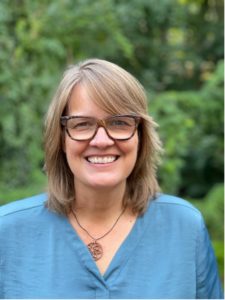
Professor Fallon's interests lie within political sociology, international development, and gender studies. Specifically, she focuses on women’s social movements, women’s political rights, women's health, and democracy within sub-Saharan Africa, as well as across developing countries more broadly. Through comparative analyses across developing countries, and using both qualitative and quantitative methods, she has researched how types of democratic transitions influence women's political representation, how women's legislative representation is linked to children's health outcomes, how women's activism contributes to the spread of women's political quotas, how maternity leave policies effect fertility and child health outcomes, as well as how regional diffusion and support for CEDAW contribute to the passage of domestic violence laws across developing countries. She is currently working on research that examines the influence of USAID on gender related projects, as well as exploring topics linked to land, environment, and Indigeneity.
Research keywords:
Gender, Justice, Colonization, Politics
Themes | Global Health & Humanitarianism |
Status | Alum |
Related Work |
N/A
|
Updates |
N/A
|
You may also be interested in...
Recap – Fall 2022 Graduate Research by Dahdaleh Global Health Scholars
The Dahdaleh Institute proudly supports graduate research and scholarly and creative activities in line with the three themes of planetary health, humanitarianism, and foresighting at York University. We held our 3rd Annual Global Health Graduate ...Read more about this Post
Recap – Innovative Approaches to Target HPV-Vaccine Accessibility and Cervical Cancer in Sub-Saharan Africa
On November 22, 2023, Dahdaleh graduate scholar Eric Asempah addressed the urgent global health issue of preventing human papillomavirus infection (HPV) related cervical cancer through prophylactic vaccines in low and middle-income countries. Cervical cancer claims ...Read more about this Post
Recap — Post-Colonial Legacy and the Challenges to Health and Safety in Black Communities
In the final instalment of the 2023 Black History Month seminar series at the Harriet Tubman Institute, the Dahdaleh Institute's cosponsored a virtual seminar on February 28 with faculty fellow Harris Ali and Yvonne Simpson. ...Read more about this Post