
Post
Published on August 19, 2024
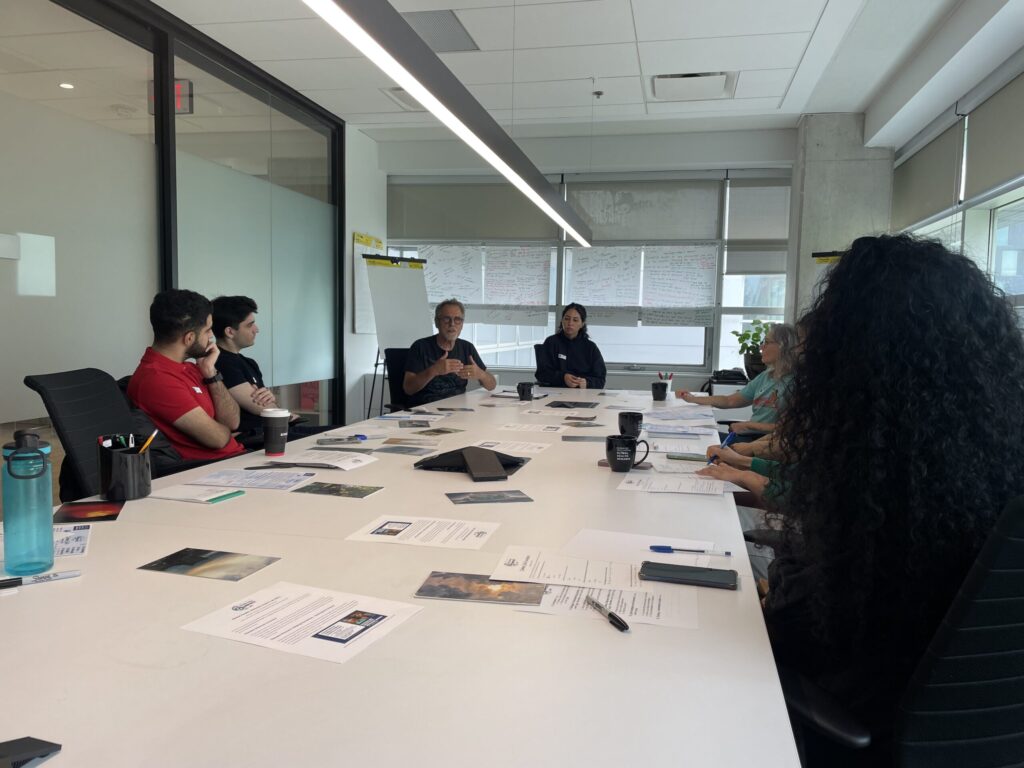
This summer (June 27 and July 8, 2024), participants joined a calm, welcoming, and respectful environment to discuss ‘Climate Distress to Action’. Climate distress is the natural emotional and mental distress that arises when people are faced with the climate crisis. Many people experience a ‘double bind’ not wanting to contribute to climate warming but finding it difficult to change. While triggering complex feelings, the aim of the cafes is to conduct evidence-based initiatives for fostering resiliency and managing stress e.g., this is the Wellness Impact Lab's initiative to give voice to emotions, experience that we are not alone, and enable conversations about ways to take action.
It isn't a lecture or debate—it's a safe space to express feelings, share ideas, and find support for people who care about the planet. Meaningful conversations can spark powerful actions, and everyone’s voice is important! Each Climate Café began by setting group ground rules to create a safe and supportive space for all group members (old and new). While talking about the climate crisis can evoke strong emotions, it is a conversational space, not therapy. However, when unexpected directions come up, the facilitators were there to provide support.
Questions?
>> Click here to ask questions
Themes | Global Health & Humanitarianism |
Status | Active |
Related Work | |
Updates |
N/A
|
People |
N/A
|
You may also be interested in...
Humanitarian Water Engineering Lab Kicks Off New Projects in Uganda
This June, researchers from the Humanitarian Water Engineering (HWE) Lab at the Dahdaleh Institute for Global Health Research travelled to Uganda to launch two new humanitarian health research collaborations in crisis-affected communities in Uganda. Dr. ...Read more about this Post
Recap — Systems Approach to Address Resource Insecurity and Health Inequities, with Godfred Boateng
On October 23, Dahdaleh faculty fellow Professor Godfred Boateng examined how interconnected systems such as food, water, energy, and housing insecurity impact public health, particularly within vulnerable communities. Professor Boateng used the analogy of blind ...Read more about this Post
Dahdaleh Institute’s Safe Water Optimization Tool Helps Address Gaza’s Water Crisis
A new report highlights the vital role the Safe Water Optimization Tool (SWOT) can play in protecting drinking water during humanitarian emergencies. The findings come as Gaza faces nearly two years of siege and bombardment ...Read more about this Post