
Post
Published on November 13, 2024
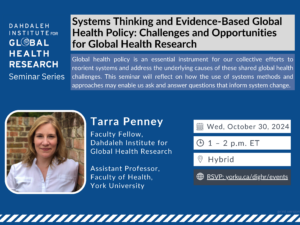
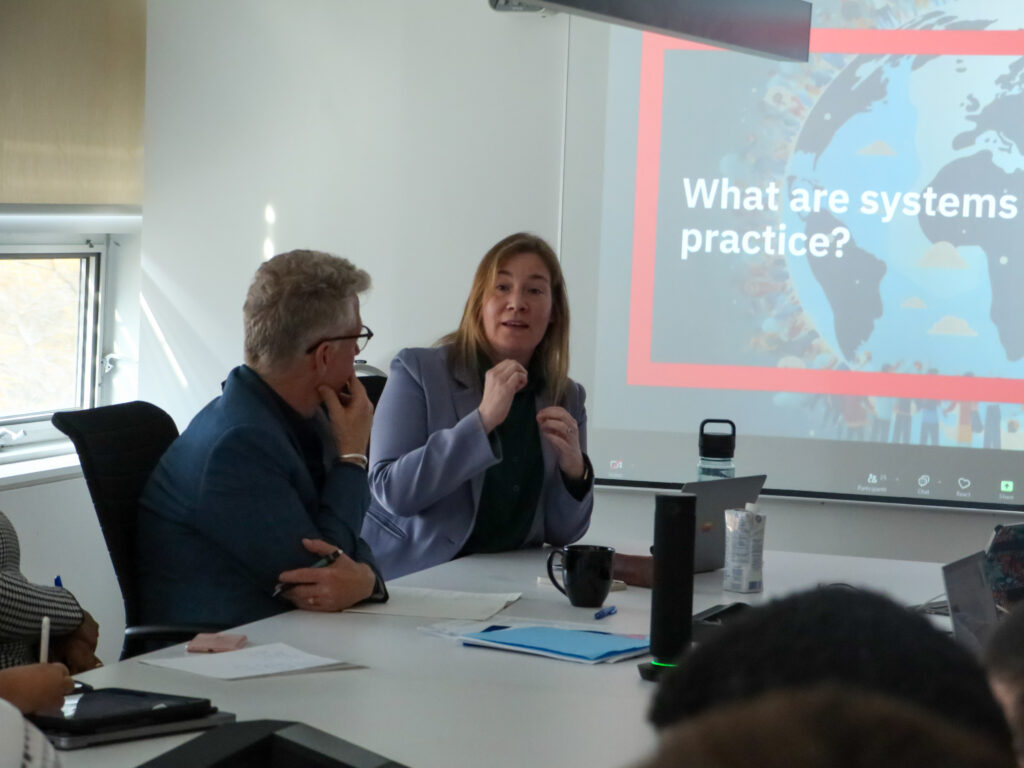
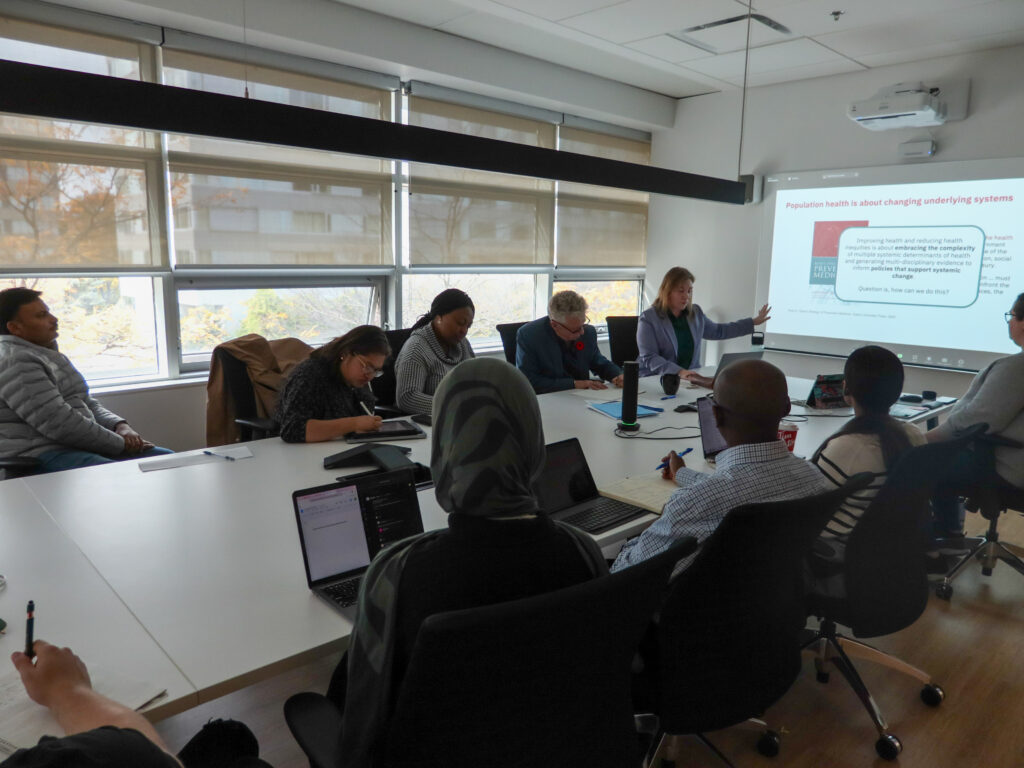
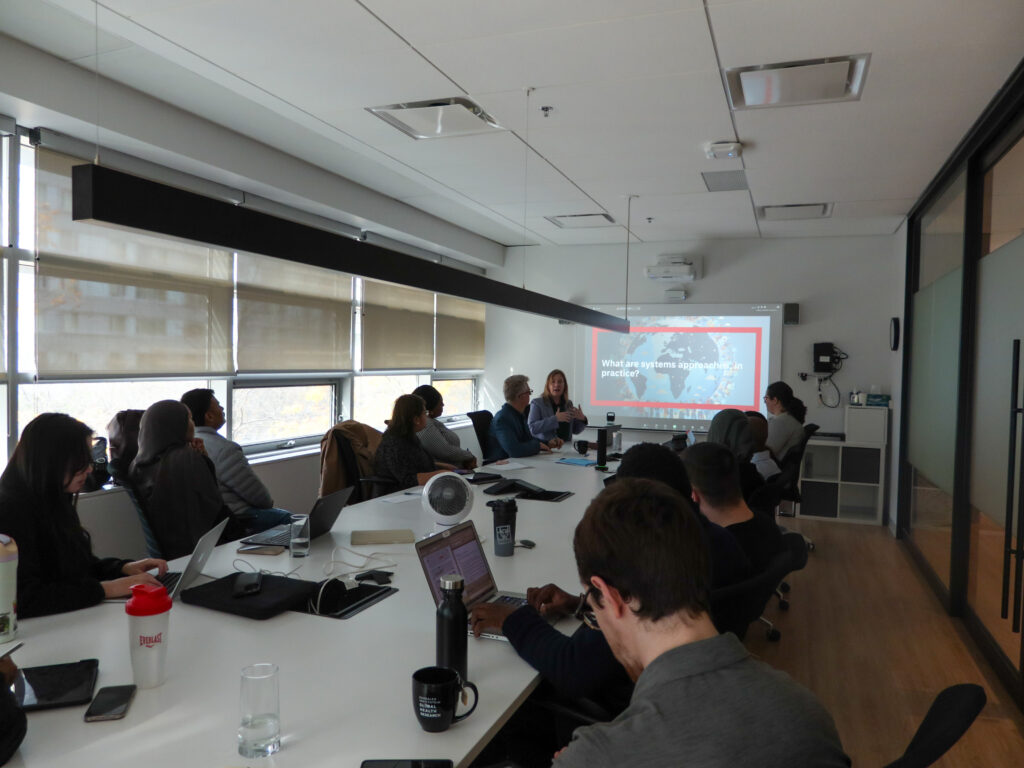
On October 30, Dahdaleh faculty fellow Dr. Tarra Penney presented on systems-based approach and how it can transform traditional methods of public health intervention. Her work seeks to address complex global health challenges by understanding and influencing the structures and forces that drive health outcomes, rather than focusing solely on isolated risk factors.
She explained that traditional epidemiology often prioritizes identifying and managing high-risk individuals. However, her approach aligns more closely with shifting entire population risk distributions through broad, structural and policy level changes. This strategy, inspired by the work of Jeffrey Rose, underlines the importance of recognizing that many determinants of health lie outside healthcare systems, such as in economic, social and environmental policies. Her philosophy emphasizes addressing "the causes of the causes" of health issues, which necessitates a complex and multidisciplinary approach.
Dr. Penney introduced systems thinking as a method of understanding these complexities. Using metaphors like an iceberg, she described how observable health events are influenced by deeper systemic factors, such as patterns, structures, and underlying mental models. Systems thinking, she argued, involves recognizing these interconnections and using specialized methods to map and influence them. She highlighted tools like concept mapping, network analysis, agent-based modeling and causal loop diagrams to illustrate how systems can be analyzed and better understood.
A significant part of her seminar covered case studies demonstrating the practical application of these methods. For example, she and her colleagues investigated global wildlife trade governance to understand how organizational structures and power dynamics impact policy effectiveness. Another example involved mapping unintended consequences of wildlife policies across different countries, using causal loop diagrams to detect recurring systemic issues, such as "fixes that fail" where interventions produce counterproductive long-term outcomes.
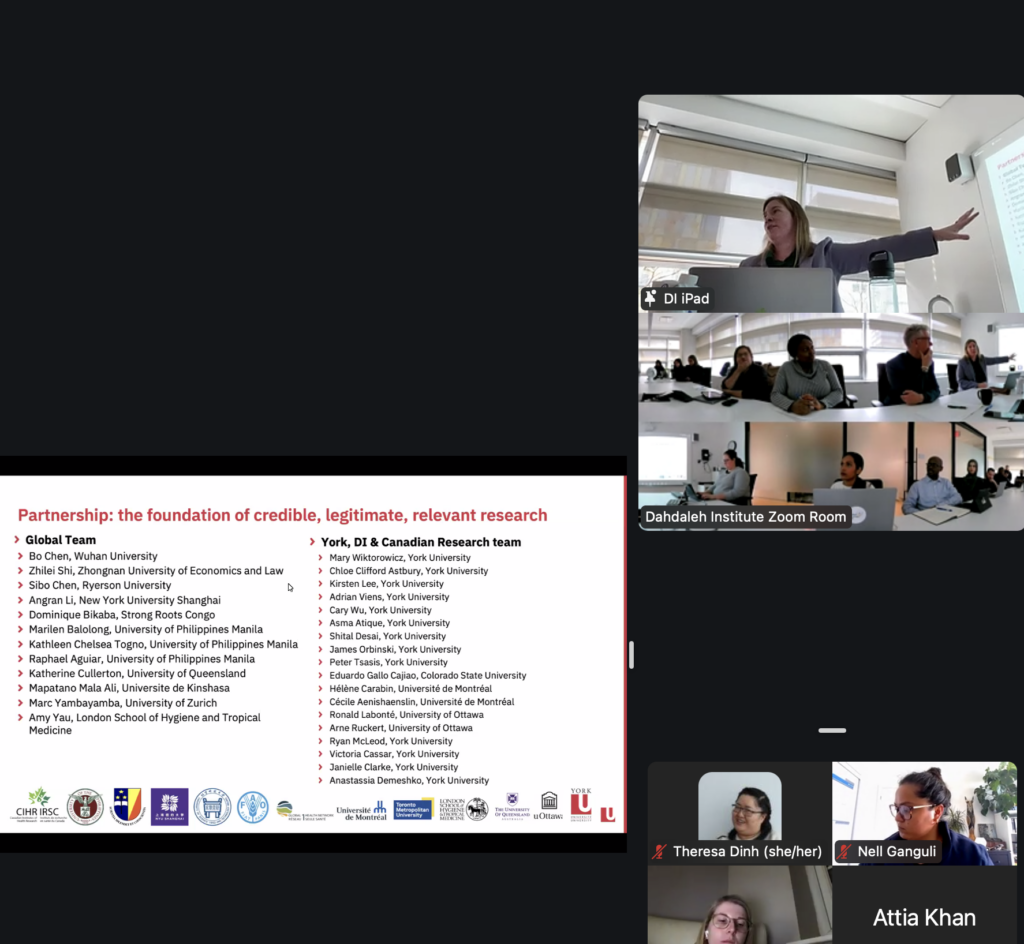
Dr. Penney concluded by discussing the importance of making research actionable. She emphasized the need for credible, legitimate and relevant evidence that is designed to be impactful and usable in policy contexts. Partnerships with organizations like the World Health Organization and collaboration with diverse disciplines help position research to influence policy effectively, ensuring that insights from systems thinking translate into meaningful, real world health improvements.
Watch the seminar presentation below: https://www.youtube.com/watch?v=kmC6wYxs8JU
Connect with Tarra Penney.
Themes | Global Health & Humanitarianism |
Status | Active |
Related Work |
N/A
|
Updates |
N/A
|
People |
You may also be interested in...
Dahdaleh Graduate Scholar Advocates for the Protection of All Civilians Against Violence in Israel and Gaza
Dahdaleh graduate scholar Sarah Khan recently published an article in the Policy Options where she discusses Canada's response to the Israel-Hamas conflict. The government initially condemned the terror attack on Israel and later called for a ...Read more about this Post
York Researchers Receive Federal Funding for Knowledge Mobilization Projects
Originally published by YFile (26 October 2023) By Corey Allen, senior manager, research communications Four York University researchers are among the latest recipients of Connection Grants from the Social Sciences & Humanities Research Council of Canada (SSHRC). ...Read more about this Post
Highlighting the SWOT’s Risk-Based Approach at the 2022 Emergency Environmental Health Forum
Dahdaleh Institute member Michael DeSanti is presenting on the innovative Safe Water Optimization Tool (SWOT) at the 2022 Emergency Environmental Health Forum. He will discuss SWOT’s risk-based approach to generating chlorination guidance to ensure safe ...Read more about this Post