
Project Description
Access to adequate, safe, and affordable housing is a fundamental human right and a cornerstone of health, development, and sustainable livelihoods. In slums---urban areas lacking durable housing, sufficient living space, security of tenure, sanitation, or safe water---housing is a critical determinant of well-being. Yet, there is currently no cross-culturally validated way to quantify housing insecurity and its consequences at the household level in Low- and Middle-Income Countries (LMICs), where insecurity is pervasive. Existing tools are country-specific, poorly specified, or lack formative validation, leaving policymakers and practitioners without reliable evidence to act. This absence of measurement is a critical barrier to addressing one of the most pervasive forms of urban vulnerability. This project addresses that gap.
Objectives
The primary objective of this project is to develop and cross-culturally validate the first regional scale for measuring experiences of housing insecurity in sub-Saharan Africa, assess its interactions with other forms of resource insecurity (food, water, energy), and examine its economic, social, and psychosocial consequences. We hypothesize that housing insecurity has unique deleterious consequences on households, particularly women, infants, and children, and that it co-occurs and interacts with other insecurities to compound vulnerabilities in economic, social, and psychosocial domains, in ways distinct from food and water insecurity. Building on prior work generating measurement items on housing insecurity in the urbanized areas of Ghana, this study has three aims: (1) assess the content validity of housing insecurity scale items across slums and informal settlements; (2) psychometrically evaluate and cross-culturally validate the scale across 11 country sites in Western, Eastern, Central, and Southern Africa; and (3) assess the prevalence and hotspots of housing insecurity while testing pathways through which it interacts with food, water, and energy insecurity.
Methods
A mixed-methods design will be employed, drawing on qualitative and quantitative approaches consistent with best practices in scale development. Data for Aims 1 and 2 will be analyzed using content analysis, a variation of exploratory and confirmatory factor analysis, Item Response Theory, and external validity testing. Aim 3 will be assessed through a test of prevalence, hotspot analysis based on spatial mapping, and syndemic modelling through structural equation and generalized latent-variable approaches.
Expected Outcomes
The development of a cross-culturally validated housing insecurity measure will advance our understanding of the prevalence and consequences of housing insecurity on urban residents. It will provide a framework for developing targeted interventions and policies to mitigate housing insecurity and track progress made in the provision of inclusive, safe, and resilient human settlements.
This study will generate five main outcomes:
- We will work with academic and community partners to generate an ecologically valid housing insecurity scale that can be integrated into organizational and governmental housing initiatives. This new scale will increase the capacity of policymakers and key stakeholders to advocate for appropriate resources and interventions
- This study will increase the knowledge and skill capacity of students and strengthen academic-community partnerships for action-oriented research in the future. Some key activities informing this outcome include workshops with community-based partners, peer-reviewed articles, conference presentations, media engagement (specifically on radio, television, and social media), and policy briefs.
- This research will foster partnerships between the university and community-based organizations in Africa, enhancing knowledge and academic exchange.
- This study will provide the needed evidence to support Global Affairs Canada’s policy development on Africa, to improve housing conditions. Within Canada, the new scale would be adapted and modified to create a Canadian Housing Insecurity Scale in a follow-up study.
- This novel tool on housing insecurity will be a game-changer and an important tool to aid the tracking of various targets in Sustainable Development Goal 11, which aims to make cities and human settlements inclusive, safe, resilient, and sustainable, within the African Context. This tool will help assess the multiplier effects of food, water, and energy insecurity and housing insecurity, as well as the cumulative economic and social consequences on slum dwellers living in Low- and Middle-income Countries
Impact
The impact of this research will be both scholarly and practical. Academically, this research will be transformative in advancing knowledge across sociology, geography, anthropology, and global health by providing new theoretical and methodological insights into resource insecurities and their role in reinforcing social inequalities. The validated scale will enable cross-country comparability, provide reliable data on prevalence, spread, and severity, and identify the characteristics, circumstances, experiences, and locations of those most affected. Practically, it will provide governments, policymakers, NGOs, and development agencies with a tool to measure vulnerability, monitor housing conditions, and design effective social protection strategies. The scale will also serve as the foundation for developing a Canadian Housing Insecurity Scale in follow-up research, broadening its global relevance.
Project Activities
The study would be implemented in four phases:
- Content Validation of Housing Insecurity Scale across 11 countries in sub-Saharan Africa : West [Ghana, Nigeria, Sierra Leone), East (Kenya, Uganda, Tanzania), Central (Cameroon), and Southern (Malawi, Zambia, Zimbabwe, South Africa) regions [Years 1-2]
- Survey Administration & Scale Validation across multiple countries in sub-Saharan Africa (11+ Countries) [Years 2-3]
- Air Quality and Environmental Health Assessment (11+ Countries) [Years 3-4]
- Knowledge Mobilization Activities [Years 1-5]
Project Leads
- Godfred O. Boateng (Principal Investigator, York University)
- Stephen Gaetz (Co-Applicant, York University)
- Mohamed Sesay (Co-Applicant, York University)
- Paul Mkandawire (Co-Applicant, Carlton University)
- Godwin Arku (Co-Applicant, Western University)
- Isaac Luginaah (Co-Applicant, Western University)
Project Team
Role: Cross Country Assessment
Site: Cross Country
Contribution: Project Administration, data analysis, manuscript development, and policy development

Role: Country Lead
Site: Sierra Leone
Specific Expertise: Legal Advocacy, human rights
Contribution: Trusted community access, coordinate data collection and advance KMA in Sierra Leone

Role: Country Lead
Site: Nigeria
Specific Expertise: Community health, high risk populations
Contribution: Trusted community access, coordinate data collection and advance KMA in Nigeria

Role: Country Lead
Site: Zambia
Specific Expertise: Prior work on housing insecurity, poverty reduction, housing policy
Contribution: Trusted community access, coordinate data collection and KMA in Zambia.

Role: Country Lead
Site: Uganda
Specific Expertise: Participatory research methodologies, community outreach
Contribution: Trusted community access, coordinate data collection and KMA in Uganda
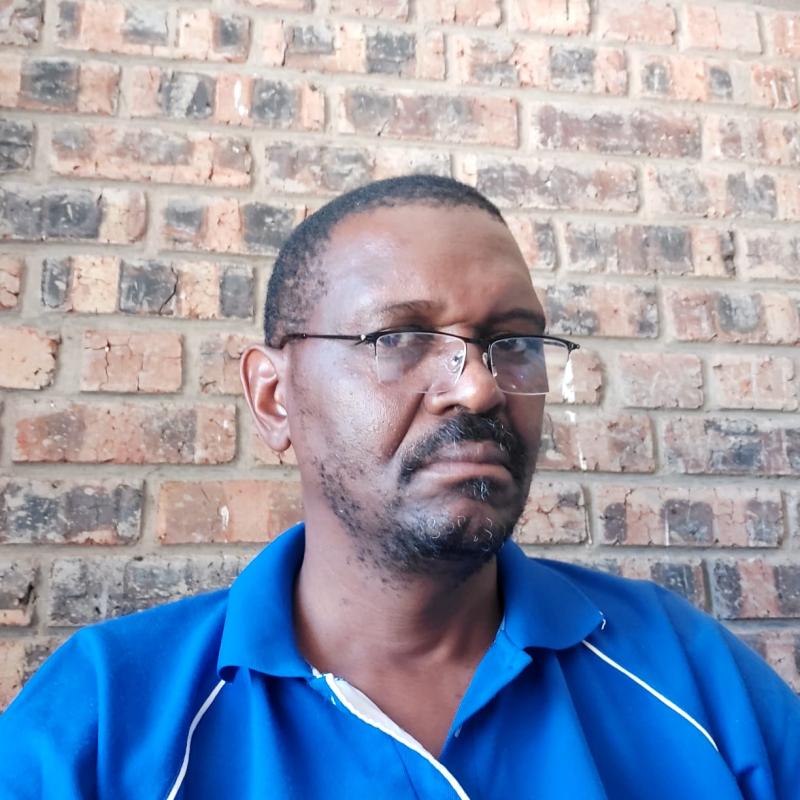
Role: Country Lead
Site: Zimbabwe
Specific Expertise: Town planning, urban governance, housing insecurity.
Contribution: Trusted community access, coordinate data collection, KMA, and knowledge user in Zimbabwe
Role: Country Lead
Site: South Africa
Specific Expertise: Enterprise development, emerging markets, urban planning
Contribution: Trusted community access, coordinate data collection, and advance KMA

Role: Country Lead
Site: Tanzania
Specific Expertise: Gender-based violence, economic empowerment, and youth development
Contribution: Trusted community access, coordinate data collection, advance KMA, and knowledge user

Role: Country Leads
Site: Cameroon
Specific Expertise: Gender, resource insecurity, livelihoods, health inequality.
Contribution: Trusted community access – French and English sites, coordinate data collection and advance KMA.
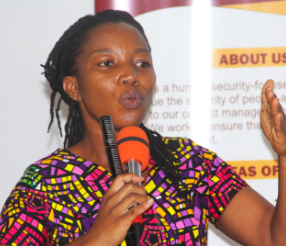
Role: Country Lead
Site: Ghana
Specific Expertise: Social development, environmental crime, project management
Contribution: Advance KMA and serve as knowledge user
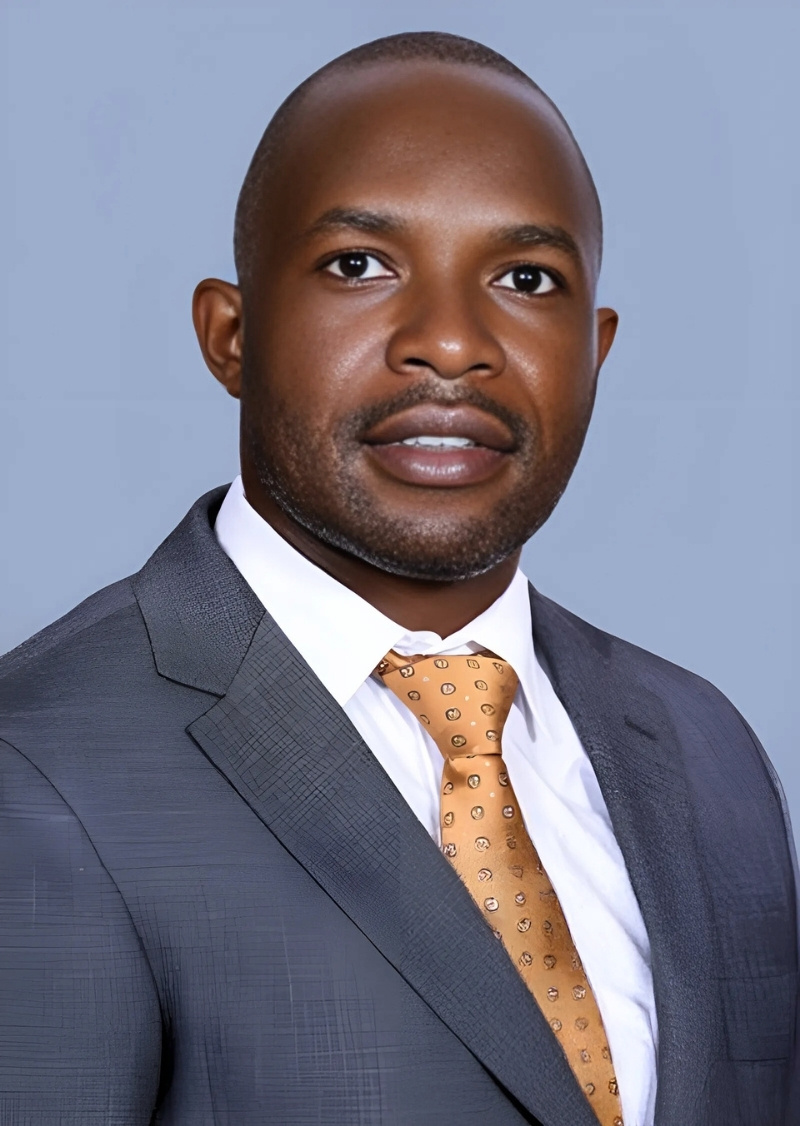
Role: Country Lead
Site: Kenya
Specific Expertise: Housing and food insecurity, community health, gender-based violence, mental health.
Contribution: trusted community access, coordinate additional field research, advance KMA, and knowledge user

Role: Country Lead
Site: Malawi
Specific Expertise: Environmental science, climate change
Contribution: Trusted community access, coordinate additional field research, advance KMA.
Role: GeoSpatial Modelling
Site: Across Sites
Specific Expertise: Geospatial mapping, health inequality
Contribution: Provide training on Geospatial mapping of data collection sites and hotspot analysis.
External Funders
Social Science and Humanities Research Council
Canada Foundation for Innovation
Themes | Global Health & Humanitarianism |
Status | Active |
Related Work |
N/A
|
Updates |
N/A
|
People |
Mohamed Sesay, Faculty Fellow, Faculty of Liberal Arts & Professional Studies - Active
Godfred Boateng, Faculty Fellow, Faculty of Health - Active |
You may also be interested in...
Empowering Communities Through AI: How Senegal Is Pioneering Digital Health Surveillance in West Africa
AI4PEP Senegal has been prominently featured in the 2025 Q1 “AI in Africa” Summary Report by Convergence AI, under the AI for Digital Transformation section. The recognition highlights the team’s efforts to apply artificial intelligence in ...Read more about this Post
Internship Program: Summer 2023 In Review
This summer, the Dahdaleh Institute has worked with wonderful students through our dynamic, experiential education Global Health Internship Program. The program offers students to contribute to exciting research projects by working on literature reviews, data ...Read more about this Post
2023 Graduate Research Spotlighted at Annual Dahdaleh Graduate Symposium
The Dahdaleh Institute hosted its 4th Annual Annual Global Health Graduate Scholars Symposium on Wed. December 13, 2023. Joined by 20 attendees, the superb presentation line-up featured research addressing some of the most pressing issues ...Read more about this Post