
Post
Published on January 17, 2022
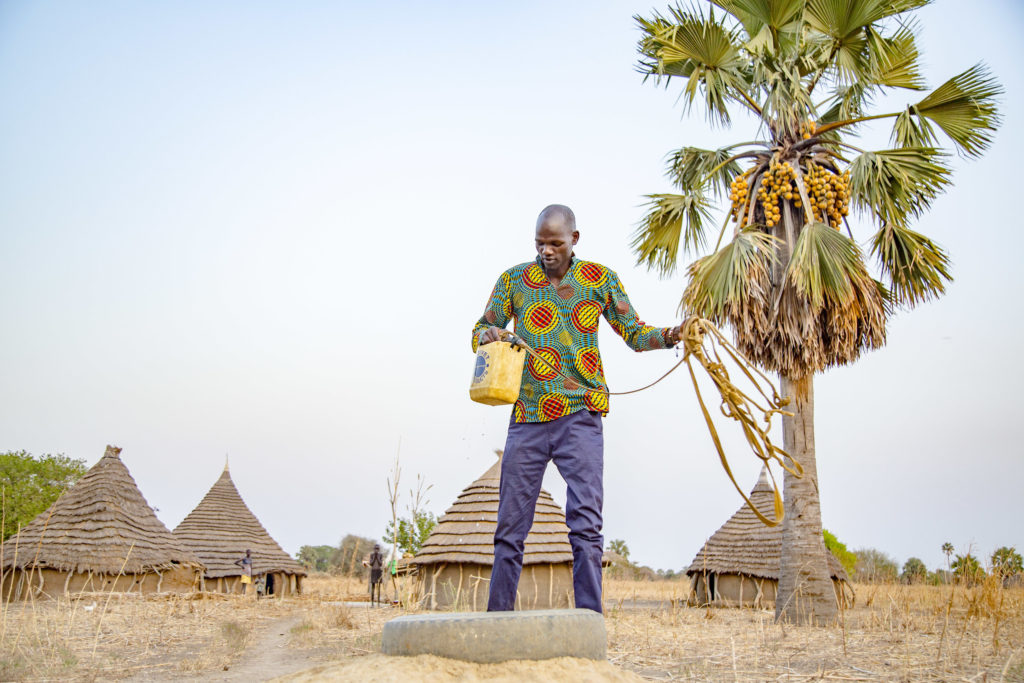
A sure sign of its impact and promise for smallholder farmers impacted by climate change, the Rainmaker Enterprise is now receiving funding and technical assistance from the World Food Programme (WFP) to help build lasting solutions for local communities in South Soudan. Global health intern James Madhier developed Rainmaker at the Dahdaleh Institute with support and guidance from director James Orbinski and Institute fellows. Locally led, Rainmaker develops solar-powered water pumps and tractor-for-hire services for farmers in South Sudan to boost local food production, address hunger, and ensure community resilience toward climate change effects like floods and droughts.
One of the best indicators of success is when a humanitarian agency takes up an innovation, and WFP has done just that—helping Rainmaker help communities to meet their food and water needs, “building dignity, drop by drop.”
Themes | Planetary Health |
Status | Active, Alum |
Related Work | |
Updates |
N/A
|
People |
James Orbinski, Director [F17-F24] - Alum
James Thuch Madhier, Community Scholar, The Rainmaker Enterprise - Alum |
You may also be interested in...
Congratulations! Jude Kong Selected to Develop Global South Artificial Intelligence for Pandemic and Epidemic Preparedness and Response Network
The five-year project is aimed at ensuring vulnerable and at-risk populations are included in disease outbreak management and policies. At a time when the risk of emerging or re-emerging infectious diseases (ERIDs) is increasing, an ...Read more about this Post
BioCAM4 Summer Update: Research, Collaboration, and the Road to COP31
During summer 2026, the BioCAM4 research consortium made strides in advancing the project's research and implementation, and strengthening project partner integration and team spirit. The BioCAM4 Annual Team Meeting in Bonn was held over three ...Read more about this Post
AirWear Co-Design Workshops Explore Community-Centred Approaches to Personal Air Pollution Monitoring
This month marked the launch of the community co-design phase of AirWear, a research project investigating how wearable sensing technologies can improve understanding of particulate air pollution exposure while supporting healthier communities. The project was ...Read more about this Post