
Faculty Fellow, Osgoode Hall Law School
Faculty Fellow
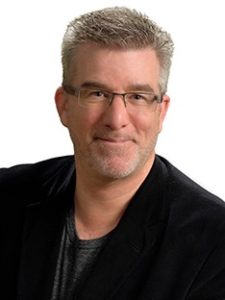
Professor Craig Scott is a professor and the associate dean (academic) of Osgoode. His teaching and research have been primarily in the fields of public international law and private international law, with a focus on the place of international human rights law in both of these fields. His most recent work draws on all three of these fields, including in the areas of human rights torts across borders, transnational corporate accountability and transitional justice. He has also written on constitutional rights protection in Canada and abroad. Much of his work has been on the theory and doctrine of economic, social and cultural rights. His work and teaching is strongly influenced by his interests in legal theory and in policy responses to globalization. He is series editor of Hart Monographs in Transnational and International Law and founding editor of Transnational Legal Theory.
Research keywords:
Transnational Law; Legal Theory, Law and Social Justice; Democratic Theory and Institutions; Law and the Arts; Constitutional Law
Themes | Global Health & Humanitarianism |
Status | Active |
Related Work |
N/A
|
Updates |
N/A
|
You may also be interested in...
SeeChange
Communities are the future of Humanitarian Action SeeChange is a social purpose organization that firmly believes that communities can lead the responses tohealth crises that affect them. We seek to create meaningful and lasting change, ...Read more about this Project
Recap – Book Launch Playing for Real, with Paul Hogan
A book launch was held for DI community fellow Paul Hogan's book, Playing for Real on December 10, 2022. The book was commissioned by Di director James Orbinski for Paul to develop a curriculum based book as ...Read more about this Post
Voices on the Move
Voices on the Move, launched in October 2024, is a podcast series exploring the complex relationship between climate change and mobility. It aims to amplify the voices and stories of researchers, climate migrants, and community ...Read more about this Project