
Project
Last Updated on January 22, 2023
To address the rising cost of medicines, patients and policymakers are increasingly turning to personal importation through Internet Pharmacies. Despite their potential to improve access to affordable medicines, most countries do not sufficiently regulate Internet Pharmacies, exacerbating public health risks.
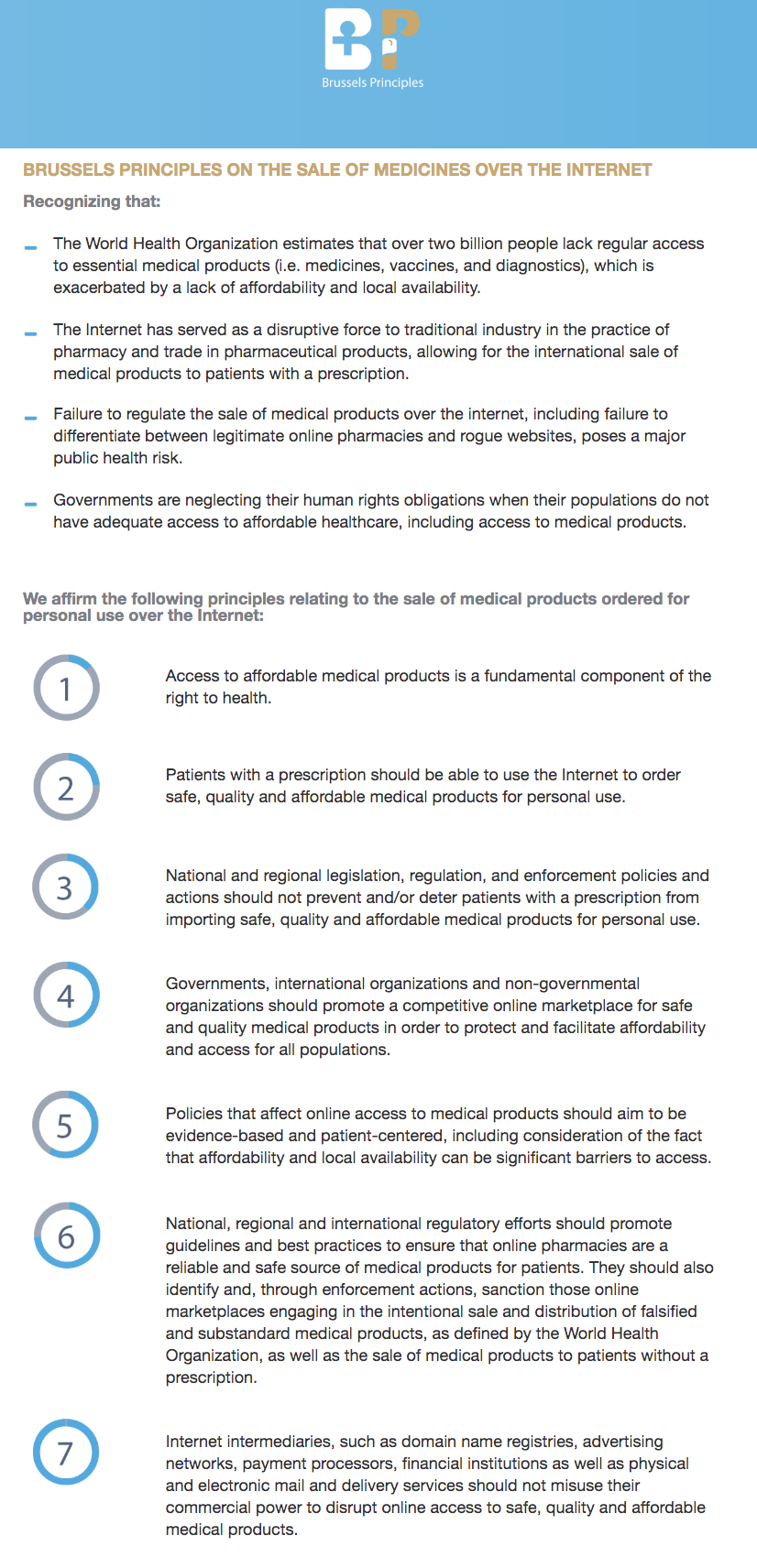
This project convenes stakeholders, including the Canadian Internet Pharmacy Association & PharmacyChecker.org, to establish model legislation regulating online pharmacies, including the .pharmacy domain. It led to the drafting of the Brussels Principles on the Sale of Medicines over the Internet.
Brussels Principles on the Sale of Medicines over the Internet
Themes | Global Health Foresighting |
Status | Concluded |
Related Work |
Towards a Regulatory Framework for Internet Pharmacies | Library, Research
Brussels Principles on the Sale of Medicines over the Internet | Library, Research |
Updates |
Dahdaleh Institute Panel at RightsCon Addresses Digital Access to Medicines | August 24, 2020
Dahdaleh Institute hosts panel at RightsCon | July 28, 2020 Foresighting Fellow Quoted in Financial Post | February 27, 2020 Foresighting Fellow Presents on Regulating Internet Pharmacies | December 20, 2019 Dahdaleh Institute Hosts Panel at Internet Governance Forum | November 27, 2019 Foresighting Fellow Hosts Panel at Internet Governance Forum | November 27, 2019 |
People |
You may also be interested in...
Call for Applications – 2023 Seed Grants for Critical Social Science Perspectives in Global Health Research
The Dahdaleh Institute for Global Health Research is accepting applications for the 2023 Seed Grants for Critical Social Science Perspectives in Global Health Research. Five seed grants worth up to $5,000 CAD each will be awarded. ...Read more about this Post
Call for Presentations – 2024 Critical Social Science Perspectives in Global Health Workshop
Returning for a fifth year, the Critical Social Science Perspectives in Global Health (CPGH) Research workshop will be held on Friday, March 1 from 9:30 a.m. to 1:30 p.m. ET. Join us to gain novel ...Read more about this Post
SSHRC invests $9.3M in York-led social sciences, humanities research
Originally published by YFile (July 24, 2026) By Ashley Goodfellow Craig More than $9.3 million in new federal funding will support 42 York University-led research projects across the social sciences and humanities, including AI, health, ...Read more about this Post