Skip to main content Skip to local navigation
Home » Page 3

Nature's Wild

Project Investigator: Andil Gosine

Funding: SSHRC Connection Grant

Term: 2022-2023.

The project shares the author's research collected in Nature’ Wild: Love, Sex and Law in the Caribbean (Duke University Press, 2021). In Nature's Wild, Gosine engages with questions of humanism, queer theory, and animality to examine and revise historical and contemporary understandings of queer desire. Surveying colonial law, visual art practices, and contemporary activism, he shows the very concept of homosexuality in the Caribbean (and in the Americas more broadly) has been overdetermined by a colonially influenced human/animal divide. He refutes this presupposed binary and embraces animality through a series of case studies: a homoerotic game called puhngah, the institution of gender-based dress codes in Guyana, and efforts toward the decriminalization of sodomy in Trinidad and Tobago—including the work of famed activist Colin Robinson, paintings of human animality by Guadeloupean artist Kelly Sinnapah Mary, and his own artistic practice. In so doing, he shows the ways in which individual and collective anxieties about “wild natures” have shaped the existence of Caribbean people while calling for a reassessment of what political liberation might look like.

Website: https://ago.ca/events/art-spotlight-natures-wild

Colin Robinson's unfinished work

Project Investigator: Andil Gosine

Funding: SSHRC Insight Grant

Term: 2022-2026

This five-year interdisciplinary project examines historical and contemporary articulations of and approaches to the security of sexual autonomy through consideration of the intellectual, literary and political legacy of Colin M. Robinson, the Black, Queer, Caribbean-American writer and activist who made formidable impacts during his prolific and enduring engagement in social justice movements in the United States, where he spent twenty-five years of his life as an undocumented migrant (1980-2005), and in Trinidad and Tobago, where he co-founded the country's most important sexuality rights organization, CAISO, and became the country's most visible queer person, following his return there in 2007. The impact of his work on sexual justice advocacy was felt internationally, in the wider Caribbean and in spaces like Toronto and Johannesburg. Robinson's work also crossed many areas, including community activism, governance, transnational policymaking and literature, and this project will both generate interest from a wide audience of scholars, policy-makers, activists and writers, and, we believe, advance some pressing contemporary questions and concerns.

Website: https://yfile.news.yorku.ca/2024/03/13/york-profs-exhibit-explores-life-work-of-social-justice-advocate/

Oral history, music-making and food justice

Picture of an Avocado

Project Investigator: Honor Ford-Smith

Funding: Carswell Family Foundation

Term: 2020-2023

The project aims to create music that teaches about food justice, health and nutrition through oral histories. It responds to concerns in the Jane/Finch community and offers a chance for knowledge exchange between generations, music-making and production, and community education in the service of food justice.

Website: https://www.yorku.ca/euc/research/ohjam/

Energy solidarity in Latin America: Generating inclusive knowledge and governance to address energy vulnerability and energy systems resilience - Colombia, Cuba and Mexico

Collaborator: Lina Brand-Correa. Principal Investigator: Harriet Thomson

Funding: Economic and Social Research Council (ESRC), UK.

Term: 2020-2024

ESLatinA responds to the urgent need for comprehensive and inclusive understanding, evidence and governance capacity on energy vulnerability in Latin America, with an in-depth focus on Colombia, Cuba and Mexico. Energy vulnerability occurs when households cannot access vital domestic energy services – such as heating, cooling, and powering appliances – because of systemic problems such as unreliable or poor quality infrastructure; gendered differences in energy access and use; high energy prices; social isolation; and intensifying climatic changes. ESLatinA will combine the concepts of energy vulnerability and energy systems resilience to generate inclusive and transformative understanding, evidence and governance - creating the potential to change the way we look at energy policy, not just in Latin America but worldwide. The project includes bespoke local and national-level household surveys, participatory workshops, and proposals for new governance and legal frameworks. The project will also establish national monitoring Observatories and a pan-Latin American network, and undertake national-scale energy systems vulnerability mapping and local-level assessment modelling.

Project website: https://gtr.ukri.org/projects?ref=ES%2FT006382%2F1

Climate, conflict, and co-existence: Identifying the drivers of human-polar bear interaction in Southern Hudson Bay

Picture of a Polar Bear

Principal Investigator: Gregory Thiemann

Funding: World Wildlife Fund

Term: 2021 - to date

The primary goal of this research is to reduce the risk of human-polar bear conflict. This will both reduce the risk of injury to people and reduce the number of polar bears killed in defense of life or property. Secondarily, the proposed research will contribute to broader management and conservation efforts in the region; identify opportunities and challenges for the co-production of knowledge related to polar bears and human-polar bear conflict in Southern Hudson Bay; facilitate public engagement with, and public confidence in, polar bear research; advance the social and cultural interests of local people; and better understand the consequences of sea ice loss on polar bear ecology and demography.

Climate Solutions Park

Picture of farmers smiling

Investigator: Jose Etcheverry

Funding: Various

Term: 2022 - to date

The Climate Solutions Park (CSP) is an environmental park, living-lab and a community leadership institute developing and showcasing the most innovative and efficient solutions to the climate emergency. It offers interactive learning, training and research opportunities designed to connect communities and build a network of Eco-leaders from across the globe. CSP full-scale prototypes and on-site projects incorporate 100% renewable energy, bio- solutions, electric mobility and affordable housing.

Website: https://www.climatesolutionspark.ca/

Smart cities in global comparative perspective: Worlding and provincializing relationships

Picture of a city at nighttime

Co-Investigators: Teresa Abbruzzese and Linda Peake

Funding: SSHRC Partnership Development Grant

Term: 2020-2023

This research project advances interdisciplinary understandings of the societal implications of diverse smart city initiatives around the world. Our global comparative research program focuses on smart city initiatives in seven cities: Toronto, Calgary, Stockholm, Barcelona, Singapore, Taipei, and Seoul. Key research questions across the comparative case studies include the objectives of smart city initiatives, who their initiators are, social coordination logics of the initiatives, how they are legitimized, and the scales at which they are organized. Insights from this research will provide valuable guidance for future smart city initiatives, helping to identify approaches through which smart city initiatives foster more open, participatory, just, and sustainable forms of urban development and organization, as well as approaches that are socially and environmentally ill-advised.

Website: https://www.yorku.ca/cityinstitute/projects/current-projects/smart-cities-in-global-comparative-perspective-worlding-and-provincializing-relationships/

Las Nubes

Picture of women in a classroom.

Project Investigator: Felipe Montoya-Greenheck

Funding: Fisher Fund for Neotropical Conservation; Lillian Meighen and Don Wright Foundation

Term: 1998-to-date

The Las Nubes project in Costa Rica supports the protection of the biological, ecological and social values of the Alexander Skutch Biological Corridor which contains  the  Las Nubes forest reserve that borders the largest protected area  in Central America. Originally created by Professor Howard Daugherty following a donation made by Toronto physician and medical researcher, Dr. Woody Fisher in 1998, the project expanded with more than $8M contributions from multiple donors, supporting faculty and student research. In 2012, Professor Felipe Montoya-Greenheck was appointed as Chair of Neotropical Conservation and Director of Las Nubes and has since then been working to achieve the project’s mission of developing a grounded theory and praxis around the sustainability of healthy and gratifying rural lifeways respectful of, and in harmony with the natural environment.

Website: https://lasnubes.euc.yorku.ca/

Peripheral centralities: Lost, past, present and future

Picture of peripheral centralities.


Co-Principal Investigators: Roger Keil with Nicholas Phelps (PI, University of Melbourne) and Paul Maginn (Co-PI, University of Western Australia).

Funding: Urban Studies Foundation Seminar Series Award.

Term: 2021-2022.

The seminar series brings together a multidisciplinary mix of scholars and practitioners including urban historians, sociologists, geographers, planners, architects, urban designers and property developers to consider the meaning, form, dynamics and significance of peripheral centralities within an era of global extended urbanisation. It does this via four key themed sessions: Seminar 1: Peripheral Centralities - Lost and Past; Seminar 2: Peripheral Centralities - Politics, Policy & Practice; Seminar 3 - Peripheral Centralities - Present and Future; and Seminar 4: Peripheral Centralities – Centering (Sub)Urban Analyses: A PhD/ECR Workshop. More info on the University of Melbourne School of Design webpage.

Call for papers for the November 2022 seminar on Peripheral Centralities: Present and Future.

Addressing Global Challenges to a Canadian Low-Carbon Energy Transition

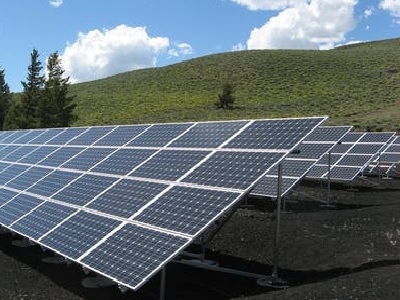
Picture of Solar Panels

Project Investigator: Mark Winfield.

Funding: SSHRC Insight Grant.

Term: 2021-2023.

The proposed project will build on and expand the research, Canadian and international partnerships and networks, and knowledge mobilization infrastructure in the area of sustainable energy transitions and climate change policy. The major outputs of the project will include two books: 1) an edited volume on low-carbon sustainable energy transitions in the age of populism and pandemic that will bring together an interdisciplinary team of leading researchers on climate change policy and low-carbon energy system transitions; and 2) a monograph that will examine wider long-term sustainability transition challenges for Ontario in the context of populism and COVID-19.