Skip to main content Skip to local navigation
Home » Page 4

Carrying Knowledge: Indigenous Artists' Archives

Picture of a group of Indigenous people sitting in a circle.

Principal Investigator: Lisa Myers.

Funding: SSHRC Insight Development Grant.

Term: 2021-2023.

The project is the first exploration of the informal archives that result from the work of Indigenous artists and filmmakers. Since these important archives hold linguistic, social and environmental histories related to Indigenous rights and interests in Canada, their care is of particular interest to First Nation communities, researchers, artists and museum professionals. Care of such collections will include making them accessible to communities and researchers. Through research ­creation in curatorial practice and socially engaged art approaches, the archival research will inform two art exhibitions and result in curatorial and academic writing.

Transnational Perspectives on COVID-19’s Impact on Youth Sexuality, Risk and Relationships

A picture of three people working in an office wearing nose masks.

Principal Investigator: Sarah Flicker.

Funding: SSHRC New Frontiers Research Fund.

Term: 2021-2023.

The project brings together an international and interdisciplinary team of scholars with expertise in participatory methods, sexuality, and global health research. The project’s multi-method, multidisciplinary, and multi-site research will examine how COVID-19 is redefining risk and re-forming youth sexuality in Australia, Canada, and the United States, all countries with liberal democracies with comparable discourses and debates surrounding youth sexuality, but starkly different experiences of and responses to the pandemic. Results will be used to develop site-specific and transnational briefings, videos, podcasts, and other resources to help sex educators, parents and youth navigate social norms, health risks, and sexual relationships during (and, eventually, in the wake of a pandemic.

Website: https://research.monash.edu/en/projects/transnational-perspectives-on-covid-19s-impact-on-youth-sexuality

A Podcast Thinking through Language and Native Plants

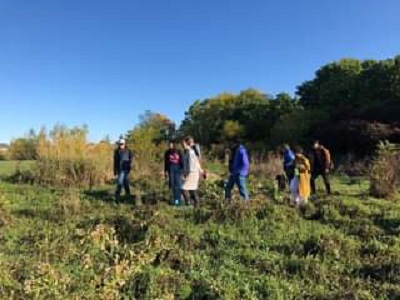
Picture of people walking in a field

Principal Investigator: Lisa Myers.

Funding: SSHRC Connection Grant.

Term: 2021-2022.

This podcast creation project is an outreach and knowledge mobilization initiative of Finding Flowers with main focus on researching, replanting and caring for the more-than-twenty Medicine and Butterfly Garden artworks created across Canada by the late Mi'kmaw/Beothuk and 2-Spirit artist Mike MacDonald. MacDonald's gardens were originally planted, and some continue to exist, surrounded by different plant life and languages across the land we know as Canada. Distinct from colonial conceptions of gardens, MacDonald conceived his gardens as art installations, and as spaces for community contemplation and environmental reflection. In this connection, the project will create a sound and conversation-based archive of Indigenous languages, gardens and contemporary art created by Indigenous people, promoting the diverse practices and knowledge of Indigenous artists and Knowledge Holders, such as Mike MacDonald.

Re-Search for Re-Creation: Youth Making with Place to Catalyze Change

Picture of a hand painting

Principal Investigator: Sarah Flicker. Partner: Sketch Working Arts.

Funding: SSHRC Partnership Engage Grant.

Term: 2021-2023.

The project aims to build on and actualize the knowledge and learning surfaced and generated by Sketch Working Arts' Making with Place youth artist researchers, to disseminate key stories and findings, and identify pathways forward for the Sketch agency, and community arts practice. This work is grounded in, and will inform interactions of, the Sketch Theory of Change (ToC). The project seeks to capture the pathways and outcomes through which young people can engage and express in the arts, develop increased agency and capacity, navigate and manage challenges, and organize action in community. It seeks to mobilize knowledge, and further co-create and activate understandings of these processes of change, with the youth who are living and leading this work.

Website: https://www.sketch.ca/programs/special-projects/making-with-place/

Indigenous Economics Assembly

Picture of the text "Indigenous Economics Reclaiming the Sacred"

Principal Investigator: Peter Victor.

Funding: SSHRC Connection Grant.

Term: 2021-2022.

The project supports the first collaborative Indigenous Economics Conference held in partnership by the Canadian Society for Ecological Economics (CANSEE) and Indigenous Climate Action (ICA). The Assembly that took place virtually from June 10-12, 2021 brought together scholars, students, business leaders, organizers, policy-makers and community members to develop and share educational resources that sit at the intersection of Indigenous rights and climate justice. The aim of the Assembly is to promote Indigenous voices as agents of change and knowledge-keepers, and to amplify contributions to knowledge both within academia and among community practitioners. In line with SSHRC's Indigenous Research guidelines, the Assembly has been created by and with Indigenous Peoples, and will place great emphasis on lived experience, the co-creation of knowledge, and identifying and addressing community needs.

Community-based participatory research

Picture of a group of women hugging.

Principal Investigator: Sarah Flicker

Funding: York Research Chair

Term: 2020-2025

The overarching goal of the research program is to improve the sexual and reproductive health outcomes of youth communities with a special emphasis on those communities that experience heightened vulnerabilities as a result of historic and ongoing structural and interpersonal violence. Focusing on improving structural, social and political environments that create the conditions for health to flourish, the specific objectives of the research chair program are to: improve the health of individuals and communities by documenting, implementing and sharing youth-led solutions to intractable health challenges using community-based participatory research methodologies; take leadership in the scholarship of community-engaged, ethical, decolonizing participatory research practices; build the research capacity of communities, academics and trainees to engage in policy-relevant community-based participatory health research; and mobilize youth-centred, transnational networks and solutions for improving sexual and reproductive health.

Interdisciplinary Conservation Science

Picture of bees hovering over flowers.

Principal Investigator: Sheila Colla

Funding: York Research Chair

Term: 2020-2025

The research program over the next five years continues to combine ecology, citizen science, policy and biocultural understanding to better address pollinator conservation and management challenges. The broad objectives are to: investigate differential success of native pollinators subject to multiple environmental stressors; develop new conservation frameworks to incorporate different types of knowledge to better understand and solve conservation challenges; and develop an evidence-based, collaborative, multi-stakeholder national pollinator strategy. The research program aims to add to the basic understanding of ecological requirements, population dynamics and habitat use for native pollinator species but also have implications in understanding differential responses to stressors by co-occurring wildlife species. The project team is implementing recovery strategies and habitat restoration with a much better understanding of the inter-specific differences with respect to vulnerability, ecological needs and behaviour. They are targeting conservation efforts for declining bumblebee species to be more effective and efficient and are creating new interdisciplinary frameworks and methodologies to incorporate and co-produce different types of knowledge and strategies to guide policy development to incorporate scientific evidence in a collaborative way.

Indigenous Environmental Justice

Picture of people around a table.

Principal Investigator: Deborah McGregor. Co-Investigators: Dayna Scott and Martha Stiegman.

Funding: Canada Research Chair.

Term: 2020-2025.

The Indigenous Environmental Justice (IEJ) research and outreach project aims to develop a distinctive EJ framework that is informed by Indigenous knowledge systems, laws, concepts of justice and the lived experiences of Indigenous peoples. It serves as a resource for community members, students, activists and scholars towards contributing to the development of the EJ framework. It aims to: support communities fighting an environmental injustice; provide resources to teachers and schools that are interested in educating their students about the concept of Indigenous environmental justice, and; continually create opportunities for inclusive dialogue on how to move toward greater justice.

COVID-19 Among Meatpacking Workers: Documenting Migration Status and Employment Conditions in Southern Alberta

Picture of a group of people holding up an "Action Dignity" banner.

Project Investigator: Jennifer Hyndman. Partner: ActionDignity.

Funding: SSHRC Partnership Engage Grant.

Term: 2020-2022.

The project seeks to unpack the links between the migration status of meat packers and their experience of COVID-19. Reports in the media and by community advocates, including partner organization, ActionDignity, indicate that the workforce is composed of almost entirely of migrant and immigrant workers: both Temporary Foreign Workers from the Philippines and resettled refugees from Eritrea, Ethiopia, and Sudan; yet exact information about the current legal status of workers is unknown. The project aims to document exactly who works at these plants, under what conditions, and with what impacts at the Cargill plant in High River and JBS Foods in Brooks, Alberta.

Polishing the Chain

Principal Investigator: Martha Stiegman.

Funding: SSHRC Connection Grant.

Term: 2020-2023.

This is a knowledge translation project that leverages the research of the Indigenous-led Talking Treaties community arts project to instigate, amplify, and enrich public discussion on our treaty responsibilities as settler and Indigenous residents of Tkaron:to. The overarching goal is to activate along-neglected treaty obligation to "polish the Covenant Chain" (an Indigenous metaphor for renewing treaty relationships) by helping Torontonians learn the history of their agreements with Indigenous peoples and with the Land, an important first step towards rectifying and renewing these relationships in the present and for the future. Toronto is a diverse city located on the traditional territory of multiple Indigenous nations and subject to several historic treaties and modern land claims that are understood in sometimes conflicting ways. The project focuses on the historical significance and contemporary relevance of three key intercultural agreements that underpin relations in Toronto today: the Covenant Chain/1764 Treaty of Niagara, the Dish with One Spoon, and the so-called Toronto Purchase of 1787/1805.