
Each Month the Connected Mind's EDI Committee selects 1-2 professors to feature on our Monthly Musings page.
Professors are recommended for our highlight program, through our online Nomination Package. We encourage you to nominate a colleague to be featured in next month's newsletter.
We encourage you to read through each Professor's page, and learn more about the exciting work Connected Minds members are working on that have lead them to be leaders in their Communities. New members are highlighted every month, perhaps your leadership (or a colleague's) efforts will be on our site next!
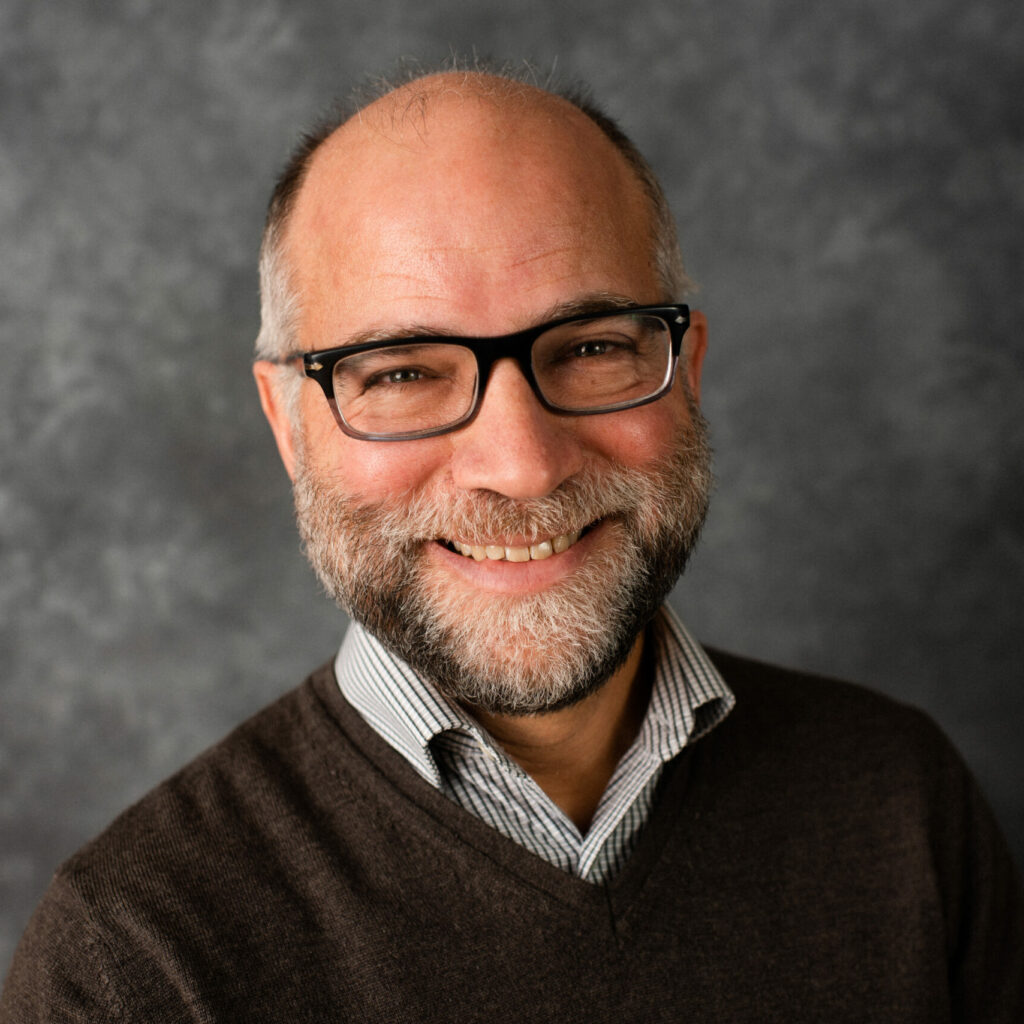
Vincent DePaul
Associate Professor, Queen's University
As lead of Connected Minds' EDI committee, Dr. Vincent DePaul plays a pivotal role in driving EDI initiatives within our community. Leveraging his extensive expertise, he has been closely collaborating with Andrew Castillo, EDI & Community Outreach Specialist, and committee members to help develop our EDI action plan.
Beyond his leadership at Connected Minds, Dr. DePaul holds several positions. As Co-PI of the Oasis Participatory Research Project, he co-leads the evaluation and expansion of the program, co-created with older adults to promote healthy aging in retirement communities across Canada. His other collaborative research focuses on stroke mobility recovery, technology in assessment and intervention, and rehabilitation access in low resource environments.
Furthermore, Dr. DePaul has served as Equity, Diversity, Inclusion, Indigeneity, and Accessibility (EDIIA) Lead for the School of Rehabilitation Therapy and the Centre for Neuroscience Studies within Queen's Health Sciences (QHS). His work towards reconciliation includes serving on the QHS TRC Calls to Action Response Committee, Indigenous Health Education Working Group and mentoring in the STEM:InA program. As Chair of the MScPT Admissions committee, he has championed equitable access for Indigenous and historically excluded student groups. Dr. DePaul's multifaceted contributions underscore his commitment to creating positive societal impact and driving meaningful change in academic and community settings.

Sean Hillier
Associate Professor,
York University
Professor Sean Hillier, a Mi’kmaw scholar from the Qalipu First Nation, is the Associate Director of Connected Minds and Director of York University's Centre for Indigenous Knowledges and Languages (CIKL), and the York Research Chair in Indigenous Health Policy & One Health.
Professor Hillier demonstrates leadership in decolonization/Indigenization and equity through roles as Chair of the Indigenous Council at York, Co-Chair of the Working Group on Anti-Black and Anti-Indigenous Racism, and current member of the National Interagency Panel on Research Ethics. He also serves as the president of the Native Canadian Centre of Toronto and formal on the Board of the AIDS Committee of Toronto.
His work with the Canadian Aboriginal AIDS Network has produced key policy papers on Canada’s COVID-19 response for Indigenous Peoples. He ranks 3rd in Canada and 7th in North America for research on Alaska Natives, First Nations, and Substance-Related Disorders.
Professor Hillier’s research spans community engagement, aging, living with HIV and other infectious diseases, and One Health all with a focus on policies affecting health care access for Indigenous Peoples in Canada. We celebrate his contributions as a leader in our community and his dedication to advancing community based responses to health equity and social justice with Indigenous communities.

Shital Desai
Associate Professor,
York University
Dr. Shital Desai, co-lead of the Connected Minds Training Committee & Associate Professor in Interaction Design at AMPD, also holds the York Research Chair in Accessible Interaction Design. With nearly 30 years of experience in Robotics & Human-Centered Design, she leads the Social and Technological Systems (SaTS) lab, supported by the Canadian Foundation for Innovation. Her work focuses on creating inclusive technologies that advance the UN SDGs, especially in Health and Well-being.
Her research focuses on developing assistive technologies for vulnerable groups, including seniors, children, neurodivergent individuals, & those with speech, physical, cognitive impairments, or dementia, using human-centered design methods. Dr. Desai, a member of the WHO Dementia Knowledge Exchange, contributes to global health policies & care systems. She has received the 2021-22 AMPD Dean’s Research Award & the Petro Canada Young Innovator Award, & was nominated for the 2023 Postdoctoral Supervisor of the Year Award. As a semi-finalist for the Longitude Dementia Award, she collaborates with researchers in Canada, the UK, & the Netherlands to develop dementia cueing technologies.
Dr. Susan Boehnke has extensive experience teaching foundational & interdisciplinary Neuroscience, including sessions on Neuromarketing & Neurolaw, leads Queen's Neurotech Micro-credential Program (NTMC), & conducts research in the fields of sensory, motor & cognitive neuroscience. As lead of the Training Committee, Dr. Boehnke has been instrumental in advancing EDI within the committee.
Recently, Dr. Boehnke & Dr. Desai hosted a strategy meeting where they discussed best practices in peer review, proposed valuable ideas to encourage applications from equity-deserving groups, & focused on building community among trainees, especially Black & Indigenous students. Dr. Boehnke is also dedicated to making NTMC more accessible for trainees & plans on developing modules that integrate EDI within her program.
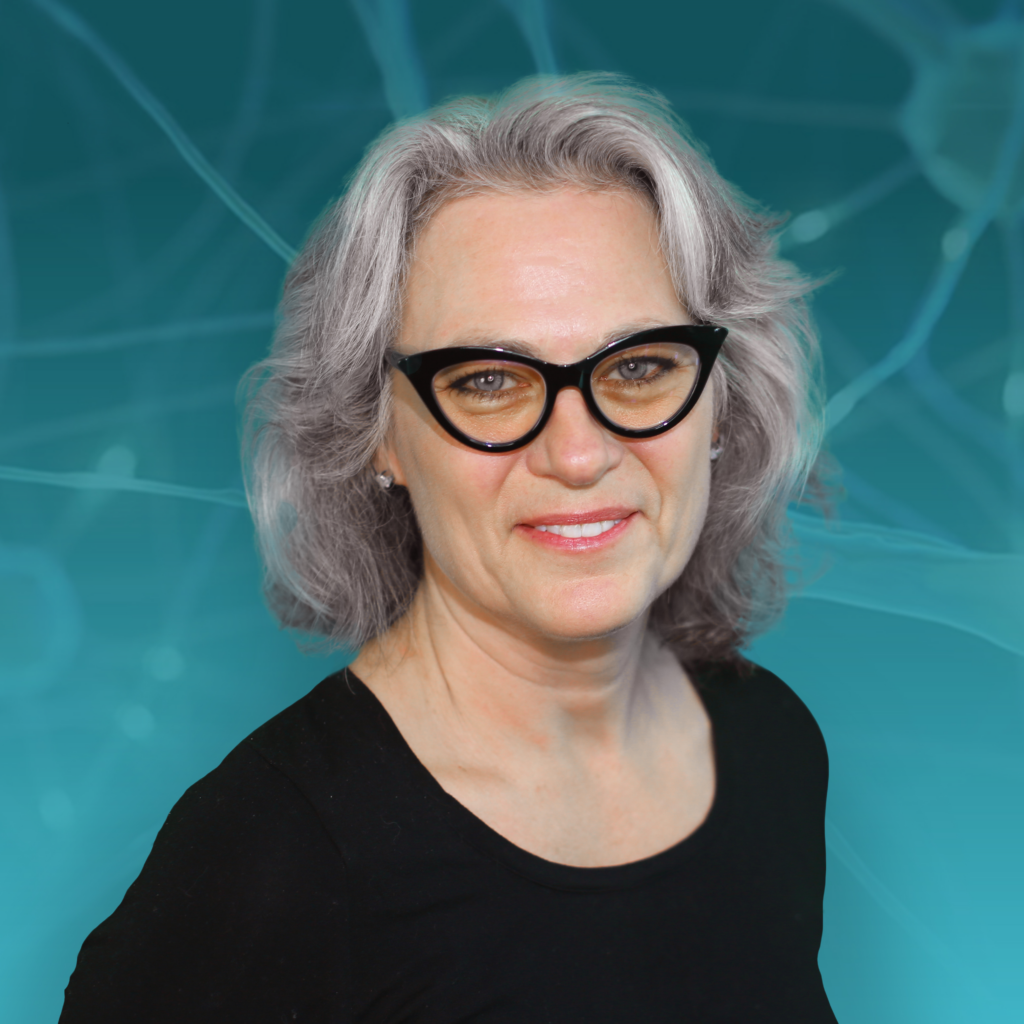
Susan Boehnke
Associate Professor,
Queen's University

Ruth Green
Associate Professor,
York University
Ruth Green, Associate Professor & Director of the School of Social Work at York University, is a citizen of the Haudenosaunee Confederacy from the Kanien'kehá Nation, & a member of the Turtle Clan. As a vocal member of the EDI committee, she has provided invaluable insights on how EDI can be embedded across various Connected Minds opportunities. Ruth is the Chair of the Indigenous Research Ethics Board at York & has served as the co-chair of the Indigenous Council at York, as well as the Special Advisor to the President on Indigenous Initiatives. Her work in Indigenous education & addressing social issues makes her a key leader in fostering inclusivity within Connected Minds.
Gerome Manson, Assistant Professor at Queen's University, has been a dynamic & vocal member of the Connected Minds EDI Committee. Gerome is also the PI in the Sensorimotor Exploration Lab at Queen’s University. His research examines the processes underlying how humans plan, control, & learn skilled movements. His insightful contributions have been invaluable in embedding EDI across various initiatives within the program. He is also a member of the Training Committee, where he is deeply committed to supporting our trainees. His dedication to fostering a more inclusive and supportive environment is helping shape the future of Connected Minds.

Gerome Manson
Assistant Professor,
Queen's University

Dolleen Maning
Assistant Professor,
Queen's University
Dolleen Manning, an interdisciplinary artist & Queen’s National Scholar in Anishinaabe Language, Knowledge, & Culture at Queen’s University, integrates Anishinaabe ontology and mnidoo interrelationality into her work. A member of Kettle & Stoney Point First Nation, her research challenges academic norms through storytelling & community-engaged methods. She leads Earthdiver: Land-Based Worlding & co-directs the Peripheral Visions Co-Lab, advancing Indigenous knowledge & artistic practice while deepening our understanding of Anishinaabe philosophies.
Joseph DeSouza, Associate Professor at York University, advocates for revitalizing nêhiyawêwin (Cree) and its healing power for Indigenous communities. His work alongside Belinda Daniels, Assistant Professor at University of Victoria and Founder of the nêhiyawak Summer Language Experience, integrates neuroscience with Indigenous language revitalization to explore how re/learning nêhiyawêwin impacts holistic health. Joseph's research supports Treaty obligations, preserving Cree language, identity, and well-being for future generations, with a broad impact on Connected Minds and beyond.
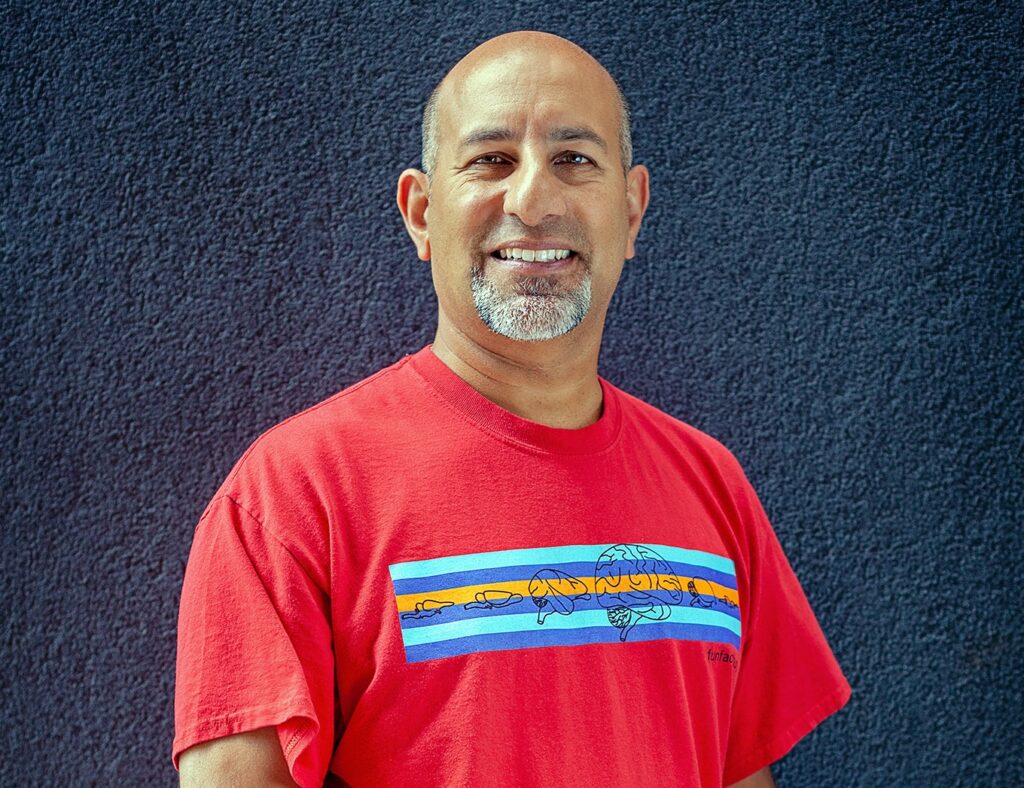
Joseph DeSouza
Associate Professor,
York University

Rebecca Caines
Assistant Professor,
York University
Rebecca Caines, an Assistant Professor at York University's School of Media, Performance, & Design, is deeply committed to co-creation & interdisciplinary collaboration. As a Connected Minds Seed Grant recipient, her research connects fine arts, engineering, neuroscience, & Indigenous knowledge systems to address complex social challenges. Through her work with the Mississaugas of the Credit First Nation, she emphasizes community engagement & the development of socially responsible technologies. Rebecca’s innovative approach fosters meaningful partnerships between academia & communities, advancing both creative practices & knowledge mobilization.

Amanda van Beinum
Assistant Professor,
York University
Amanda van Beinum is an Assistant Professor at York University and one of the Connected Minds EDI Committee members. Her research explores the tensions and opportunities between disciplines like sociology of health & medicine, science and technology studies, critical posthumanism, and medical ethics. As a member of the HYBRID-MINDS research consortium, her current work explores embodied social and technological aspects of brain stimulation technologies as emerging therapies for the treatment of psychiatric illnesses. As a member of the EDI Committee, she is constantly pushing for new ways to integrate EDI throughout the entire program.
Keyvan Hashtrudi-Zaad, Professor at Queen’s University, explores applications of control & intelligent systems in haptics & telerobotics, robotic rehabilitation, & autonomous driving. His research in the control of telerobotic systems is considered as seminal work in the field. He was recently awarded a Connected Minds Seed Grant focusing on developing a home-based robotic rehabilitation system to help stroke survivors regain arm & hand functionality by practicing real-life tasks. In collaboration with a researcher from Providence Care Hospital, the project integrates input from stroke survivors & therapists to ensure the system is engaging, safe, & effective, while addressing potential racial & ethnic differences in stroke outcomes through a diverse sample of participants.

Keyvan Hashtrudi-Zaad
Professor,
Queen's University

Catherine Stinson
Assistant Professor,
Queen's University
Catherine Stinson is an Assistant Professor & Queen’s National Scholar in Philosophical Implications of AI. As a member of the inaugural EDI Committee at Connected Minds, they helped with the initial development of program initiatives to be launched in 2025. They have an extensive publication history in the philosophy of neuroscience, psychiatry & AI, & tech policy. Their current research interests include algorithmic bias in recommendation & search, regulation of social media platforms, how diversity affects research, the metaphysics of scientific models, the medicalization of gender, & data science for anti-racist advocacy.

Alvine Boaye Belle
Assistant Professor,
York University
Alvine Boaye Belle is an Assistant Professor in the Department of Electrical Engineering & Computer Science at York. As a member of the inaugural EDI Committee at Connected Minds, Dr. Belle has helped with the development & launch of several Connected-EDI initiatives. Dr. Belle has extensive leadership experience within the field of EDI, & has participated in several mentoring talks to increase the inclusion of Black students in the field of computer science. As the head of the DARE research group, member of several international committees, reviewer of serval high impact journals, & award winning poet, Dr. Belle is working towards the inclusive betterment of the computer science field through her work at & beyond Connected Minds.

Claire Davies
Associate Professor,
Queen's University
Claire Davies is an Associate Professor in the Department of Mechanical & Materials Engineering at Queen’s. Having volunteered at Holland Bloorview Kids Rehabilitation Hospital, she has dedicated her research career to improve the lives of people with disabilities by covering three main areas: biomaterials, motion analysis & assistive technology. Through interdisciplinary work, Prof. Davies collaborates with clinicians & engineers to design medical technologies in her Building & Designing Assistive Technology (BDAT) Lab in hopes of increasing productiveness of all individuals to be more confident members of society.
Mahtot Gebresselassie is an Assistant Professor in the Faculty of Environmental & Urban Change at York. Prof. Gebresselassie’s research focuses on Uber/Lyft & transportation equity in relation to people with disabilities & low-income earners. Through studying disabled accessibility in human-computer interactions, smart mobility policy & accessibility in urban design, Prof. Gebresselassie’s research engages with emerging tech & equity. Her recent Connected Minds Seed Grant, "Developing an AI-Based Tool for Optimizing Disability Accessibility of Pedestrian Networks in Marginalized Neighborhoods." will help transform pedestrian networks into inclusive pathways, supporting equitable access to transportation in marginalized communities.

Mahtot Gebresselassie
Assistant Professor,
York University

Eun-Young Lee
Associate Professor, Queen's University
Eun-Young Lee is an Associate Professor in the School of Kinesiology & Health Studies at Queen’s, an Affiliated Investigator with the Children’s Hospital of Eastern Ontario Research Institute & the Institute of Sport Science at Seoul National University. As Team Lead of the In Situ Population Health Research lab, their research is focused on bridging social issues & theories with quantitative research methodology to advance population health in cross-cultural & global contexts. Their impactful research on children’s physical activity parallels the community-level impact they provide by participating on the board of children’s physical education programs, ParticipACTION & Outdoor Play Canada, & as co-founder of PLaTO-Net. As a member of the Climate Action Committee for the International Society of Behavioral Nutrition and Physical Activity, they continue to demonstrate the impacts of collaborative work to solve global challenges for a better future.
Ozzy Mermut is an Associate Professor in the Faculty of Science at York. Her research in biophotonics converges optical & life sciences by harnessing the power of light to study structural-functional changes in humans in the aging processes. As lead of the Mermut integrated Biophotonics Applied Research Lab (MiBAR Lab), the team is focused on developing pre-diagnostic metrics & intelligent phototherapeutic approaches for minimally invasive, real-time interventions from studying hallmark feature of degenerative diseases. Her recent CM Seed Grant, “Erasing Racism in Optical Technologies” aims to identify & eliminate racial bias in optical devices by evaluating the accuracy of optical devices based on their responses to variations in skin melanin. By collaborating with the Canadian Black Scientists Network & NIRx Medical Technologies, LLC, the project seeks to establish new standards for more inclusive optical technologies.

Ozzy Mermut
Associate Professor,
York University

Monakshi Sawhney
Associate Professor, Queen's University
Monakshi Sawhney is an Associate Professor in the Faculty of Health Science at Queen’s. Dr. Sawhney’s main focus of research is in pain management & has helped increase awareness regarding EDI issues in healthcare & educational settings. At the individual level, she has mentored a student developing a pilot study evaluating post-surgery pain assessments in patients of different ethnic backgrounds using video vignettes. She helped create the Addressing Culturally based Hidden bias And Racism (A-CHARM) virtual simulations that assists students & faculty learn how to navigate racism in hospital settings, resulting in 2 peer reviewed manuscripts evaluating their experiences. At the national level, she’s working on addressing bias in the healthcare system using participatory theatre, presenting her work on equity in healthcare education & evaluating AI enhanced virtual reality simulation in nursing education across Canada & the Caribbean. Her experience & leadership has allowed her to take on the role of EDI lead within the School of Nursing at Queen's University.

Frederic Fu
Post-Doctoral Fellow,
York University
Frederic Fu is a Postdoc Fellow at York in Professor Vijay Mago’s Data & Text Analytics Lab (DaTALab) in the School of Health Policy & Management. Dr. Fu is also one of two trainee reps on the Connected Minds EDI Committee.
Dr. Fu’s research interests lie in computerized, statistics-based public health research, currently with a specific focus on analyzing neurological & mental health risks among people experiencing homelessness (PEH). His innovative data collection strategies have helped to better understand the health disparities faced by PEH through active engagement with affected communities, nonprofit organization, & community partners providing real world-contexts & culturally sensitive & effective interventions to improve health outcomes for vulnerable populations in Canada.
His work has been published in several public health journal, presented internationally & continues to positively impact both scholarly research & community impact!

Élise Devoie Assistant Professor,
Faculty of Engineering and Applied Science,
Queen’s University
Élise Devoie is an Assistant Professor in the Faculty of Engineering and Applied Science at Queen’s University combining numerical modelling, community engagement, fieldwork and laboratory analysis together in their research.
Dr. Devoie’s transdisciplinary research focuses on responsible and productive ways to study the impact of climate change impacting frozen soils, and how these changes are felt, especially by communities directly affected by thawing permafrost. Dr. Devoie is helping to lead work in responsible community engagement and improving predictive capacity of climate change in permafrost environments by combining modelling and fieldwork. By bringing together researchers across unique disciplines and Indigenous community members they are working together to co-create and develop nuanced research questions that align with community priorities and drive the study of hydrology and hydrogeology forward.
Two Connected Minds members are being highlighted as recipients of the inaugural EDI Committee Member Initiated Funds opportunity at Connected. Each member has established strong connections with local, international and/or Indigenous communities ensuring projects are focused on community needs. and demonstrated how impactful co-creating projects build sustainability in community and more inclusive research practices for the future.
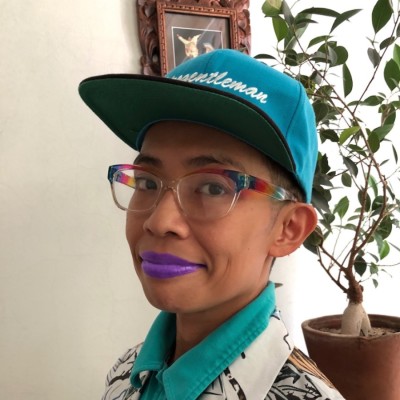
Ar Ducao
Artist-in-Residence,
Connected Minds
Project Title: “Biometrics & Cartoons” Community Initiatives
Ar Ducao, Artist in Residence (Connected Minds)
Organized and facilitated a workshop series “Biometrics & Cartoons” exposing biometric concepts (technical and sociocultural) to students and professionals in the Jane & Finch community, prioritizing minoritized folks and learners of colour. Through partnering with York University’s TD Engagement Community Centre (TD CEC), York University Jane Finch Social Innovation Hub (JFSIH), and Youth Association for Academics, Athletics, and Character-Led Education (YAAACE), to promote, coordinate space and facilities, and disseminate workshop material to the community for future summer and fall programming, respectively.

Gabriel Mennotti
Associate Professor,
Film & Media,
Queen's University
Project Title: Post-Exhibition Strategies: Exploring Critical and Multisensorial Access to Digital Arts
Gabriel Mennotti, Associate Professor, Film & Media, Queen’s University
This initiative supports an ongoing collaboration with grassroots association Zentrum für Netzkunst (Center for Netart) to increase accessibility to new media and technological arts. Zentrum has identified key barriers to audience engagement, low technological literacy, lack of resources, and sensory disabilities, the project combines curatorial and participatory research to explore how accessibility-first strategies reshape media production. It includes two main activities: integrating local community members with disabilities into Zentrum’s programming committee to identify accessibility challenges and accompanying mediation strategies, and hosting a workshop on “versioning” artworks to enhance accessibility, especially in immersive virtual environments. The project fosters inclusion, and supports knowledge exchange through Zentrum’s online presence and networks across Canada, Europe, and Latin America.

Dr. Rebecca Pillai Riddell, C.Psych, FCAHS,
Professor, Faculty of Health,
York University
Dr. Rebecca Pillai Riddell, C.Psych., FCAHS, is a Professor of Clinical-Developmental Psychology in the Faculty of Health at York University. As the Director of the Opportunities to Understand Childhood Hurt (OUCH) Laboratory, Dr. Pillai Riddell currently leads a multi-national, multi-million dollar research program that studies preterm infants and their parents in Neonatal Intensive Care Units. Outside of her lab work, she has also been involved extensively in supporting EDI initiatives in research contexts at both the institutional and federal levels. She is the founding director of the POLARIS training collaboration to teach academics how to adjudicate faculty for awards and jobs inclusively. Additionally she is the Nominated Principal Investigator for DIVERT Mental Health, a multi-million-dollar CIHR-funded national training program setting out to disrupt the Canadian mental health system by innovating curriculum for mental health trainees, focusing on more diverse knowledges and leveraging technology to increase access to mental health resources.
Two Connected Minds members are being highlighted as recipients of the EDI Committee Member Initiated Funds opportunity at Connected. Each member has established strong connections with local, international and/or Indigenous communities ensuring projects are focused on community needs. and demonstrated how impactful co-creating projects build sustainability in community and more inclusive research practices for the future.

Alison Harvey,
Associate Professor,
Glendon,
York University
Project Title: How to Care: Mentorship, Wellness, and Community-Driven Initiatives for EDI
Alison Harvey is an Associate Professor in the Department of Global Communications and Cultures at Glendon College at York University. Prof. Harvey’s initiative aims to bring together internationally tech-focused experts with the scholarly and practical knowledge to share and develop community-led strategies for EDI. The initiative bridges disciplinary silos and centers around hosting a local workshop, international symposium, and an edited collection based on the exchanges.
Ar Ducao,
Artist-in-Residence,
Connected Minds
Project Title: UNDOCTORED: Investigating the Mental Health Crisis in STEM Higher Ed
Ar Ducao is an Artist-in-Residence at Connected Minds. Their project, UNDOCTORED: Investigating the Mental Health Crisis in STEM Higher Ed, is focused on conducting interviews on mental health, IBPOC/BIPOC identity, and the culture of STEM research. By conducting and transforming these interviews into visual stories, and by sharing personal experiences as BIPOC STEM researchers and practitioners, the project goal will amplify both longstanding inequities and best academic practices that value people over published papers.

Afolasade Fakolade
Assistant Professor,
School of Rehabilitation Therapy,
Queen’s University
Afolasade Fakolade is an Assistant Professor in the School of Rehabilitation Therapy at Queen’s University. As a neurological physiotherapist, Prof. Fakolade’s research is focused on understanding the impact of disability on both people with disabilities, particularly multiple sclerosis, and their family caregivers, and developing effective intervention strategies to enhance their collective well-being to lead healthy and meaningful lives. Her research examines factors influencing wellness needs, outcomes and experiences, exploring the role of remotely delivered interventions using technology-support tools for wellness programming, and developing and evaluating theoretically grounded wellness interventions for people with multiple sclerosis and their family care-partners.