
Post
Published on April 24, 2024
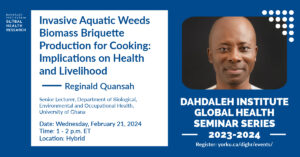
On February 21, 2024, Dr. Reginald Quansah, senior lecturer at the University of Ghana and an environmental epidemiologist, presented his research on using invasive aquatic weeds, particularly water hyacinth, to produce biomass briquettes. This innovative approach aims to offer a sustainable cooking fuel alternative, thereby addressing the triple burden of environmental degradation, household air pollution and adverse health outcomes in Ghana and potentially other developing countries. By utilizing the plentiful supply of water hyacinth that have infested almost all rivers in Ghana since its introduction in 1984, his research seeks to mitigate its adverse impacts on ecosystems and livelihoods.
Dr. Quansah's study is driven by the urgent need to reduce the reliance on traditional biomass and fossil fuels that contribute to deforestation and emit hazardous pollutants, exacerbating non-communicable diseases (NCDs) and environmental degradation. He highlighted the alarming statistics in Ghana, where household air pollution is a significant risk factor for NCDs, and advises that it needs to be adequately addressed in national policies.
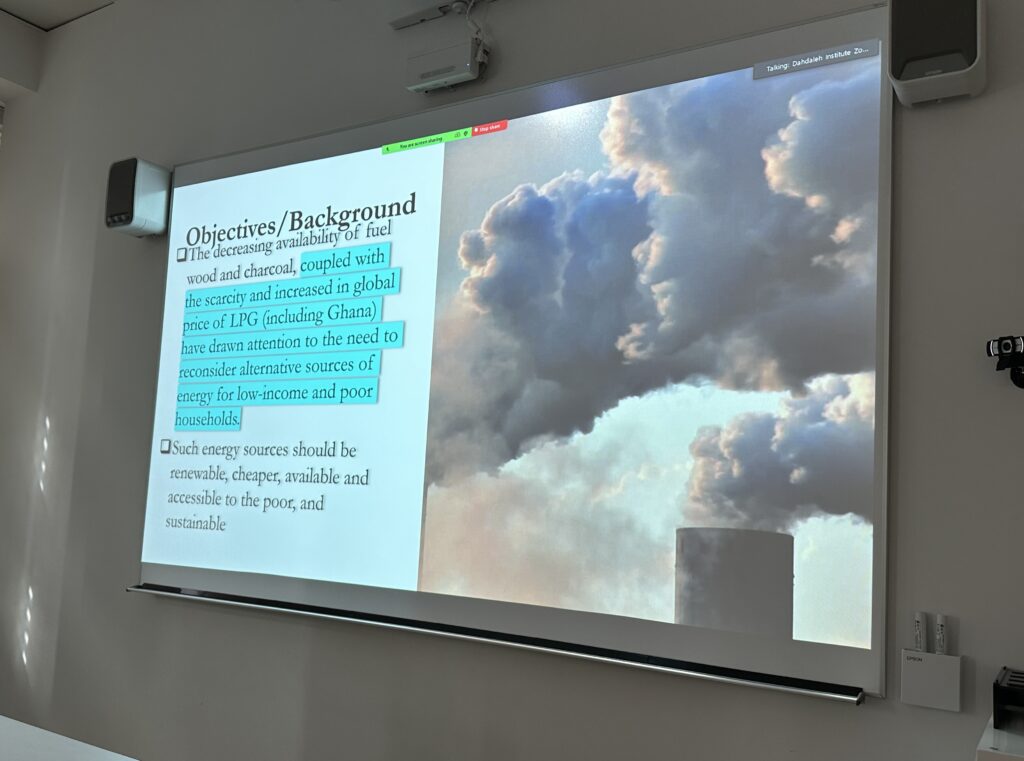
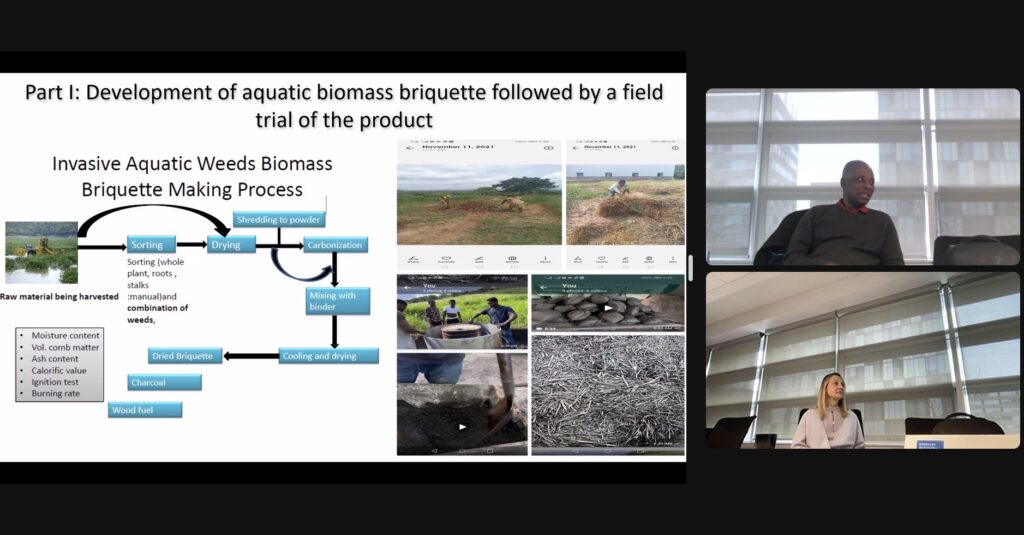
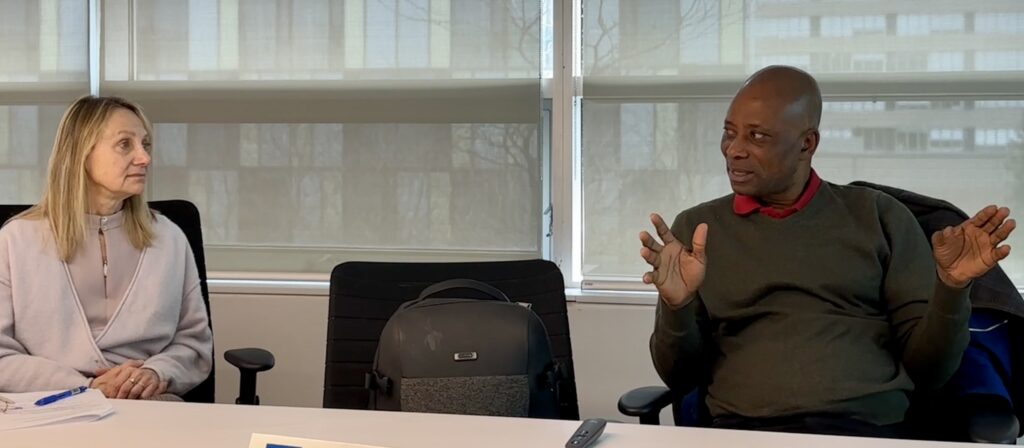
He and his team have made significant strides in understanding the briquettes' optimal moisture content and combustion properties, comparing them favourably with traditional cooking fuels like wood and charcoal regarding cost, efficiency, and health implications. In the future, they would like to create a formula to further refine the briquette production process and assess its impacts.
The benefits of producing biomass briquette extend beyond environmental and health benefits. It also includes socio-economic upliftment through job creation and income opportunities for local communities, particularly for women and youth, involved in the production process. Moreover, Dr. Quansah's work addresses several UN Sustainable Development goals to reduce poverty, improve health outcomes, and combat climate change. His research offers an innovative and adaptable model for other regions beyond Ghana.
Watch the seminar presentation below:
Connect with Reginald Quansah
Themes | Global Health & Humanitarianism |
Status | Active |
Related Work |
N/A
|
Updates |
N/A
|
People |
N/A
|
You may also be interested in...
Don't Miss Our November Lineup of Events
Join us for a November packed with insightful seminars, inspiring guests, and the launch of SWOT v2. Start off the month with a public seminar by visionary designer and Dahdaleh Institute community fellow Bruce Mau. ...Read more about this Post
Recap — Systems Approach to Address Resource Insecurity and Health Inequities, with Godfred Boateng
On October 23, Dahdaleh faculty fellow Professor Godfred Boateng examined how interconnected systems such as food, water, energy, and housing insecurity impact public health, particularly within vulnerable communities. Professor Boateng used the analogy of blind ...Read more about this Post
Recap — The Benefits of Qi Gong (Tai Chi) in Theory and Practice
Efforts towards addressing the most pressing global health issues must not overshadow the importance of personal health and wellbeing. Recognizing this, the Dahdaleh Institute invited the YorkU community to participate in a special three-part Wellness ...Read more about this Post