
Post
Published on November 21, 2024

A new article has been authored by experts from the Dahdaleh Institute for Global Health Research and collaborators from mWater, the Mortenson Center, Aquaya Institute, Global Water Challenge, and ETH Zurich. The paper, titled Challenges and opportunities for advancing data-driven WASH programming: Reflections from the UNC Chapel Hill Water and Health Conference side event "DATA: A key for unlocking quality in WASH programming", has been published in the special UNC Water & Health Collection by PLOS Water.

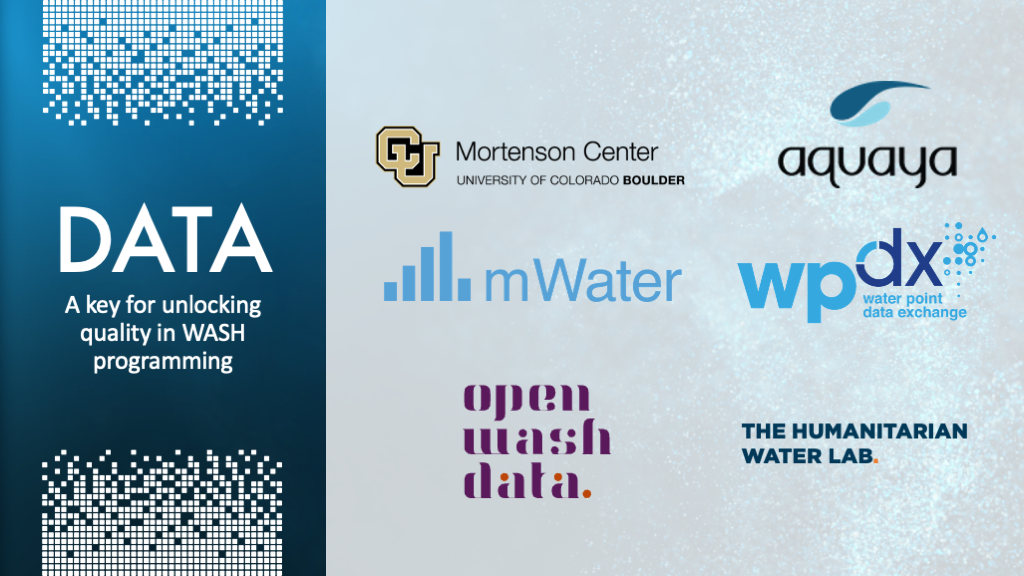
Held at the University of North Carolina at Chapel Hill, the side event gathered WASH professionals, researchers, and data specialists to examine the critical role of data in improving the quality and accountability of WASH programmes, particularly in low- and middle-income countries. The session emphasized the current state and untapped potential of data-driven approaches, with key objectives focused on identifying information gaps, building collaborative networks, and showcasing impactful data initiatives such as the Safe Water Optimization Tool (SWOT), which supports water system operators in achieving household water safety.
The published article outlines four critical themes that emerged from the event:
1. Targeted Measurement: Accurate indicators are essential to meaningful insights. For example, water quality often deteriorates during the “last mile” to households, an area currently under-monitored. Innovations like SWOT are instrumental in addressing these household-level risks by offering evidence-based guidance for water treatment.
2. Accessibility and Ethical Sharing: While data collection is costly, access often remains limited due to institutional silos and privacy concerns. The event highlighted initiatives like openwashdata, WPDx, and HDX that are leading efforts in promoting accessible, ethical data sharing, advocating for more inclusive standards and recognition of data contributors.
3. Data Integration for Broader Insights: Combining large-scale remote sensing with granular field data allows for broader, more nuanced understanding. Examples from the Mortenson Center’s drought resilience programme illustrate how integrating borehole sensor data with remote sensing can enable predictive insights for drought preparedness and resilience planning.
4. Action-Driven Data Use: Decision-makers need actionable data in real-time to guide effective responses. The article emphasises the importance of stakeholder engagement, particularly with government agencies, to align data collection with local priorities. By investing in capacity-building and gradually transferring ownership of data systems, international organisations can support sustainable, locally driven WASH solutions.
This article addresses a diverse audience, including researchers, practitioners, government agencies, and donors, each with unique roles in advancing WASH programming. Through collaborative, data-driven approaches, the article advocates for strengthening systems that support decision-making at all levels, driving sector-wide improvements in effectiveness and accountability.
The team thanks all attendees and contributors to the 2023 UNC side event for their invaluable insights. We look forward to continuing this dialogue and inspiring future research pathways that build on data’s role in enhancing WASH programme quality, efficiency, and impact. The article is available in PLOS Water, marking an important step in promoting data as a cornerstone of effective WASH programming.
Brown, James, Ali, Syed Imran, Hubbard, S., MacDonald, L., Peletz, R., Sill, K., & Zhong, M. (2024). Challenges and opportunities for advancing data-driven WASH programming: Reflections from the UNC Chapel Hill Water and Health Conference side event “DATA: A key for unlocking quality in WASH programming.” PLOS Water. https://doi.org/10.1371/journal.pwat.0000316
Themes | Global Health & Humanitarianism |
Status | Active |
Related Work | |
Updates |
N/A
|
People |
Syed Imran Ali, Research Fellow, Global Health and Humanitarianism - Active
James Brown, Associate Course Director, Humanitarian Water Engineering; Technical Advisor, Safe Water Optimization Tool - Active |
You may also be interested in...
Recap – Inuit Traditional Wisdom and Climate Advocacy with Siila Watt-Cloutier
On Thursday, May 23, 2024, a joint seminar was hosted by the SeeChange Initiative, the Centre for Indigenous Knowledges and Languages, and the Dahdaleh Institute for Global Health Research. Carol Devine from SeeChange and a ...Read more about this Post
GEHLab Interns Present Oral Presentations at Undergraduate Summer Research Conference 2025 at York University
Global and Environmental Health Lab interns Hefot Ahmed and Amoian S. F. Kouatin, skillfully guided by Dr. Godfred Boateng at the Dahdaleh Institute for Global Health Research, showcased their groundbreaking research at the 2025 Undergraduate ...Read more about this Post
Recap — AI for Health Equity: Transforming Global Pandemic Preparedness, with Jude Kong
On November 6, Dahdaleh faculty fellow Professor Jude Kong presented an overview of his work in developing and implementing decolonized Artificial Intelligence (AI) frameworks, particularly within public health contexts across Africa and the Global South. ...Read more about this Post