
Welcome to the September/October 2026 edition of the EUC Research Update, bringing you highlights from research and scholarly activities at York's Faculty of Environmental & Urban Change. We invite you to view our other recent updates on our Research News page.
Research Spotlights

Jaqueline Aparecida Bória Fernandez: Assessing the adaptive capacity of social-ecological systems

Felipe Montoya and Ana Maria Martinez: Las Nubes Semester Abroad Program offers immersive learning and research experience

Oleksandr Galychyn: Understanding how economies depend on energy, resources and the environment

Adeyemi Olusola: Mapping flood exposure inequities across river basins in Southern Ontario
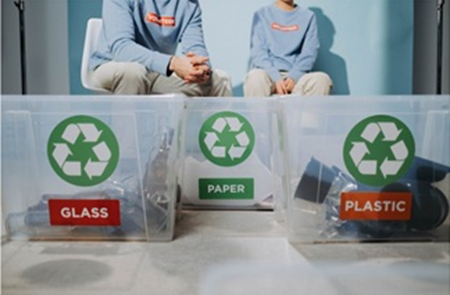
Calvin Lakhan: Circular Innovation Hub - Driving evidence-based change

Eva Schwab: Expanding the Greenbelt in an expanding city
Accolades, Awards and Acknowledgements
EUC is proud to announce its latest recipients of Tri-Council grants as well as non-government and industry contracts. From social sciences to health and natural sciences, our projects reflect the interdisciplinarity and diversity of the Faculty's research. From scientific discoveries to impactful social and cultural insights, the work of our faculty, postdocs and students reflects our commitment to fostering a collaborative and vibrant research environment on questions of critical global concern.

Dean Alice Hovorka received a SSHRC Insight Grant for her research on "Animal Performativity: ‘Becoming Primate’ in Human Society." The research will feature case studies of non-human primates by exploring the lives of macaques, orangutans and howlers in order to unearth human-primate relations. She will be working with Siobhan Speiran who received a Canada Postdoctoral Research Award and whose research explores intersections of sustainable tourism, multispecies governance, animal welfare, and wildlife conservation. They recently published an article on "Sustainable wildlife tourism in sanctuaries in Costa Rica" building on the growing scholarship that demonstrates how wildlife sanctuaries can advance animal welfare and species conservation.
Sarah Rotz received a SSHRC Partnership Development Grant for her research "Confronting Financialization, Consolidation, and Settler-Colonial Agri-Food Land Governance in Canada." The project will co-produce knowledge with Indigenous Nations, community land stewards, Chiefs of Ontario (COO), National Farmers Union (NFU), and regional collaborators to examine how financial and governance shifts impact land justice to advance relationally accountable models for just and decolonial land stewardship in the agri-food sector. She also received a SSHRC Partnership Engage Grant to do a feasibility study on public grocery stores in Canada.

Sarah Flicker received a SSHRC Insight Development Grant for her research with Shira Taylor on “Performing Prevention Pedagogies: Exploring the Use of Theatre for Sex Education with Pre-Service Teachers.” The project will address a persistent gap in teacher education, particularly on sensitive topics such as consent, relationships, identity, mental health, and sexual well-being. She is also a co-applicant on a successful SSHRC Connection Grant application with LA&PS Professor Richard Saunders as PI on "Image as Voice: Perspectives on Lithium Extraction in Argentina and Zimbabwe."
Linda Peake received a SSHRC Insight Development Grant for her research on "Place, Body, and Mind: Creating community-based mental wellness tools for graduate students in Canadian universities." She will be working with CITY postdoc fellow Mantsa Katsikana on this project to deepen research on graduate student wellbeing, focusing on those facing intersecting types of marginalization and precarity, while conceptualizing the mental health crisis in academia not as an accumulation of individual vulnerabilities but as a structural condition that prioritizes productivity, competition and constant performance.
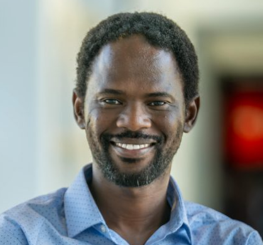
Adeyemi Olusola received an NSERC Discovery Grant for his research "Advancing hydrogeomorphological understanding and monitoring of headwater catchments in Southern Ontario." The study will offer novel, integrated approach to understanding the hydro-geomorphological functioning of river systems, with a unique focus on the spatial organization and dynamic linkages within Southern Ontario’s post-glacial headwater catchments. The development of spatial datasets, models, and non-contact monitoring tools will present significant advancement in evidence-based watershed planning, prioritizing ecological integrity, equity, and resilience.
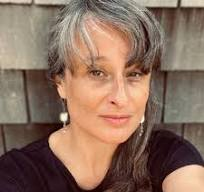
Carlota McAllister's collaborative project on "Vernacular spiritualities in environmental and disaster risk management from the bottom up" with Universidad de los Andes - Colombia received seed funding from the Hemispheric University Consortium (HUC).
The Consortium is a selective alliance of universities across the Americas, including institutions from Latin America, the Caribbean, Canada, and the United States, committed to fostering collaborative academic and research endeavours that respond to global and regional challenges. Through coordinated research initiatives, shared infrastructure, and academic partnerships, HUC member institutions work together to strengthen higher education and research capacity throughout the Americas.
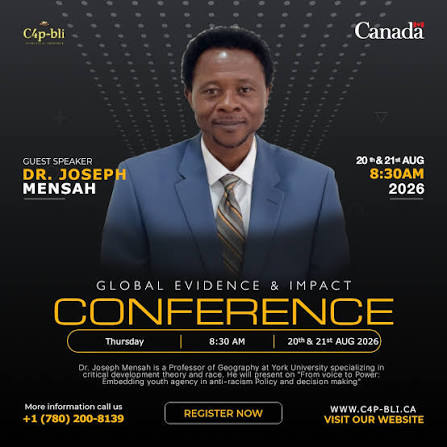
Joseph Mensah served as keynote speaker at the recent Global Evidence and Impact Conference held in Edmonton in August. Organized by the Centre for Practice-Based Learning and Intervention, the event was attended by policymakers, practitioners, and community advocates who gathered to critically interrogate pathways to ensuring more socially just societies. Event speakers shared critical insights on the real-world impact of play-based learning, bridging the gap between evidence and practice. Key contributions provided a powerful vision for the future of education, highlighting the transformative power of playful pedagogy on a global stage.

Martina Jakubchik-Paloheimo received a Canada Postdoctoral Research Award for her research on human-polar bear co-existence in Hudson Bay and James Bay with Omushkego communities along the coast. Her community-engaged research supports Omushkego Knowledge and Polar Bear Conservation in a community-led project to identify the drivers of, and effective mitigation strategies for, human-polar bear interactions. She is also working with the Mushkegowuk Council, which represents and serves Omushkego Cree communities in Northern Ontario, towards advancing Indigenous-led polar bear conservation.
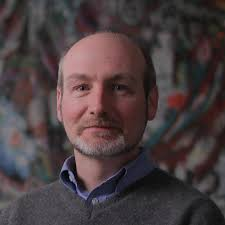
Mark Winfield received a Clean50 Lifetime Contribution Award in recognition of his significant role in Canadian environmental policy since 1992. Canada’s Clean 50's Lifetime Contribution Award recognizes senior sustainability leaders whose careers have advanced environmental protection and climate resilience in Canada. At York, Mark's research has focused on sustainable energy, climate change, environmental law and public policy. He serves as co-chair of York’s Sustainable Energy Initiative and is co-founder of the Ontario Network for Sustainability Energy Policy and helped establish the Energy Modelling Hub as a nationally recognized resource.
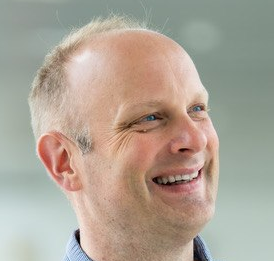
Tarmo Remmel gave an inaugural open lecture to the INTENSE — Integrated Doctoral Program for Environmental, Climate Policy, Management and Technology that took place within the framework of the Erasmus+ SUNRISE project — Supporting Ukraine's Next Generation of Scholars: a Project for Raising University Capacity and Improving Doctoral Student Education. He gave a presentation on the topic "Using patterns and structures to understand the state or changes in landscapes and forests" - an approach that involves going beyond the analysis of exclusively spectral characteristics obtained by remote sensing methods.
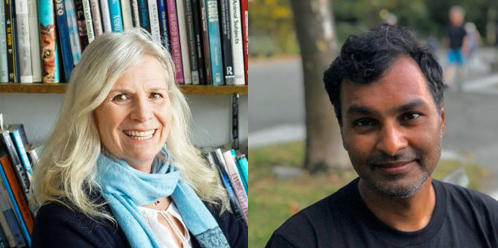
Leesa Fawcett is part of a successful Partnership Development Grant (PDG) led by Collen Dell of University of Saskatchewan. The project "Establishing a Network for Human-Animal Connections Research and Collaboration" aims to create a cross-cultural, transdisciplinary collaborative network to comprehensively study and convey how connections between human and non-human animals influence, interact with, and impact their shared experiences on individual, communal, and societal levels.
Andil Gosine is also part of a Partnership Development Grant ed by Jill Didur of Concordia University. The project "(Re)Thinking Sustainability: Research Network for Global Environmental Humanities" will strengthen institutions and partners’ capacities to respond to the complexity of sustainability issues through better understanding of the relation between planetary health and human well-being.

Briann Dorin received the Femida Handy Award in recognition of her outstanding dissertation work on Wild Bee Conservation in Pollinator-Independent Crop Systems. Following her PhD, her postdoctoral research funded by the Weston Family Foundation examined how wild bees respond to vineyard management practices in Niagara and the surrounding landscape composition to understand which factors support healthy bee communities. Her work continues the conservation science research legacy of the late EUC professor Sheila Colla. She is now working as adviser for the Business and Client Development at Vineland Research and Innovation Centre.
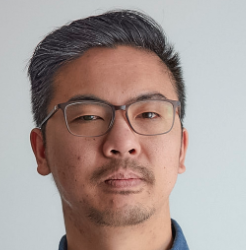
Esmond Lee, EUC PhD candidate in Environmental Studies, has been awarded the Susan Mann Dissertation Scholarship for 2026-2027. The scholarship assists outstanding doctoral students in their final year of doctoral study to concentrate exclusively on and complete their dissertations.
Lee is an community artist, architect and doctoral student in Critical Human Geography. His research deals with migration, class and capitalism, settler colonialism, and informal spatial (re)production in Toronto’s urban periphery. He recently published an article titled "Resisting detached abstraction and universality: The politics and practices of artmaking in the racialized suburbs of Scarborough, Toronto".

Charlotte Minnes (MES 2026) received the 2026 CIP-PSTF Outstanding Graduating Student Award. The Canadian Institute of Planners-Planning Student Trust Fund (CIP-PDTF) Outstanding Graduating Student Award recognizes one graduating student from each accredited planning program (undergraduate and postgraduate) in Canada, who has demonstrated an outstanding contribution to their future profession. To support her ongoing professional development in planning, she received a complimentary registration for “The Path: Your Journey Through Indigenous Canada”, an Indigenous cultural awareness course offered by the Canadian Institute of Planners (CIP) and created by NVision Insight Group Inc.
Minnes' major paper focuses on Toronto Waterfront’s Revitalization: Planning Policy’s Evolution and Commitment to Public Space Over Time with Liette Gilbert as her supervisor. Following graduation, she joined the Department of National Defence as a Land-Use Planner within the Real Property Portfolio planning team. In this role, she applies her passion for sustainable development and human-centred design to support long-term planning initiatives for Canada’s defence communities across the country.
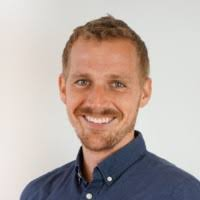
Brian Waters, EUC PhD candidate in Goegraphy, received a MITACS Globalink Research Award for his PhD research titled "From Insecurity to Strategy: Making Community Water Solutions Legible in Freetown, Sierra Leone" with Martin Bunch as academic supervisor.
Waters studies water security in West Africa focusing on gender, participatory action research, and decentralized water infrastructure in urban settings. He has completed nearly half a year of water justice data collection in March and now wrapping up a year of field work in Freetown, Sierra Leone.
EUC recently welcomed several postdoctoral researchers and visiting scholars to the Faculty. The postdocs and visiting scholars work with EUC faculty to advance academic research, build professional networks, exchange knowledge and foster research collaboration.

Oleksandr Galychyn is our postdoctoral researcher from Ukraine. His research explores how economies depend on energy, materials, water, and ecosystems and his work brings together ecological economics, environmental accounting, life cycle assessment, and systems modelling to better understand how economic activity affects the environment and how these relationships may change over time. He is working with Peter Victor and Eric Miller in the International Ecological Footprint Learning Lab on research connecting economic development with environmental limits.

Tilen Kolar is our postdoctoral researcher from the UK. He recently completed his PhD at the University of Leeds on queer mobilities and spatial scale in Central and Eastern Europe. At CITY Institute and EUC, he is currently working on a project on queer cultural infrastructure and the remaking of inclusive cities with Professor Alison Bain, alongside a comparative study of modalities of queer mobility in the context of infrastructural citizenship and urban rail transportation in Canada, Spain, and India with Professor Patricia Wood.

André Braz Golgher is Full Professor at the Economics Department and the Graduate Program in Economics at the Federal University of Minas Gerais (UFMG), Brazil. His research focuses on demography, social economics, regional economics, mathematical economics, population, and metropolitan areas. For his visiting scholarship, he will work with Lina Brand Correa on common research and teaching interest in ecological economics. He has co-published an article on A transdisciplinary framework for assessing human impacts and sustainability in tropical hydropower reservoirs identifying conservation priorities, informing management strategies, and supporting policies at hydropower plants in South America.

Hannah Richter is Assistant Professor in Politics at the University of Sussex, UK, where she researches and teaches critical political thought, and Editor-in-Chief of Distinktion: Journal of Social Theory. She is the author of The Politics of Orientation. Deleuze meets Luhmann (SUNY Press, 2023) and Challenging Anthropocene Ontology. Modernity, Ecology and Indigenous Complexities (Bloomsbury, 2024; with E. Randazzo). She is working with Ilan Kapoor on a project that will develop a critical genealogy of how 20th century democratic thinking imagines ‘the masses’. She will deliver a lecture titled "The spectre of the crowd: liberal democracy and the fear of the masses" on Wednesday, November 4, from 4:30-6:30pm at HNES 142. Everyone welcome!
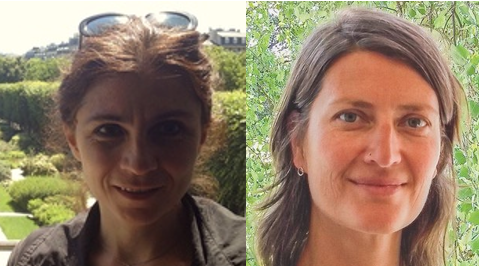
Camilla Perrone and Eva Schwab were invited by Ute Lehrer for a short visit to York this September. Perrone's visit aimed to develop a comparative exchange between European and North American research on “terrain vague” understood as urban voids, vacant land, leftover and underused spaces, and on strategies for their adaptive repurposing.
Schwab delivered a talk on "Expanding the Greenbelt in an Expanding City" where she shared the history of the Vienna Greenbelt, arguing that the inhabitants of the Vienna region understand the greenbelt as a common good and have taken to shape it actively.
Angela Stienen, EUC Scholar-in-Residence from the Institute of Research and Development, University of Bern, will also be at York for two months till December to share her work on planetary perspectives in/on knowledge co-production between the global South and North, developed in the frame of the long-standing research partnership between Colombia’s second largest public university, University of Antioquia in Medellín and the University of Bern, Switzerland.
Publications and Reports
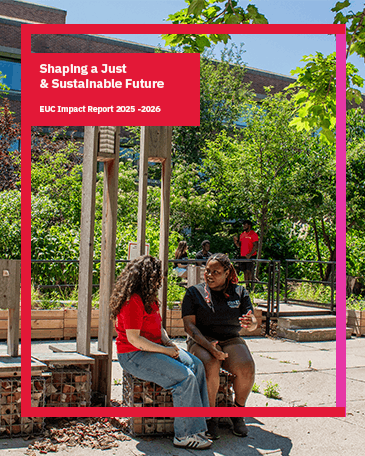
EUC Impact Report 2025-2026. The Faculty of Environmental & Urban Change (EUC) has released its latest Impact Report, showcasing a banner year of research in action. From climate resilience to Indigenous knowledge to student research and new ways of thinking about urban life, the report brings together a year of ideas, discoveries, and partnerships. It is a snapshot of our work that moves across disciplines, geographies, and ways of knowing, connected by a share commitment to contributing to meaningful change.
Akingboye, A..S, Adeola, A.O., Olusola, A.O. (2026). Artificial intelligence for groundwater sustainable development under climate variability and socio-environmental stress, Groundwater for Sustainable Development, Volume 35, 101690.
Das, R. J. (2026) Marx, the State, and Primitive Accumulation: Rethinking Dispossession Under Capitalism. 1st edition. London: Routledge.
Dorin, B. C., & Colla, S. (2026). Are broad sustainability practices sufficient to support wild bees? A case study in cool-climate vineyards. Renewable Agriculture and Food Systems, 41, e30.
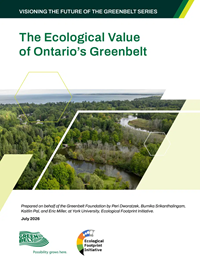
Dworatzek, P., Srikanthalingam, B., Pal, K., Miller, E. (2026). The Ecological Value of Ontario’s Greenbelt. Report part of the Visioning the Future of the Greenbelt Series published by the Greenbelt Foundation.
Gasman, R., Jumbo, R., Korosi, J. et al. (2026). Microcystins detected in a drinking water source in subarctic Northwest Territories, Canada. FACETS. 11: 1-15.
Gebresselassie, M., & Korniyenko, G. (2026). Aspects of Social Engineering in Planning: A Critical Analysis. Journal of Planning Literature, 0(0).
Hong, A., Gebresselassie, M., Kim, J., Li, S. (Alex), Cochran, A. L., Bogra, B., & Biglieri, S. (2026). Bridging the Gap: Accessibility for Aging and Disability in Planning. Journal of the American Planning Association, 92(4), 629–636.
Japiong, M., Landy, C.K., Mensah, J., et al. (2026). Understanding the healthcare services and social support needs of patients with end-stage kidney disease in Ghana. BMC Nephrol 27, 435,
Kapoor, I. (2026) 'Tariff nationalism as symptom: the libidinal economy of trade', Distinktion: Journal of Social Theory, 1–12.
Kapoor, I. (2026). Dissociation or disavowal? or, Where's the fetish? Political Geography, Volume 129, 2026, 103509.
Kapoor, I. (2026). Against Pluriversality: Epistemology, Ideology, and the Disavowal of Capitalist Antagonism. Antipode.
Kapoor I. (2026). There is no outside: on the impossibility of non-Eurocentrism. International Theory. Published online 2026:1-20.
Kipfer, S. (2026). Book Review: The hostile city of love and antibodies of hate. Urban contestations of identity by Demirsu Ipek, Leiden, Brill, 2025, 296 pp.
Kish, K., Fieldwebster, J., and Curran, A. (2026). Cultural Footprints in the Manyèr èkawlawjik michif de traké: Bridging Métis Knowledge, Sustainability, and Economic Behaviour. Journal of Aboriginal Economic Development.
Olusola, A. O., Amanambu, A. C., & Ghorbani, M. A. (2026). Surface flow dynamics using LSPIV: insights from the July 2024 flood event in Black Creek, Toronto. Physical Geography, 1–22.
Ohemeng, F.N.A., Wrigley-Asante, C., Mensah, J. (2026) et al. Livelihood vulnerabilities among women in the bushmeat trade in Ghana during the COVID-19 pandemic. Humanities and Social Science Communications.
Ross, T.R. , Thiemann, G., et al. (2026) 'Habitat Selection and Intrapopulation Spatial Segregation in an Arctic Top Predator at the Southern Limit of Its Range', Global Change Biology [cite: 7.1.2].
Rutherford, J., Fraser, G., et al. (2026). Examining inclusivity of participation and engagement in Aotearoa New Zealand’s offshore petroleum governance. The Extractive Industries and Society. 101878. 10.1016/j.exis.2026.101878.
Rutherford, M., Fraser, G., et al. (2026). Offshore fossil fuel extraction and marine conservation: intensifying regulatory challenges in Australia. Journal of Costal Conservation, 30, 45 (2026).
Saha, C.K.,, Carter, A.V., Fraser, G.S. et al. (2026). Conservation and Regulatory Tensions at Acreage Release in Offshore Newfoundland and Labrador, Canada. In Ocean Yearbook Online. Brill.
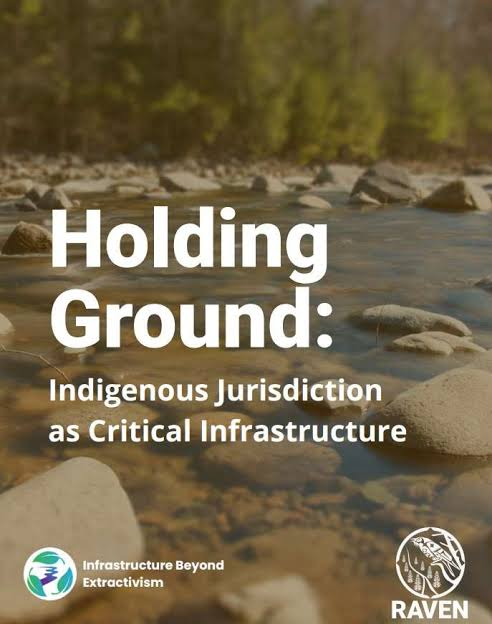
Scott, D.N., Kiiwetinepinesiik Stark, H., Sophia Jaworski, J., Robinson, M, Magill, L. and Mandamin, Z. (2026). Holding Ground: Indigenous Jurisdiction as Critical Infrastructure. Infrastructure Beyond Extractivism Report. Raven.
Shira T., Virani, I., Flicker, S., et al. (2026). Staging We're Just Men: Gender Transformation through Theatre-based Peer Education. Girlhood Studies. 19. 1-16. 10.3167/ghs.2026.190202.
Speiran, S.I.M. and Hovorka, A.J. (2026). Sustainable wildlife tourism in sanctuaries in Costa Rica. Annals of Tourism Research Empirical Insights, 7(2):100228. Elsevier.
Vayghan, S.S. and Remmel, T.K. (2026). Integrating Explainable Machine Learning and Classification methods for Wildland Fire Danger Mapping. International Society for Photogrammetry and Remote Sensing. Volume XLIX-B3.
Wrigley-Asante, C., Ohemeng, F., Mensah, J. et al. (2026). Attitude and behaviour of women traders towards (in)formal insurance schemes in the context of COVID-19 impacts in Ghana. Liverpool University Press.
Zalik, A., Biorklund, L. and Hernández Cervantes, A. (2026). North American Neomercantilism and Energy Sector Integration: Trade Disputes, Green Marketing, and the Continental Infrastructural Regime. Norteamérica, Vol.21, No.2. Ciudad de México jul./dic. 2026 Epub 08-Oct-2026
Zalik, A., & Fraser, G. S. (2026). Conservation and regulatory tensions at acreage release in offshore Newfoundland and Labrador, Canada. Oryx, 40(1), 374–382. https://brill.com/view/journals/ocyo/40/1/article-p374_13.xmlhttps://papers.ssrn.com/sol3/papers.cfm?abstract_id=7028698
EUC and Associated Events
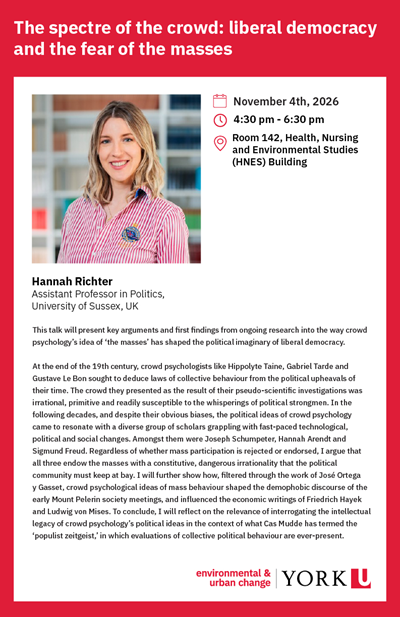
EUC visiting scholar Dr. Hannah Richter will give a talk on Wednesday, November 4 at 4:30pm at HNES 142 on "The Spectre of the Crowd: Liberal democracy and the fear of the masses." Richter is Assistant Professor in Politics at the University of Sussex, UK, where she researches and teaches critical political thought, and Editor-in-Chief of Distinktion: Journal of Social Theory. In her talk, she will present key arguments and first findings from her ongoing research into the way crowd psychology’s idea of ‘the masses’. She will reflect on the relevance of interrogating the intellectual legacy of crowd psychology’s political ideas in the context of what Cas Mudde has termed the ‘populist zeitgeist,’ in which evaluations of collective political behaviour are ever-present.

The Infrastructure Beyond Extractivism (IBE) project & Sacred Earth Solar Present: Indigenous Resilience Against Extractivism. In this webinar, Sacred Earth will share their approach to grassroots climate solutions, with a focus on lessons learned during their community education programs. Sacred Earth is an Indigenous women-led organization that partners with Indigenous communities to build resilience in the face of climate change. SE provides support for community-led climate solutions and clean energy infrastructure; conducts Indigenous-centered research; provides training and educational resources; and advocates for equitable climate policy and Indigenous sovereignty. When: Thursday, November 12th, 11:30 AM – 1 PM PT.
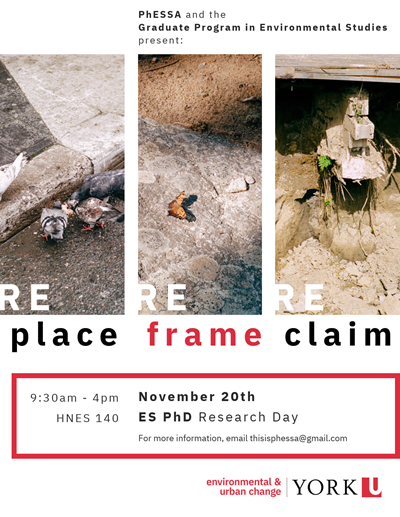
PhESSA, the ES PhD Program, and the Faculty of Environmental and Urban Change are pleased to announce ES PhD Research Day 2026 on November 20. The day will showcase the rich diversity of work being done by PhD students in Environmental Studies to address the complex social, ecological, economic, spiritual, technological, and political conditions of our time.
The day’s theme, (Re)Place, (Re)Frame, (Re)Claim, gathers critical and creative responses to the overlapping crises of our built, conceptual, and natural environments locally and globally, highlighting interdisciplinary perspectives and intersectional justice in doctoral research. This is a day-long, in-person event that seeks to foster community among PhD students as well as with faculty in EUC and the larger research community at York.
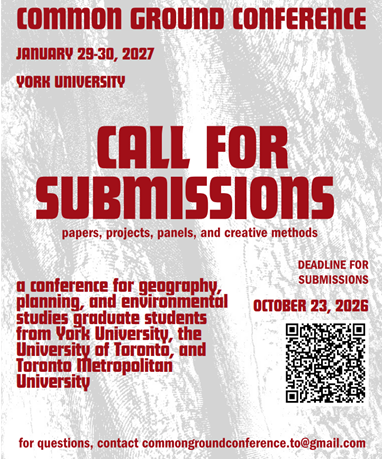
Call for Abstracts: Common Ground Conference - January 29-30, 2027. In January 2026, students from York University and the University of Toronto gathered for the first joint conference of geography graduate students between the two universities. This gathering began to build connections between graduate students who work on spatial matters and create a space of conviviality and solidarity. Building on the success of this initial gathering, the Common Ground in January 2027 will expand in multiple ways. Colleagues from Toronto Metropolitan University, University of Toronto and York University invites students to join the conference extending the disciplinary reach of the conference beyond geography, to welcome environmental studies, urban planning, and other relevant spatial disciplines. Registration for the conference is free. For further questions about the call and conference, please contact the organizing committee at commongroundconference.to@gmail.com.
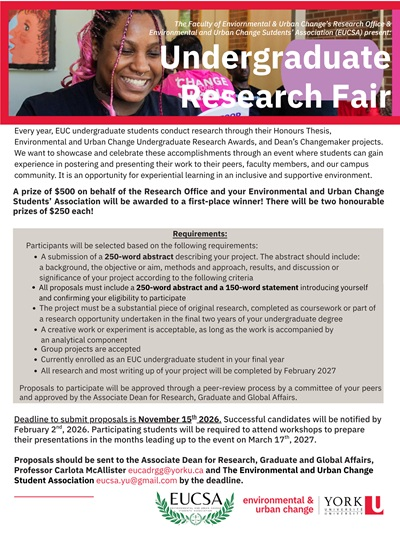
Every year, EUC undergraduate students conduct research through their Honours Thesis, EUC and Tri-Council Undergraduate Research Awards, and Dean's Changemaker projects. The EUC Undergraduate Research Fair, hosted and organized by the EUC Undergraduate Student Association (EUCSA), celebrates and showcases these accomplishments through events where they can gain experience in postering and presenting their works to their peers, faculty members and campus community. Deadline to submit proposals: November 15, 2026. Proposals including a 250-word abstract about your project and a 150-word statement about yourself and your eligibility should be submitted to the Associate Dean Research, Graduate and Global Affairs at eucadrgg@yorku.ca and EUCSA at eucsa.yu@gmail.com.

The 77th annual meeting of the Canadian Association of Geographers will be hosted by the Faculty of Environmental and Urban Change on May 31 - June 3, 2027. The conference will consist of four days of sessions, posters, field trips, social events and keynote lectures. Geographers and allied researchers from across the discipline and around the world are warmly invited. The conference will be in-person only, with no online or hybrid formats.
The overall conference theme is ‘Geographical Stories / Récits Géographiques’ - a theme that signals the diverse forms of geographical knowledge production that the conference will encompass; and, the importance of translating and mobilizing geographical research through compelling stories. Further details can be found on the main conference website. Inquiries can be sent to CAG2027@yorku.ca
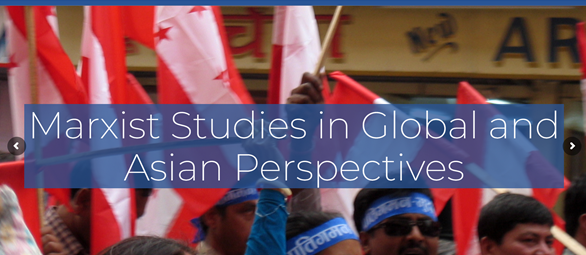
Call for Papers: The Marx Conference 2027 - The Current Conjuncture and the Making of Possible Futures, York University, Toronto
3–5 August 2027. Following the inaugural Marx Conference on "The Power of Marxist Thought" in 2025, the next conference organized by Marxist Studies in Asian and Global Perspectives (MSGAP), will bring together scholars, students, activists, and organizers to examine the disjuncture between the depth of capitalism’s crises and the relative weakness of left organizing, with the aim of clarifying the conditions for socialist renewal in our time. Individual papers, panels, roundtables, book discussions and book launches on the following themes of political economy, ecology, and new technologies, state and democracy, socialism, culture, strategy and resistance are welcome that combine theoretical analysis with historical investigation and/or practical experience. Deadline for abstract submission: December 15, 2026.
Recent Events
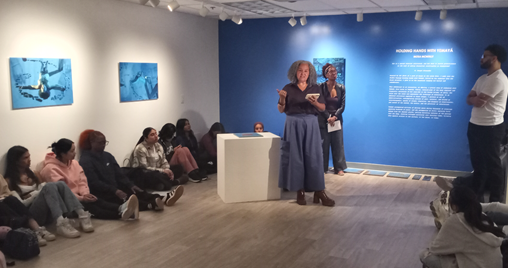
EUC PhD candidate Mosa McNeilly recently held an artist talk for her exhibition at the Crossroads Gallery titled "Holding Hands with Yemaya." An interdisciplinary artist working in Ontario for 35 years, McNeilly's studio practice began in the 1980s confronting global themes of white supremacy and colonial violence. The solo performance is a meditation on the embodied experience of sacred accompaniment. The works are created through a photomontage process of layering, deconstructing, and reassembling imagery from different sources. By blending the historical, the embodied, and the symbolic, the works act as a sort of temporal palimpsest—collapsing past, present, and the timeless realm of the sacred, while gesturing towards an Afrofuturist imaginary.
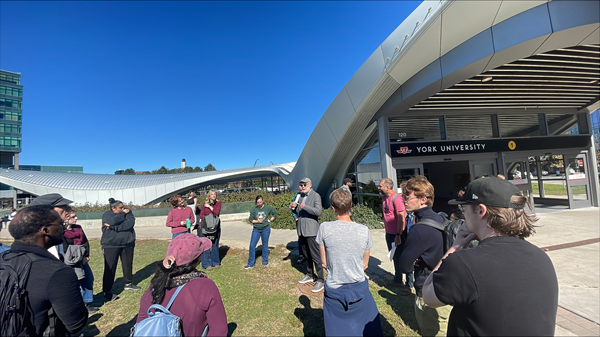
Anders Sandberg led an Alternative Campus Tour of York University, a pedagogical tool to equip and engage students and community members to critically examine conceptions of the campus space and community. With an Indigenous focus, the walking tour and educational experience see university grounds not just as standard institutional spaces, but as colonized land and living history. By walking the campus as tourists and talking about the campus as tour guides, the tour seeks to enable participants to learn and converse about the historical context of the university. This participatory learning process gives them the opportunity to explore and contest how the campus space is or could be used by members of the university community and allows them to envision new stories about the campus space. The event was sponsored by the Environmental Research Group at the Robarts Centre for Canadian Studies.
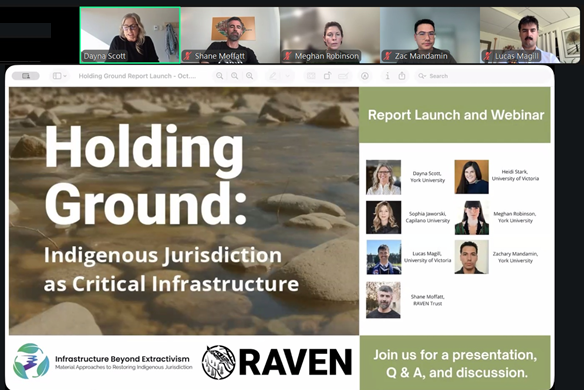
The Infrastructure Beyond Extractivism project held a webinar launching their report titled Holding Ground: Indigenous Jurisdiction as Critical Infrastructure. The report's authors and collaborators, Dayna Nadine Scott, Heidi Kiiwetinepinesiik Stark, Sophia Jaworski, Lucas Magill, and Zachary Mandamin, presented the report and its main ideas. Essentially, the report argues that restoring Indigenous jurisdiction is itself an investment in critical infrastructure and asks what it would mean to reclaim roads, rail corridors, and abandoned mining sites as vehicles for Indigenous governance rather than extraction. The report is of interest to faculty, graduate students, and staff, particularly those working on Indigenous law and governance, environmental justice, infrastructure, resource policy, and climate.
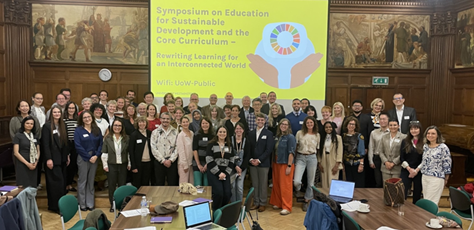
Ellie Perkins, Patty Walker (MES candidate) and Steve Alsop co-authored and presented a symposium paper on "Education for Sustainable Development in an Era of Polycrisis” at the Symposium on Education for Sustainable Development and the Core Curriculum - Rewriting Learning for an Interconnected World held this October in London, UK.
The Symposium was organised and hosted by the University of Westminster in London, UK, in partnership with the Research and Transfer Centre Sustainable Development and Climate Change Management at the Hamburg University of Applied Sciences (Germany), the UK Consortium on Sustainability Research (UK-CSR), European School of Sustainability Science and Research (ESSSR), and the Inter-University Sustainable Development Research Programme (IUSDRP).
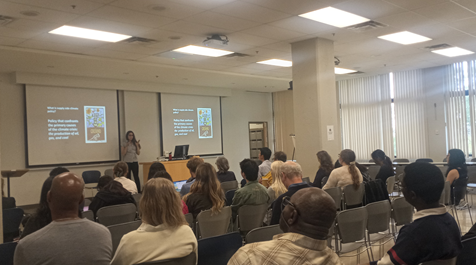
Angela Carter, Professor at the Department of Political Science and Canada Research Chair in Equitable Energy Governance and Public Policy delivered a lecture on "How to Elbow Up for Phase Out? Canada and the Global Imperative to End Oil Production. In this talk Carter emphasized that climate change requires not only reducing fossil-fuel use but also limiting the continued expansion of oil and gas production.
As a major fossil-fuel producer, Canada has both a responsibility and an opportunity to support this transition. Her discussion highlighted the importance of a just transition that protects workers, supports communities and Indigenous peoples, and creates new opportunities in renewable energy and other emerging sectors. She also examined how political and economic interests can slow meaningful climate action. Overall, she underscored that achieving a successful energy transition will require political commitment, international cooperation, and ensuring that no one is left behind.
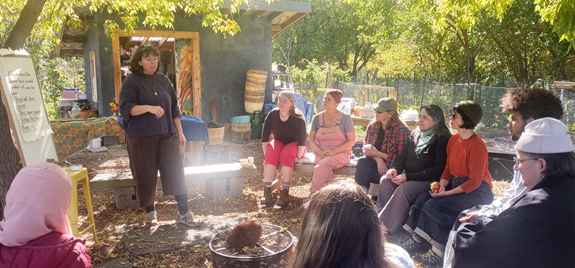
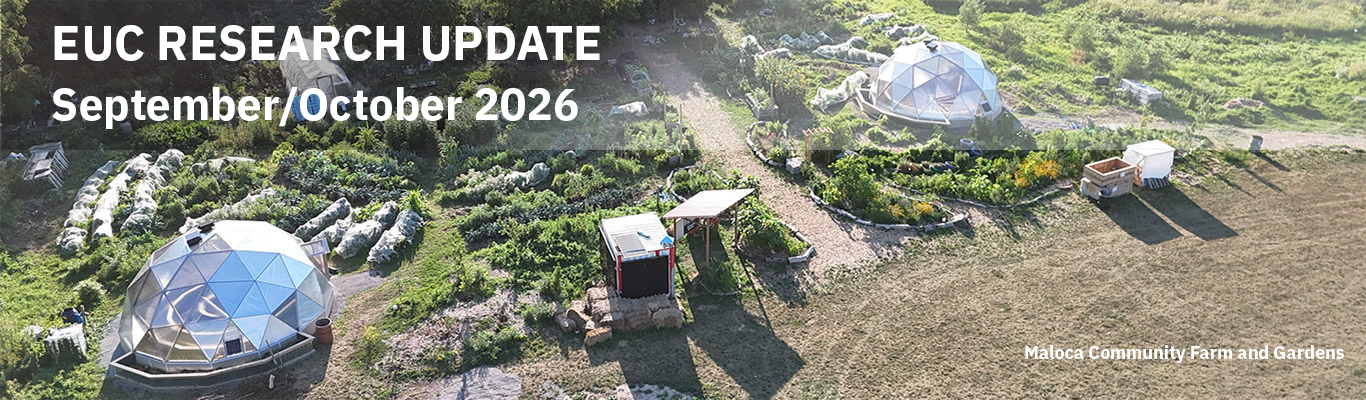
EUC's Maloca Community Gardens recently held a Mini Eco-Arts Festival, a community-oriented event where creativity and sustainable visions intersect. This first event celebrates the solar-punk spirit of Maloca Gardens, where the energy of wind, sun, and plants meets DIY creativity and collective action.
Attendees participated in a series of events and collaborative workshops to build a deeper understanding of the intricate relationship between art and the environment. They also collaborated, created, and explored insights surrounding the intersectionality of art and environmental sustainability. Maloca has an Earthworks Program from May to November, Tuesdays and Thursdays, 4-7pm. Just drop in or sign-up to volunteer.
EUC in the Media

Ilan Kapoor penned an op-ed in The Loop titled "When the exception becomes the rule in world politics." In this article, he argues that governments are increasingly governing through exceptions built into the rules themselves highlighting that "Liberal political systems normally operate through procedures, with emergencies exposing the authority capable of suspending them. Increasingly, however, the exception is written into the rules." Kapoor concludes that the international order is evolving into a system where rules contain mechanisms for their own suspension, making exceptional governance a routine part of political life rather than a temporary deviation.
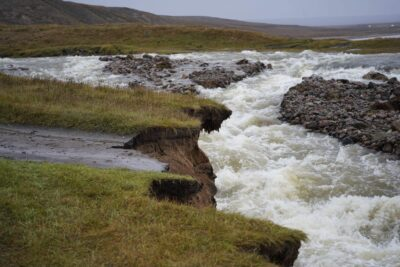
Gregory Thiemann was cited in Nunatsiaq News about Nunavut’s future. Titled "What will Nunavut look like by the end of the century?", he is one of the scientists who predict Nunavut’s winters could be 10 C warmer for much of the winter by 2100. He observes that the dark water on ice- and snow-covered surfaces indicate that they are now absorbing more heat. Earlier, in a YFile article featuring York research in the Arctic, he and other York researchers are shedding new light on how declining sea ice affects the health of the ringed seals and polar bears that depend on them.
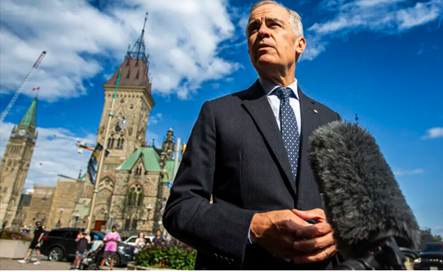
Mark Winfield published an op-ed in The Hill Times examining Prime Minister Carney’s reliance on nostalgia in justifying the proposed changes to environmental protections under Bill C-39, officially known as the Building Canada Strong Act.
The bill is Canada's bold plan to build a stronger, more resilient economy by streamlining federal approval processes, simplifying permits, lowering investor risk, and coordinating long-term regional development planning in the national interest, giving investors greater certainty to deploy capital, advance projects quickly, and create high-paying Canadian jobs.
The op-ed offers an important perspective on how environmental policy, political narratives, and regulatory changes intersect in Canada.
Contact Us
The EUC Research Update is compiled by the Research Office at EUC: Associate Dean Research, Graduate & Global Affairs Carlota McAllister, Research Officer Rhoda Reyes, and Special Project Assistants, Shirin Chugh and Nicole Nwanshi. Thanks to Paul Tran for the web design and development.
We welcome the opportunity to pass along research-related information and achievements from our whole community - faculty, postdocs, visiting scholars, students, and retirees.
News for future updates can be submitted using the EUC Kudos and News form, circulated monthly. Or, send your news directly to: eucresea@yorku.ca
If you are not on the EUC community listserves, but would like to receive this Research Update each month, send an email to eucresea@yorku.ca
Faculty of Environmental and Urban Change (EUC)
4700 Keele Street, Toronto, Ontario, Canada M3J 1P3
(416) 736-5252