
Project
Last Updated on March 5, 2024
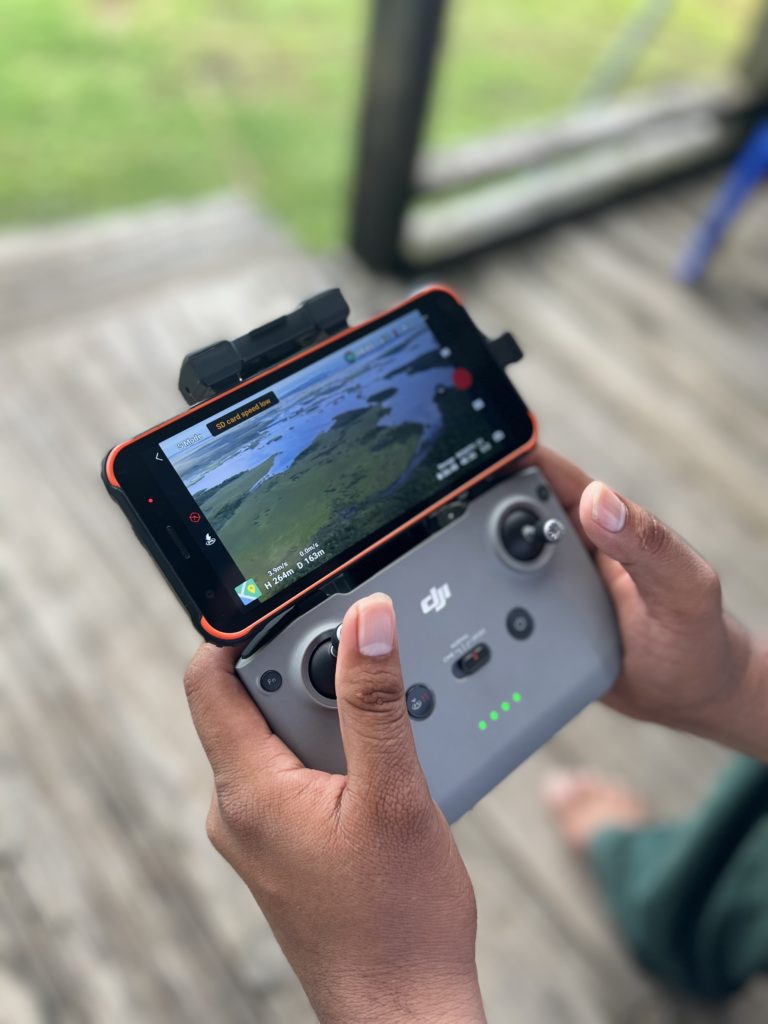
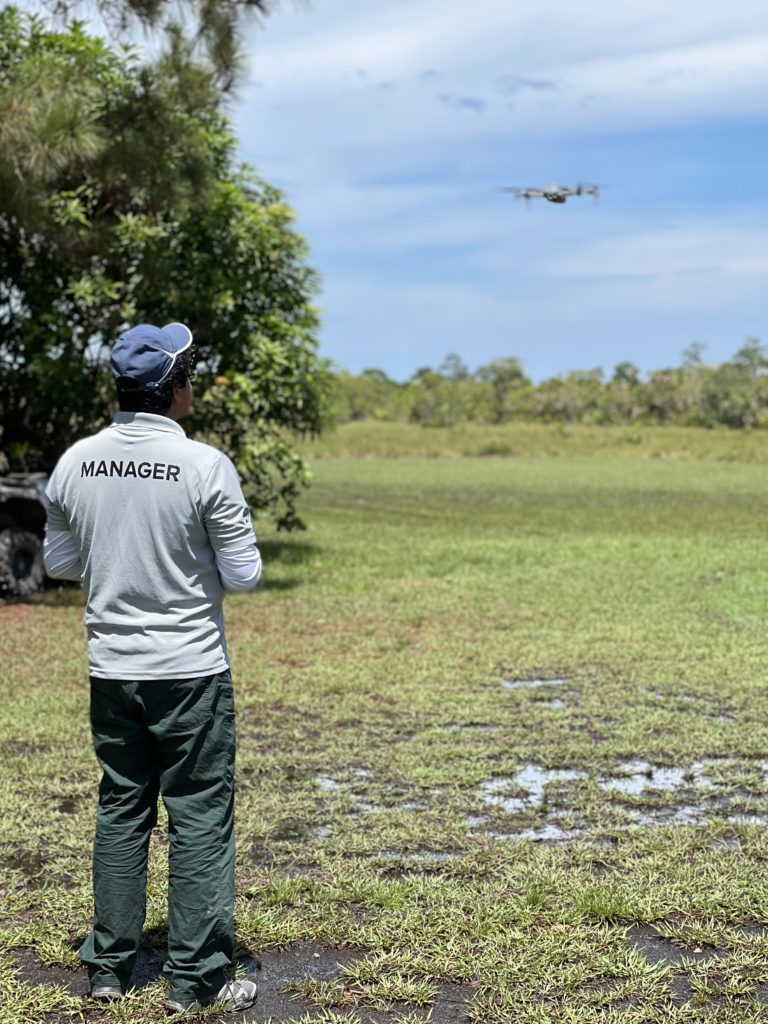
This two-year project led by Dahdaleh Institute Research Fellow James Stinson will provide a qualitative and ethnographic examination of the Spatial Monitoring and Reporting Tool (SMART) and its use in terrestrial and marine protected areas in Belize. Framed through the interdisciplinary lens of political ecology, the project will explore the social and ecological impacts of SMART conservation in Belizean protected areas and bordering communities. It will also consider the broader implications of conservation and protected area management decisions being increasingly shaped not by humans and local knowledge but by smart sensors, algorithms, and artificial intelligence.
In 2018, Belize adopted the Spatial Monitoring and Reporting Tool as the country’s official monitoring system for their protected area network. SMART is a digital data collection and analysis platform used in over 70 countries and 1000 protected areas. It uses a range of digital sensors, mobile devices, cloud-based storage, and artificial intelligence to allow conservation and protected area management organizations to collect, store, share, and analyze data and intelligence on wildlife observations, poaching, arrests, and other events in real time. The most recent update to the platform (SMART 7) also facilitates “Predictive Patrol Planning,” which uses machine learning to plan ranger patrols by predicting poachers’ future behaviour and the probable locations of illegal activities in protected areas.
Significantly, the adoption of SMART in Belize reflects a global trend in conversation away from models of integrated conservation and development toward a focus on combating the illegal wildlife trade and the policing of protected areas using digital monitoring and surveillance technologies.
Project activities will occur in four phases:
- Literature review of digital and smart conservation (September 2021 to April 2022)
- Interviews with protected area managers and conservation professionals in Belize (March 2022 to May 2022)
- Ethnographic fieldwork with terrestrial and marine protected area management organizations in Belize (May to August 2022, May to August 2023)
- Mobilization of project results (September 2022 to August 2023)
Project Lead
James Stinson is a postdoctoral fellow in planetary health and education at York University, cross-appointed to the Faculty of Education and the Dahdaleh Institute for Global Health Research. James has a PhD in anthropology from the University of Toronto and has built a research program that advances transdisciplinary debates at the intersection of political ecology, conservation and development, Indigenous and youth-centred approaches to planetary health, and wellbeing in the Anthropocene. A central question driving this research is how process of conservation and development are imagined, contested, and forged in particular cultural, economic, and technological contexts. Central to this inquiry is a recognition of the need to decolonize human–environment relations to build sustainable and just futures. James has extensive ethnographic research experience focused on ecotourism, integrated conservation and development, and Indigenous social movements in Belize, and he has recently initiated a new program of youth-led research focused on promoting understanding and awareness of Indigenous conceptions and practices of planetary health and wellbeing.
Project Team Members
- Tieneke Dykstra, PhD – Research assistant, York University
- Lee McLoughlin (PhD Candidate) – Research assistant, Florida International University
- Rebecca Zarger, PhD – Collaborator, University of South Florida
- Noella Gray, PhD – Collaborator, University of Guelph
Acknowledgments
This project is funded by an Insight Development Grant from the Social Sciences and Humanities Research Council of Canada.

Themes | Planetary Health |
Status | Active |
Related Work |
N/A
|
Updates |
Spotlight – James Stinson, Reflections on a Postdoctoral Exploration of Planetary Health Education | January 20, 2026
Dahdaleh Postdoctoral Fellow Discusses Digitalization and Predictive Policing in Conservation | June 8, 2023 Recap — Conservation at What Cost? Surveillance Technology and Community Conservation | April 21, 2023 |
People |
James Stinson, Postdoctoral Fellow, Planetary Health & Education - Alum
Lee Mcloughlin, Research Assistant, SMART Conservation - Alum Tieneke Dykstra, SMART Conservation, Global Health Intern [S21; FW21-22] - Alum |
You may also be interested in...
Digital Wellbeing Hub
With funding from Heritage Canada’s Digital Citizen Contribution Program, this project worked together with youth and community partners in the unique co-development of Canada's first comprehensive Digital Wellbeing Hub as a safe online space for ...Read more about this Project
Climate Change Research Month showcases York as community of changemakers
A month-long series of events hosted by York University Organized Research Units (ORU) and campus groups aim to generate awareness on climate change research and mobilize community action. March 1 marks the start of the second annual ...Read more about this Post
Recap — Sensory Investigations in Global Health Practice: Critical Perspectives in Global Health Workshop
Kristina Baines What does it actually mean to be healthy? This is one of the questions that this year’s Critical Perspectives in Global Health Workshop sought to address and, more importantly, challenge. Anthropologist Kristina Baines ...Read more about this Post