
Post
Published on August 3, 2023
Despite commendable advances in new Tuberculosis (TB) diagnostics and more safe and effective TB treatments, as depicted in the latest Global TB Report, 10.6 million people fell ill, and 1.6 million people died of TB in 2021. 2023 is a critical year with opportunities to raise visibility, political commitment, funding, and investments for the more effective and people-centered TB response.
On 8-9 May 2023, UN Multi-stakeholder Hearings on three components – TB, Universal Health Coverage (UHC) and Pandemic Prevention, Preparedness and Response (PPPR) – were held at the United Nations (UN) Headquarters in New York. They brought together representatives of the UN Member States, observers of the General Assembly, UN Missions, technical and donor agencies, civil society organizations and TB-affected community, academia, professional associations, and the private sector to voice up their expectations on the priorities of the Political Declaration ahead of High-Level Meeting on TB (UNHLM on TB) in September 2023 which will take place during the UN General Assembly.
Dr. Amrita Daftary, Dahdaleh Faculty Fellow and Associate Professor at the School of Global Health, York University, and a founding director of the Social Science & Health Innovation for TB (SSHIFTB), and Yuliya Chorna, doctoral student of the Program in Social Anthropology, York University and Dahdaleh Global Health Graduate Scholar, with the support from the Dahdaleh Institute, attended the Multi-stakeholder Hearings. Their participation in the Multi-stakeholder Hearings and side events helped to expand research and networking opportunities with the global academia, affected community, and other stakeholders in TB and analyzing existing discourses central for TB response.
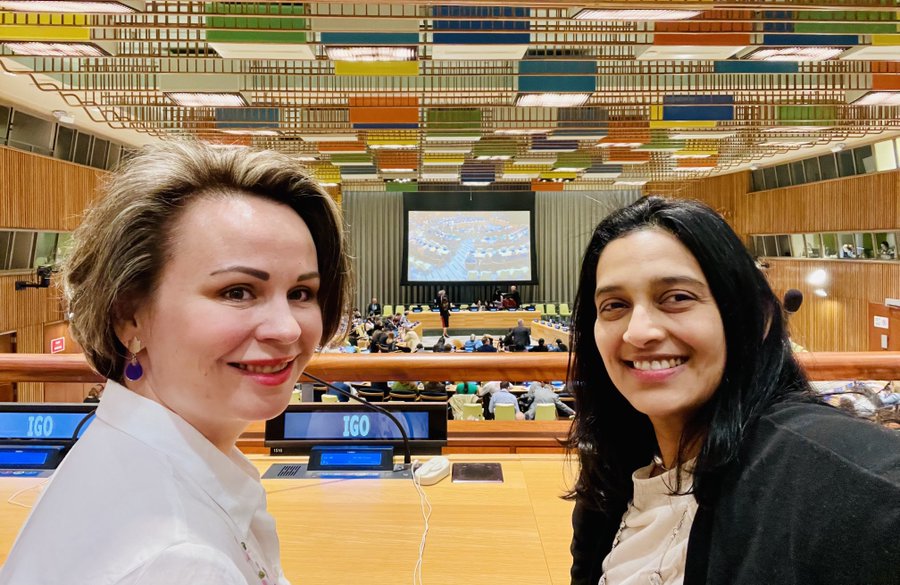
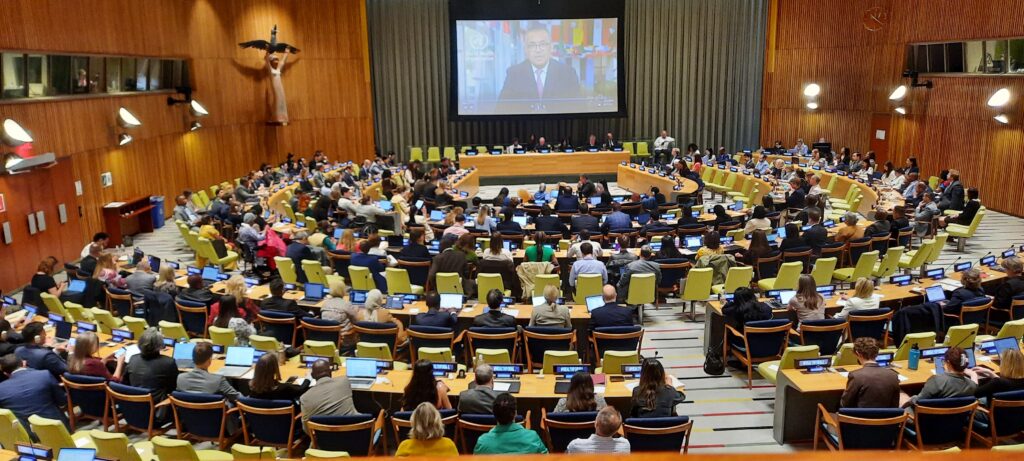
Dr. Daftary’s intervention during the TB Multi-stakeholder Hearings gave a strong impulse to further negotiations of the text of the Political Declaration on the value of the social science TB research: “The TB research & development agenda has to include social science research adjacent to biomedical research. Social science TB research is the approach to unveil and address the social determinants of TB. Often qualitative, it is by nature inclusive, participatory, equity-oriented, anti-colonial and community engaged. It can serve as a bridge to mobilize the acceptability and utilization of TB innovations and technologies.”
Social scientists have indeed made a tremendous contribution to the growing recognition of TB as a disease linked to social determinants and inequities. Despite this recognition and some momentum towards multisectoral actions in the TB response, TB policy and practice still retains a predominantly biomedical focus.
Hopefully, the 2023 UN HLM on TB (offers a window of opportunity to transform normative discourses in TB and stimulate steady changes in subsequent responses, including sufficient funding allocations to support social science insights on the drivers of TB, and to inform the development and evaluation of emerging tools and approaches. The programme is available at the UN General Assembly Resolution: A/RES/77/274. Specially accredited stakeholders may register here and ECOSOC-accredited organizations may register here by August 11, 2023, 12:00 EDT.
A zero draft of the Political Declaration of the UNHLM on TB has been released after these UN Multi-stakeholder Hearings, and there have been further consultations facilitated by various coordination platforms with engagement of stakeholders, including academia to feed into the document - ensuring it prioritizes a more equitable and people-centered TB response.
Themes | Global Health & Humanitarianism |
Status | Active |
Related Work | |
Updates |
N/A
|
People |
Amrita Daftary, Faculty Fellow, Faculty of Health - Active
Yuliya Chorna, Dahdaleh Global Health Graduate Scholar, Faculty of Liberal Arts & Professional Studies - Active |
You may also be interested in...
Recap — Are Distinctions Between Communicable and Non-Communicable Diseases Still Useful? Why We Should Care, with Paul McDonald
On October 9, 2024, York University Professor Emeritus and Dahdaleh Senior Fellow Paul McDonald asked seminar attendees to re-consider the traditional distinctions between communicable and non-communicable diseases (NCDs). He argued that, like many models, frameworks, ...Read more about this Post
Internship Program: Summer 2024 in Review
This summer, the Dahdaleh Institute has worked with wonderful students through our dynamic, experiential education Global Health Internship Program. The program offers students the ability to contribute to exciting research projects by working on literature reviews, ...Read more about this Post
World Health Assembly Simulation 2026 – Global Health at a CrossRoads: Building a Sustainable Future for Global Health in an Era of Divestment
On April 29, 2026, the School of Global Health at York University, in collaboration with the Dahdaleh Institute for Global Health, and the Global Health Students’ Association, held the fourth World Health Assembly (WHA) Simulation at York University. For the FW25-26 school ...Read more about this Post