
Faculty Fellow, Faculty of Liberal Arts & Professional Studies
Faculty Fellow
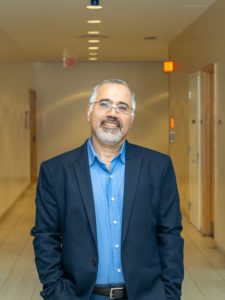
Ali Asgary is an expert in disaster, emergency and business continuity management. He has been actively involved in research, teaching and professional activities in these fields since 1993. His research has been published in leading disaster and emergency management journals including Disasters, International Journal of Disaster Risk Reduction, International Journal of Disaster Science, Disaster Prevention and Management, Environmental Hazards, International Journal of Emergency Management, International Journal of Business Continuity and Risk Management, Journal of Contingencies and Crisis Management, and International Journal of Emergency Services, among others. He was among the founding faculty members who started the first university program in Disaster & Emergency Management in Canada at Brandon University in 2003 and later on among the founding faculty embers who started Disaster & Emergency Management at York University. Dr. Asgary served as the IAEM Canada president between 2007 and 2009 and as the board member of IAEM during the same period. He has led as a PI, Co-PI and collaborator in a large number of research projects funded by different agencies including NSERC, GEOIDE, SSHRC, PreCarn, CIHR, NFRF, ORF, Transport Canada, Public Safety Canada, Wellcome Trust, IDRC, and DRDC. Since 2015 Dr. Asgary has been the executive director of York University's Advanced Disaster, Emergency and Rapid-response Simulation (ADERSIM). His research interests include post-disaster recovery and reconstruction, business continuity and risk assessment, disaster and emergency simulations and modelling, applications of AI, VR, AR and MR, and geomatics in disaster and emergency management, and cost-benefit analysis and decision making under uncertainty.
Research keywords:
Post disaster recovery and reconstruction; emergency exercise; technology enhance disaster and emergency management training; volunteer management; disaster modelling and simulation; agent-based modelling; organizational and business resilience; population displacement; emergency and humanitarian logistics
You may also be interested in...
Shaping Future Health Leaders Through Experiential Learning: Success Stories from the World Health Assembly Simulation (WHA SIM) 2025
The World Health Assembly Simulation (WHA SIM) 2025 conference, held at York University’s Second Student Centre from April 30 to May 1, was a resounding success. Hosted by the School of Global Health, with support ...Read more about this Post
Update — Modelling Health Impacts of Climate Change in Malawi Through the Context of Cyclone Freddy
Malawi was ravaged by the month-long Cyclone Freddy, which caused widespread devastation and death. The Lake Chilwa basin settlements in south-eastern Malawi remain flooded following severe rains, posing higher risks from infectious diseases such as ...Read more about this Post
Recap — Urban Inequality During and After COVID-19 in Johannesburg, Chicago, and Toronto
In this seminar on May 24, Dahdaleh graduate student scholar Hillary Birch and Dahdaleh faculty fellow Roger Keil along with their colleagues shared their findings on how communities and governments in Johannesburg, Chicago, and Toronto ...Read more about this Post