Skip to main content Skip to local navigation

Welcome to the DDMH Lab

About

Our research focuses on the prevention and support of mental health problems in people with developmental disabilities across the lifespan. We aim to understand and address mental health in people with developmental disabilities in many ways. We conduct studies that focus on the individual with developmental disability, their families, and the larger health and social service systems.

Autistic people and those with intellectual disabilities and their families thrive, experiencing wellness and healthy development across the life course. The multiple contexts in which people grow are able to support them in developing competence, confidence, and connectedness, so that they can contribute in positive ways to themselves, their families and society.

  • To address mental health problems.
  • To add to academia and maintain excellence in scholarship.
  • To conduct applied research that improves the lives of autistic people and those with intellectual disabilities and their families, focused on mental health and wellness as long-term outcomes.
  • To engage with autistic, autism and intellectual disability communities to enable research that is meaningful and which the end result is improved psychological and social outcomes. This includes working with multiple ecologies: the home, school, workplace, community, and hospital.
  • To empower the autistic, autism and intellectual disability community, clinical and research domains to be partners in research.
  • To train the next generation of professionals who work in community, clinical and research domains about mental health and wellness with the lens of autism and intellectual disability.
  • To conduct innovative knowledge mobilization that results in improved awareness, knowledge, and skill, bringing together knowledge users with knowledge generators.
  • To inform decision makers to develop evidence-informed policies related to autism and intellectual disability, which results in improved mental health and wellness.

Intervention research

Through resilience and recovery models, we are currently conducting research on interventions that promote mental health in people with developmental disabilities, and on the factors that increase the likelihood of mental health problems. Topics include:

  • The protective role that Special Olympics can play
  • Cognitive behavioural interventions
  • Photography and other arts-based methods

Health and social services research

We are interested in how people with developmental disabilities access equitable mental health care. This includes:

  • The service needs of people with dual diagnosis (mental illness and developmental disabilities)
  • Interdisciplinary allied health training in developmental disabilities
  • Clinical psychology graduate training in developmental disabilities
  • Working with government to improve developmental services

Family research

Families play a critical role in the health and well-being of family members with developmental disabilities. Understanding the experiences of caregivers of people with developmental disabilities can help us develop effective supports that keep families healthy and address caregiver challenges as they arise. We believe that healthy individuals contribute to healthy families, and healthy families contribute to healthy individuals. Topics include:

  • The experience of families of autistic people, people with intellectual disabilities or dual diagnosis
  • Family hardiness and coping with multiple stressors
  • Family flourishing

Lab Director

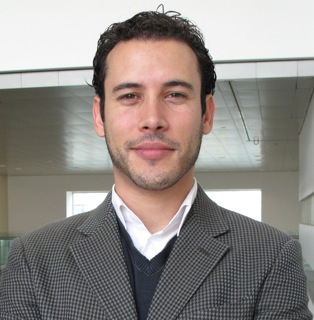
Jonathan A. Weiss, Ph.D., C. Psych.

Dr. Weiss is a Professor in the Department of Psychology, a Clinical Psychologist, and the York University Research Chair in Intellectual and Developmental Disabilities.

His research focuses on mental health in autistic people or people with intellectual disabilities across the lifespan. He conducts studies into how people with developmental disabilities access mental health care and is interested in their service needs, use, and experiences. His work is also focused on understanding and supporting family wellness when at least one family member has a developmental disability. He is interested in program development and evaluation, particularly the impact of Special Olympics on participants' psychological well-being and psychosocial interventions that promote resilience and improve the mental health of children and adults with developmental disabilities.

Read more about Dr. Weiss

Research Team

Our research team consists primarily of clinical-developmental psychology trainees (including Ph.D. and M.A. level students, and post-doctoral fellows) and research trainees (including research associates, coordinators, assistants, undergraduate thesis students, and volunteers). Learn more about our team.

Dr. Larissa Panetta, PhD, C. Psych.

Ph.D. Students

Nisha Vashi
5th Year PhD Student
Teresa Sellitto
5th Year PhD Student
Alaa Ibrahim
3rd Year PhD Student
Marina 
Charalampopoulou

3rd Year PhD Student
Jessica Klein
1st Year PhD Student
Emma Resendes
1st Year PhD Student

M.A. Students

Liaba Aamir
1st Year MA Student

Undergraduate Honours Students

  • Coming Soon

Read about the current students

Tania Pereira
Research Assistant & Consultant

Volunteers

  • Seth Petel
  • Sonya Labidi

Language Note

There have been significant changes in recent years that have shaped how autism is discussed, defined, and described. There are some recommendations for identity-first language (e.g., “autistic people”) or for person-first language (e.g., “people with autism”). While traditionally person-first language was the recommended method for describing autism, as part of a broader movement to separate the person from symptoms or traits, many advocates and authors have highlighted the issues with this approach for the autistic community.[1] Many advocates from the autistic community note that identity-first language is the preferred way of talking about autism. Autism is seen as an inseparable part of who autistic people are. Throughout this website, the term “autistic child/person” is used when communicating about autism. We acknowledge that there continue to be disagreements, and our usage of identity-first language is meant to recognize, affirm, and validate the ownership of identity for autistic people. The term autistic is not viewed in a negative light.

Contact us

4700 Keele Street
Toronto, ON M3J1P3

Lab Director - Dr. Jonathan Weiss: jonweiss@yorku.ca


[1] Bottema-Beutel, K., Kapp, S. K., Lester, J. N., Sasson, N. J., & Hand, B. N. (2020). Avoiding Ableist Language: Suggestions for Autism Researchers. Autism in Adulthood. https://www.liebertpub.com/doi/10.1089/aut.2020.0014