
Skip to main content Skip to local navigation
Home » Undergraduate Programs » (Pure) Mathematics

(Pure) Mathematics

Providing a solid foundation in pure mathematics, the Mathematics program is an excellent choice for students wishing to pursue advanced degrees in the sciences, as well as for students who enjoy abstract reasoning and aspire to intellectual rigour. The program guides students through subject areas that underpin the most powerful methods in abstract and quantitative reasoning: linear algebra, group theory, number theory, calculus and analysis, and computing.
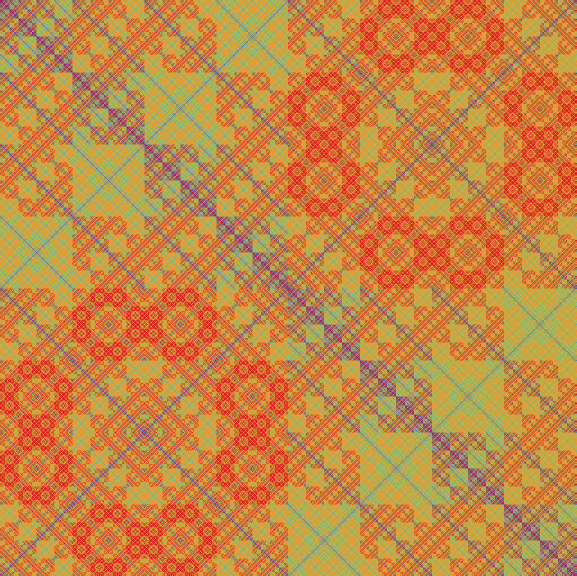
A way to visualize data constructed by one of our doctoral math students.
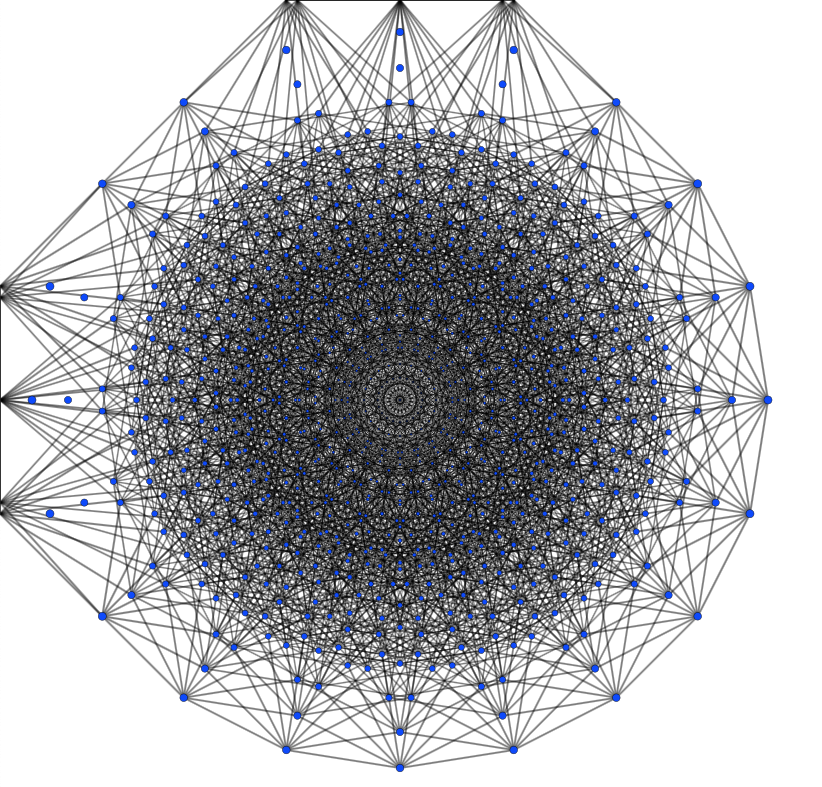
A hypercube used in Professor Ada Chan's research.

Degrees Offered:
Specialized Honours Major (BA or BSc)
Honours Major (BA or BSc)
Honours Minor (BA or BSc)

Outlook: An Honours BA or BSc in Mathematics is highly valued by employers in a range of industries, including finance, data management and analysis, communications, computing and the tech sector, environmental science, and scientific research generally. In 2014 CareerCast and the Wall Street Journal ranked mathematician as the single best job among 200 alternatives. As various scientific disciplines---such as physics, biology and climate science---become progressively more mathematical and quantitative, a degree in Mathematics provides a clear advantage to students wishing to pursue advance degrees in these disciplines. Moreover, mathematics is essential to an understanding of the information and communication technology that has an ever increasing presence in our daily lives.

Courses: An Honours program takes 4 years. The Specialized Honours degree requires more Math/Stats courses. A Major can be combined with another Major or Minor, but it doesn't have to be. A Minor must be combined with a Major degree. For a BA, you also take courses such as psychology or economics. For a BSc, you also take courses such as physics, earth and atmospheric science, biology, or computer science.

Please see the program requirements below. Courses in first year are the same for all Math/Stats programs, so you have time to decide! For course offerings, please see our Courses Page.

Why choose us? We have great student clubs and undergraduate research opportunities and a wonderful community.

How to apply: Convinced? Get more information about applying and read through our admission requirements.


Recommended course enrollment schedules for (Pure) Mathematics students:

Major Requirements and Recommended Timeline:

Academic Program Table
Fall Semester Winter Semester
Year 1 MATH 1131 3.0 (core)
MATH 1200 3.0 (core)
MATH 1300 3.0 (core)
MATH 1021 3.0 (core)
MATH 1310 3.0 (core)
EECS 1560 3.0
12 additional credits in Gen. Ed. or Outside-major (non-Math)
Year 2 MATH 2015 3.0 (core)
MATH 2030 3.0 (core)
MATH 2001 3.0
MATH 2022 3.0 (core)
3 additional credits in MATH 2XYZ 3.0
15 additional credits in Gen. Ed., Outside-major (non-Math), or Math courses without the second digit 5
Year 3 MATH 3001 3.0
MATH 3021 3.0
MATH 3022 3.0
MATH 4011 3.0 or MATH 4012 3.0 (if taking both)
One of MATH 3141 3.0, MATH 3260 3.0, MATH 3271 3.0, or MATH 3410 3.0
6 additional credits in MATH 3XYZ or MATH 4XYZ
12 additional credits in Gen. Ed., Outside-major (non-Math), or Math courses without the second digit 5
Student who wish to take both MATH 4011 3.0 and MATH 4012 3.0 should take one in Year 3 as the offerings alternate each academic year
Year 4 MATH 4021 3.0 MATH 4011 3.0 or MATH 4012 3.0
6 additional credits in MATH 4XYZ
18 additional credits in Gen. Ed., Outside-major (non-Math), or Math courses without the second digit 5 (Item 3 above)

Gen. Ed.: 24 credits from the following areas: Humanities, Models of Reasoning, Natural Science, Social Science. Of these 24 credits, students must complete the following minimum requirements: at least 6 credits from Humanities, Natural Science, and Social Science (with no more than 9 credits in each counting towards the general education requirement).

Outside-Major (non-Math): At least 18 non-Math credits in addition to EECS 1560, and Gen. Ed. courses. Not required for Double Majors or Major/Minor.

Upper-Year Credits: At least 36 credits must be at the 3000-level or higher; 18 of these 36 credits must be at the 4000-level.

Restrictions: MATH courses with second digit 5 do not count towards all Mathematics program requirements. A minimum of 30 credits and at least half of the MATH credits must be taken at York University.

Please see York University Academic Calendar for the official requirements of this degree.

Major Requirements and Recommended Timeline:

Academic Program Table
Fall Semester Winter Semester
Year 1 MATH 1131 3.0 (core)
MATH 1200 3.0 (core)
MATH 1300 3.0 (core)
MATH 1021 3.0 (core)
MATH 1310 3.0 (core)
EECS 1560 3.0
12 additional credits in Foundational Science, Science-outside-major, Non-science courses
Year 2 MATH 2015 3.0 (core)
MATH 2030 3.0 (core)
MATH 2001 3.0
MATH 2022 3.0 (core)
3 additional credits in MATH 2XYZ 3.0
15 additional credits in Foundational Science, Science-outside-major, Non-science, or Math courses without the second digit 5
Year 3 MATH 3001 3.0
MATH 3021 3.0
MATH 3022 3.0
MATH 4011 3.0 or MATH 4012 3.0 (if taking both)
One of MATH 3141 3.0, MATH 3260 3.0, MATH 3271 3.0, or MATH 3410 3.0
6 additional credits in MATH 3XYZ or MATH 4XYZ
12 additional credits in Foundational Science, Science-outside-major, Non-science or elective courses, or Math courses without the second digit 5
Student who wish to take both MATH 4011 3.0 and MATH 4012 3.0 should take one in Year 3 as the offerings alternate each academic year
Year 4 MATH 4021 3.0 MATH 4011 3.0 or MATH 4012 3.0
6 additional credits in MATH 4XYZ
18 additional credits in Foundational Science, Science-outside-major, Non-science or elective courses, or Math courses without the second digit 5

Foundational Science: 6 credits from BIOL 1000; BIOL 1001; BIOL 1010; CHEM 1000; CHEM 1001; PHYS 1010; PHYS 1410.

Science Outside Major: EECS 1560 + 6 Foundational credits + 15 non-MATH credits in science, 3 of which must be at the 2000-level or above. (BIOL 1500, CHEM 1500, PHYS 1510 do not count.) Not required for Double Majors or Major/Minor.

Non-Science: 12 credits in human enquiry outside of science disciplines

Upper-Year Credits: At least 42 credits must be at the 3000-level or higher.

Restrictions: MATH courses with second digit 5 do not count towards all Mathematics program requirements. A minimum of 30 credits and at least half of the MATH credits must be taken at York University.

Please see York University Academic Calendar for the official requirements of this degree.

Major Requirements and Recommended Timeline:

Academic Program Table
Fall Semester Winter Semester
Year 1 MATH 1131 3.0 (core)
MATH 1200 3.0 (core)
MATH 1300 3.0 (core)
MATH 1021 3.0 (core)
MATH 1310 3.0 (core)
EECS 1560 3.0
12 additional credits in Gen. Ed. or Outside-major (non-Math)
Year 2 MATH 2015 3.0 (core)
MATH 2030 3.0 (core)
MATH 2001 3.0
MATH 2022 3.0 (core)
18 additional credits in Gen. Ed., Outside-major (non-Math), or Math courses without the second digit 5
Year 3 MATH 3001 3.0
MATH 3021 3.0
MATH 3022 3.0
MATH 4011 3.0 or MATH 4012 3.0 (if taking both)
One of MATH 3141 3.0, MATH 3260 3.0, MATH 3271 3.0, or MATH 3410 3.0
18 additional credits in Gen. Ed., Outside-major (non-Math), or Math courses without the second digit 5
Student who wish to take both MATH 4011 3.0 and MATH 4012 3.0 should take one in Year 3 as the offerings alternate each academic year
Year 4 MATH 4021 3.0 MATH 4011 3.0 or MATH 4012 3.0
6 additional credits in MATH 4XYZ
18 additional credits in Gen. Ed., Outside-major (non-Math), or Math courses without the second digit 5

Gen. Ed.: 24 credits from the following areas: Humanities, Models of Reasoning, Natural Science, Social Science. Of these 24 credits, students must complete the following minimum requirements: at least 6 credits from Humanities, Natural Science, and Social Science (with no more than 9 credits in each counting towards the general education requirement).

Outside-Major (non-Math): At least 18 non-Math credits in addition to EECS 1560, and Gen. Ed. courses. Not required for Double Majors or Major/Minor.

Upper-Year Credits: At least 36 credits must be at the 3000-level or higher; 18 of these 36 credits must be at the 4000-level.

Restrictions: MATH courses with second digit 5 do not count towards all Mathematics program requirements. A minimum of 30 credits and at least half of the MATH credits must be taken at York University.

Please see York University Academic Calendar for the official requirements of this degree.

Major Requirements and Recommended Timeline:

Academic Program Table
Fall Semester Winter Semester
Year 1 MATH 1131 3.0 (core)
MATH 1200 3.0 (core)
MATH 1300 3.0 (core)
MATH 1021 3.0 (core)
MATH 1310 3.0 (core)
EECS 1560 3.0
Twelve additional credits in Foundational Science, Science-outside-major, Non-science courses
Year 2 MATH 2015 3.0 (core)
MATH 2030 3.0 (core)
MATH 2001 3.0
MATH 2022 3.0 (core)
18 additional credits in Foundational Science, Science-outside-major, Non-science, or Math courses without the second digit 5
Year 3 MATH 3001 3.0
MATH 3021 3.0
MATH 3022 3.0
MATH 4011 3.0 or MATH 4012 3.0 (if taking both)
One of MATH 3141 3.0, MATH 3260 3.0, MATH 3271 3.0, or MATH 3410 3.0
18 additional credits in Foundational Science, Science-outside-major, Non-science or elective courses, or Math courses without the second digit 5
Student who wish to take both MATH 4011 3.0 and MATH 4012 3.0 should take one in Year 3 as the offerings alternate each academic year
Year 4 MATH 4021 3.0 MATH 4011 3.0 or MATH 4012 3.0
6 additional credits in MATH 4XYZ
18 additional credits in Foundational Science, Science-outside-major, Non-science or elective courses, or Math courses without the second digit 5

Foundational Science: 6 credits from BIOL 1000; BIOL 1001; BIOL 1010; CHEM 1000; CHEM 1001; PHYS 1010; PHYS 1410.

Science Outside Major: EECS 1560 + 6 Foundational credits + 15 non-MATH credits in science, 3 of which must be at the 2000-level or above. (BIOL 1500, CHEM 1500, PHYS 1510 do not count.) Not required for Double Majors or Major/Minor.

Non-Science: 12 credits in human enquiry outside of science disciplines

Upper-Year Credits: At least 42 credits must be at the 3000-level or higher.

Restrictions: MATH courses with second digit 5 do not count towards all Mathematics program requirements. A minimum of 30 credits and at least half of the MATH credits must be taken at York University.

Please see York University Academic Calendar for the official requirements of this degree.

Requirements:

  • All of MATH 1021 3.0; MATH 1300 3.0; MATH 1310 3.0; MATH 2022 3.0; MATH 2015 3.0;
  • One of MATH 1019 3.0; MATH 1090 3.0; MATH 1190 3.0; MATH 1200 3.0; MATH 2030 3.0; and
  • 12 additional MATH credits at the 3000-level or higher.
  • Note a course used to fulfill a Major requirement cannot be used to fulfill one of these Minor requirements and a substitution will need to be made in discussion with pmathdir@yorku.ca.

There are three parts to your degree requirements:

  1. University-Wide Residency Requirement
  2. Faculty-Wide Degree Requirements
    • B.A.: General Education and Outside-major
    • B.Sc.: Foundational Science, Science outside-major and Non-science
  3. Program-Specific Degree Requirements including the Math/Stat core.

Please see the York University Academic Calendar for the official requirements of this program.