Skip to main content Skip to local navigation
Home » Summer » Spark Lab Summer Program (Grade 9-12)

Spark Lab Summer Program (Grade 9-12)

Registration will open to the public on February 18th, 2026 at 10:00am.

Sign up for our newsletter to receive email notifications about our programs.

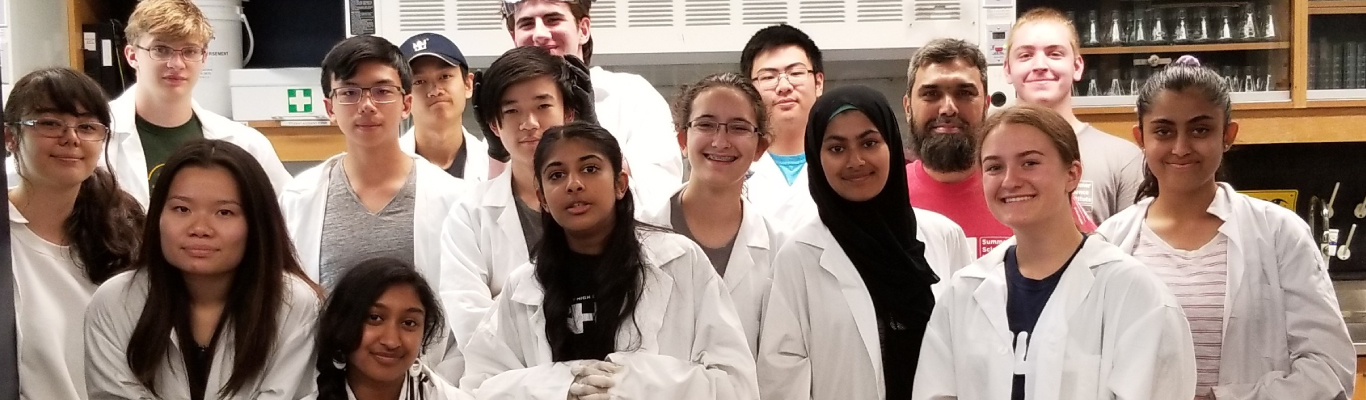
Immerse yourself in a transformative educational experience with our Spark Lab Programs—a series of week-long sessions meticulously crafted for students in grades 9 to 12 seeking dynamic, hands-on exploration of science.

Using experiment-based lab work, students explore physics, biology, and chemistry within our undergraduate student spaces. Escape the traditional classroom and join us on a journey of scientific discovery through experimentation.

The Spark Lab Program is an open-enrollment program, offering convenience and accessibility to eager learners. Secure your spot through online registration and foster a passion for science through immersive, interactive learning experiences.

PROGRAM DETAILS
Grade Level

Grades 9-12

Dates

Weekly from June 29-July 31, 2026

Time

9:30am to 3:30pm

Pricing

$495.00 (five-day weeks)

$435.00 (holiday four-day week)

Summer 2026 Course Schedule

Courses fall under the following streams: Experimental and Research.

Experimental Spark courses are developed and delivered by undergraduate/graduated students, Teacher Candidates, or Ontario Certified Teachers through hands-on, interactive, and innovative activities.

Research Spark courses are developed and delivered by graduate students and/or Professors and are based on the research they are doing at York.

We're thrilled to announce that Science Explorations Summer Camps is coming again to Markham Campus! These enriching and fun-filled summer experiences offer a diverse range of activities and themes designed to inspire creativity, foster learning, and create lasting memories.

We are excited to expand our offerings to include all high school students (grades 9-12). Spark Lab Experimental stream courses it is recommended students have a minimum overall average of 80-85%. Spark Lab Research stream courses it is recommended students have a minimum overall average of 85%-90%.

Note that due to the Fira Robotics Competition on campus, we will not be operating camps at Markham during the week of July 13-17, 2026.

Grade 9/10 Courses

Grade 11/12 Courses

July 6-10, 2026

Forensic Science (Experimental)

Health and Anatomy (Experimental)

July 13-17, 2026

Anatomy and Physiology (Experimental)

Genetics in Biological Systems: Comparative and Integrative Approaches (Research)

July 20-24, 2026

Biochemistry (Experimental)

Neuroscience in Practice: Neurons and Electrophysiology (Experimental)

We're thrilled to announce that Science Explorations Summer Camps is returning to the Keele Campus, located at 4700 Keele Street, Toronto. Exact location will be provided in the Welcome Package.

Spark Lab Experimental stream courses it is recommended students have a minimum overall average of 80-85%. Spark Lab Research stream courses it is recommended students have a minimum overall average of 85%-90%.

Grade 9/10 Courses

Grade 11/12 Courses

June 29-July 3, 2026*

Intro to Astronomy (Experimental)

Unlocking Chemical Reactions (Experimental)

July 6-10, 2026

Anatomy and Physiology (Experimental)

Genetics in Biological Systems: Comparative and Integrative Approaches (Research)

July 13-17, 2026

Biochemistry (Experimental)

Health and Anatomy (Experimental)

July 20-24, 2026

Forensic Science (Experimental)

Neuroscience in Practice: Neurons and Electrophysiology (Experimental)

July 27-31, 2026

Introduction to Microbiology (Experimental)

Molecular and Physiological Mechanisms (Research)

*Note that this is a four-day holiday week

This is a Spark Lab Experimental stream course and it is recommended students have a minimum overall average of 80-85%

  • Keele Date: June 29-July 3, 2026 (Four-day course)
  • Markham Date: N/A

Course Description

Astronomy has captivated the human imagination for centuries, and we are closer to space than we’ve ever been before! Dive into the mysteries of the universe as you explore distant galaxies and learn about the life cycles of star. Gain a deeper understanding of the cosmos through hands-on activities and interactive lectures on the York University Keele Campus. Whether you're a budding astronomer or simply curious about the night sky, this course offers a unique opportunity to connect with like-minded peers, engage with astronomers, and ignite your passion for space exploration. Join us for an unforgettable journey among the stars!

This is a Spark Lab Experimental stream course and it is recommended students have a minimum overall average of 80-85%

  • Keele Date: July 6-10, 2026
  • Markham Date: July 20-24, 2026

Course Description

Throughout this intensive program, participants will embark on a fascinating journey into the depths of human and animal biology. Through a blend of interactive lectures, laboratory experiments, and hands-on dissections, we will delve into key physiological concepts. Hands-on dissections will provide invaluable opportunities to examine the anatomical features of organs like the heart, brain, and musculoskeletal system, fostering a deeper understanding of their structure-function relationships. Investigate the effects of different stimuli on muscle contraction, exploring the physiology of the nervous system through sensory perception tests, and more. Participants will develop a profound appreciation for the complexity of the human body and gain practical skills in laboratory techniques and anatomical exploration.

This is a Spark Lab Experimental stream course and it is recommended students have a minimum overall average of 80-85%

  • Keele Date: July 13-17, 2026
  • Markham Date: July 27-31, 2026

Course Description

Immerse yourself in the fascinating realm where biology meets chemistry. Participants will unravel the molecular mysteries of life through hands-on experiments and interactive learning. From testing macromolecules in common foods to understanding enzyme kinetics, Biochemistry camp offers an enchanting journey into the building blocks of living organisms. Join us for a week of scientific exploration, where budding biochemists delve into the intricacies of cellular processes and molecular structures. It's time to discover the magic happening at the intersection of biology and chemistry in an engaging and intellectually stimulating Biochemistry camp experience!

This is a Spark Lab Experimental stream course and it is recommended students have a minimum overall average of 80-85%

  • Keele Date: July 20-24, 2026
  • Markham Date: July 6-10, 2026

Course Description

If you're interested in solving mysteries with the help of science, then learn how to become a Forensic Scientist as we explore all facets of forensic investigations. Students will be faced with challenging questions and scenarios to discover what happened at the crime scene, what evidence is there, and who is the perpetrator. Students will uncover evidence and learn investigative techniques including how to dust for fingerprints, DNA analysis, examine blood splatter, footwear and tire tread impressions and more. Solve our most interesting puzzles and delve into the mind of an investigator by processing a crime scene at York University.

This is a Spark Lab Experimental stream course and it is recommended students have a minimum overall average of 80-85%

  • Keele Date: July 27-31, 2026
  • Markham Date: N/A

Course Description

Microbes may be invisible to the naked eye, but they make up a large component of the world - including us! While microbes like bacteria are often associated with infection or illness, there are a lot of good bacteria that are essential to life. What roles do they have in the human body? How do certain microbes cause infectious diseases? What's the difference between "good" and "bad" bacteria? Join us to uncover the biological secrets at the microscopic level. Students in this course will use different microbiological techniques to learn about microorganisms and how they impact the world around us.

This is a Spark Lab Experimental stream course and it is recommended students have a minimum overall average of 80-85%

  • Keele Date: June 29-July 3, 2026 (Four-Day week)
  • Markham Date: N/A

Course Description

Step into the world of molecules in motion as you uncover how and why chemical reactions happen. In this hands-on, experiment-driven course, students will explore the science behind speeding up, slowing down, and measuring chemical change. From catalytic reactions that power everything from cells to industry, to the analytical tools scientists use to study them, participants will gain insight into the processes that shape our chemical world.

Throughout the week, students will investigate reaction rates, test the power of different catalysts, perform chemiluminescence experiments, and experiment with core analytical techniques such as colorimetry, chromatography, titration, and quantitative data analysis. Working in York University’s laboratories, students will learn how chemists design experiments, collect high‑quality data, interpret results, and use evidence to explain the behaviour of chemical systems.

This is a Spark Lab Experimental stream course and it is recommended students have a minimum overall average of 80-85%

  • Keele Date: July 13-17, 2026
  • Markham Date: July 6-10, 2026

Course Description

Embark on an exciting journey to explore the wonders of the human body through engaging experiments and hands-on activities! Ever wondered what lies beneath your skin, powering every heartbeat and breath? Get ready to uncover the mysteries of anatomy as we delve into dissections of vital organs like the heart and lung, revealing their intricate structures and functions. But that's just the beginning! We'll also delve into the fascinating realm of immunology and disease, conducting experiments to understand how our bodies defend against pathogens and maintain health. From investigating homeostasis and the delicate balance within our internal environment to comparing the anatomy of humans with that of other animals, every day promises new discoveries. Join us for a week filled with exploration, discovery, and a deeper understanding of the incredible complexities of the human body!

This is a Spark Lab Research Stream course and it is recommended that students have a minimum overall average of 85%-90%.

  • Keele Date: July 27-31, 2026
  • Markham Date: N/A

Course Description

Are you curious about how scientific research truly begins? This course opens the door to the research process, revealing how scientists transform ideas into rigorous experiments and meaningful discoveries. Through engaging lectures and guided, hands-on lab activities, you will develop the core skills required to design a scientific study from the ground up.

Learn to shape compelling research topics, craft meaningful scientific questions, define clear objectives, and build testable hypotheses supported by primary scientific literature. You will then apply these foundational skills to a focused biological theme: the molecular and physiological mechanisms of ammonia detoxification in the starlet sea anemone, Nematostella vectensis. Introductory laboratory experiments will demonstrate key experimental tools and showcase how researchers investigate these physiological processes.

By the end of the course, you will have the groundwork needed to launch your own research projects and laid the foundation for future thesis work.

About the Instructor

Alrishia Agard is currently pursuing an MSc in biology at York University. Her research focuses on invertebrate physiology, focusing on the physiological and molecular mechanisms of ammonia detoxification in the model organism Nematostella vectensis, the starlet sea anemone. As an MSc student in the biology department, Alrishia has considerable experience with molecular and physiological techniques, as well as teaching STEM activities and experiments to students of various ages. During her time as an undergraduate student in the Biomedical Science program at York University, Alrishia was an instructor for Science Engagement Programs, where she taught and developed courses for high school students. As a current graduate student, Alrishia is a teaching assistant for various undergraduate biology courses at York University.

This is a Spark Lab Research stream course and it is recommended students have a minimum overall average of 85%-90%.

  • Keele Dates: July 6-10, 2026
  • Markham Dates: July 20-24, 2026

Course Description

Genetics plays a central role in how all animals function at molecular, cellular, and physiological levels. Scientists often use the fruit fly (Drosophila melanogaster) as a model organism to better understand how our bodies function, including excretion and how hormones control different biological processes. Despite their small size, fruit flies share nearly 60% of their genes with humans and possess over 14,000 genes, making them a powerful model for studying human-relevant biology, including physiological systems such as the excretory and endocrine systems. In this course, students will explore how genetic variation influences physiology, behaviour, and survival. You will learn how scientists investigate gene function using specialized tools such as the GAL4/UAS system, which allows researchers to turn specific genes on and off in fruit flies to study their effects. Through hands-on activities, students will gain experience with real experimental techniques, including fruit fly dissections and experiments that examine how genes influence hormonal regulation and responses to different environmental conditions. The course will also explore how genetics is essential across all living organisms and why it is critical for optimal biological function. This course offers an exciting opportunity to experience what it’s like to be a geneticist and discover how scientific research connects genes to animal physiology.

About the Instructor

Marishia Agard is a PhD candidate in Biology at York University with a strong passion for teaching and science outreach. Her research explores how the neuroendocrine system regulates the excretory system, using Drosophila melanogaster (fruit flies) as a genetic model to understand how hormones function in animals. Marishia has extensive teaching experience, having developed and taught multiple summer courses at the Spark Labs of the Science Engagement Programs, including Introduction to Genetics and Genetic Analysis: Bridging the Gap in Biological Understanding. These courses introduce students to molecular, cellular, genetic, and physiological concepts through hands-on learning. In addition, Marishia has served as a course instructor for an undergraduate animal physiology biology course and currently serves as the Teaching Assistant Coordinator at York University. She is especially passionate about making complex biological concepts engaging, approachable, and fun for students, and hopes to continue combining research and teaching throughout her career.

What do parents and campers have to say about our camps?

Very engaging topics. Marishia was a kind, helpful, and insightful instructor. Learned a lot about future careers related to science and what courses and degrees I should pursue in order to get them. - Student, Genetics in Biological Systems

John was the best counselor. He was very attentive and answered all my questions about high school and university. He made all the activities to be fun and inclusive and I’m so happy I got him as my counselor. I enjoyed this week of Anatomy and Physiology so much and would love to come back next year! - Student, Anatomy and Physiology

The program was engaging, exciting and thrilling for my son and he is wanting to get back more to the laboratory space. In his words, "Nothing beats the excitement of hands-on experiments and scientific exploration at camp!" - Parent, Spark Lab Student

All of the activities are fun, and our instructor Emily is amazing! She taught us many professional techniques and generously mentored us with tips and advices she summarized from her own experience in university and the medical field. I love this camp, thank you York! - Student, Health and Anatomy

All three teachers were very enthusiastic, friendly, outgoing, and approachable. They love to interact with the class, they explain the concepts well and were very open to answering questions during lessons which were great. Our projects have been very interesting and we have gotten a lot of hands on experience in labs working with different equipment we would never have access to at school. The lab work was easily my favourite part of the camp. The timing of the projects is also pretty good, time allotted is sufficient and we are rarely sitting idle. Using the VR headsets has been especially memorable, as I've never been able to interact with 3D models in such an environment, and I don't think I would be able to get this experience anywhere else. All projects are something I would not be able to complete on my own at home, which I'm glad about as it justifies commuting so far. I'm also happy that some of the information presented is beyond grade level expectations, as I enjoy the challenge and getting a preview of what I will learn in the future. Finally, I really liked how we were able to walk through the research labs on the last day, as this was a huge mystery to me before. I had heard of several of these machines but being able to actually see the processes in action for myself was great. Overall this was an unforgettable experience! - Student, Pharmaceutical Chemistry

Frequently Asked Questions

Visit our FAQ Page for more information, including location, refund policies and financial assistance.