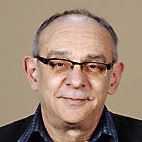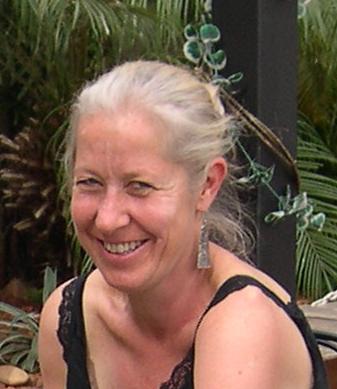
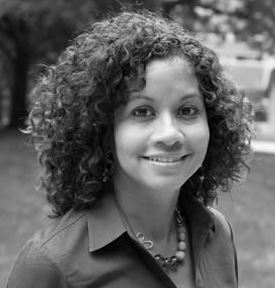
Celia Romolus
Assistant Professor, Institute of Feminist and Gender Studies, University of Ottawa
Associate Fellow
About Celia Romolus
Célia Romulus joined the department of International Studies as an Assistant Professor. Célia Romulus completed her PhD in the department of Political Studies at Queen’s University (Canada). Célia’s doctoral research focused on the normalization of gendered state repression under the Duvalier dictatorship; how these systematized forms of violence shaped movements of population out of Haiti; and the notion of citizenship as experienced by multiple generations of migrants. Her research and teaching draws from Anti-Oppression and Anti-Racist Education; Afro and Decolonial Feminisms and explores questions related to explores the Gender and Politics of Memory, Migrations, Citizenship, Political violence; Interdisciplinary Methods.
Prior to completing her PhD, Célia Romulus worked as a programme director in the areas of gender-based violence in public spaces and security sector reform for UN WOMEN and continues to work as a consultant and trainer on questions related to anti-oppression, anti-racism, Black femininities/masculinities, gender-mainstreaming in public policies and in development.
Country(ies) or Region(s) of Interest: Haiti
Keywords: Anti-Oppression and Anti-Racist Education; Afro and Decolonial Feminisms, Gender and Politics of Memory, Migrations, Citizenship, Political violence; Interdisciplinary Methods.
Joanna Anneke Rummens
Associate Professor, School of Nursing, Ryerson University
Associate Fellow
About Joanna Anneke Rummens
Joanna Anneke Rummens is a multilingual anthropologist/sociologist whose research explores the links between identity, diversity, health and wellbeing, with special focus on vulnerable and marginalized populations. She has undertaken fieldwork with a wide variety of cultural groups in different societal contexts and employs an explicitly interdisciplinary, mixed-methodological, comparative perspective. Her work reflects a strong commitment to policy- and practice-relevant research, collaborative research partnerships with representatives from diverse ethno-cultural communities, as well as effective research translation / transfer and knowledge exchange / mobilization with a wide range of key stakeholders. Dr. Rummens has served in an advisory capacity in the areas of identity, diversity, citizenship and health to various governmental departments and was a Member of the Advisory Committee to Statistics Canada and Canadian Heritage for Canada
Country(ies) or Region(s) of Specialization: Latin America
Keywords: Identity, diversity, health and wellbeing
Frans Schryer
Professor, Department of Sociology & Anthropology, University of Guelph
Associate Fellow
About Frans Schryer
Frans Schryer has published two books on the history and anthropology of the Huasteca region of Mexico, and two books dealing with postwar Dutch immigrants in Ontario. He is currently engaged in a long-terms research project in the state of Guerrero, Mexico.
His research interests are: Ethnohistory; Class and ethnicity in Mexico; Dutch farm immigrants; The impact of globalization on indigenous peoples of Mexico (particularly the Alto Balsas Nahuas); Transnationalism.
Country(ies) or Region(s) of Specialization: Mexico
Keywords: Ethnohistory; Class and ethnicity
Yasmine Shamsie
Associate Professor, Political Science, Wilfrid Laurier University
Associate Fellow
About Yasmine Shamsie
I received my PhD in Political Science from York University and my MA from the University of Toronto. I also have a journalism degree from Carleton University.
Prior to joining Laurier, I worked as a journalist for the Canadian Broadcasting Corporation. Following that, during the early 1990s, I worked in Nicaragua as a researcher examining how structural adjustment policies affected women employed by the government, based in Managua.
My research is on the democracy-building and economic development programs of international actors (governments and international organizations) in Central America and the Caribbean. During the last 10 years, I focused primarily on how outsiders have affected economic and political developments in Haiti.
Country(ies) or Region(s) of Specialization: Central America, the Caribbean, Haiti
Keywords: Democracy building, economic development,
Tyler Shipley
Professor of Culture, Society, and Commerce at the Humber Institute of Technology and Advanced Learning
Associate Fellow
About Tyler Shipley
Dr. Tyler Shipley holds a Ph.D. in Political Science from York University and is Professor of Culture, Society, and Commerce at the Humber Institute of Technology and Advanced Learning. He is an Associate Fellow with the Centre for Research on Latin America and the Caribbean (CERLAC), and is a longstanding member of the Canadian Association of Latin American and Caribbean Studies (CALACS). He has written several articles in leading journals in the fields of Political Economy and Latin American Studies, and is a contributing author in the forthcoming Organized Violence and the Expansion of Capital. In 2016, he wrote a commissioned report on civil-military relations in Honduras for the Chr Michelson Institute in Bergen, Norway, and he has written for local and mainstream media across North America and Europe. He lives in Toronto, Canada.
Country(ies) or Region(s) of Specialization: Honduras, Latin America, Canada
Keywords: postcolonial theory, imperialism, neoliberalism, social movements
Luisa Sotomayor
Associate Professor and Director, Program in Planning, Department of Geography and Planning, Univeristy of Toronto
Associate Fellow
About Luisa Sotomayor
My research and teaching interests focus on the various dimensions of urban inequality and governance, and their connections to planning practice. On the one hand, I am interested in how regimes of socio-spatial inequality consolidate in contemporary cities and the roles that planning tools, tactics, politics, and discourses may play in their formation. On the other, I aim to consider the limits and possibilities of grass-roots activism, collective action, equity planning approaches, and state-led policy experimentation to overcome such urban divides. The geographic scope of my work involves both, Latin America and Canada.
I have a special interest in urban planning and social development in Latin American cities. Over the past six years, I have been involved in research projects that examine the use of planning tools to deliver better services and social policies in peripheral neighbourhoods. I have also examined the opportunities and limitations of a comprehensive planning strategy, called social urbanism, aimed to improve transit equity and reduce violence and socio-spatial segregation in Medellin, Colombia. More recently, I started paying attention to the way that ordinary residents increasingly use the judicial system as a strategy to challenge exclusionary planning policies, and the rising role of the judge in the resolution of urban conflicts in some Latin American countries.
My current housing research project looks at the experience of students in Toronto’s private rental housing markets. I am investigating the effects of neoliberalism in the student housing sector, the proliferation of unlicensed rooming houses around university campuses, and the territorial stigmatization of low-income post-secondary students, a group that is typically excluded from urban policy discussions and housing affordability debates.
Country(ies) or Region(s) of Specialization: Colombia
Keywords: urban planning, inequality, governance, urbanism
Giselle F. Thompson
Assistant Professor, Black Studies in Education, University of Alberta
Associate Fellow
Research Cluster: Migration, Labour, and Political Economy
About Giselle F. Thompson
Giselle Thompson is the Assistant Professor of Black Studies in Education at the University of Alberta, where she teaches in the Social Justice and International Studies in Education graduate specialization and the Bachelor of Education program. Her award-winning research exists at the nexus of critical studies in the Sociologies of Race, Education, Gender, Diaspora, and International Development and seeks to understand how colonialism, racial capitalism, white supremacy, and modernity operate globally and are implicated in the ongoing (mis)education of Black people. She is particularly concerned with how anti-Black racism in its various iterations including, but not limited to, lack of accessibility, under resourcing, and curricular deficits impede on holistic learning for Black school-aged children and youth and diasporic groups in both local and transnational contexts. Her current research project examines the ways in which the transhistorical phenomenon of Black motherwork is deployed in school settings and in other sites of learning to resist these social maladies, whilst transmitting ethics of love, care, and concern.
Country(ies) or Region(s) of Specialization: The Caribbean (Jamaica); Canada
Keywords: Diaspora Studies; Education/Schooling; Gender; International Development; National Debt; Race, Racism and Racialization; Racial Capitalism; Research Methods; Political Economy
Antonio Torres-Ruiz
Senior Lecturer, Departments of Global Development Studies and Political Science, University of Toronto
Associate Fellow
About Antonio Torres-Ruiz
Antonio Torres-Ruiz is a Senior Lecturer in the Departments of Global Development Studies and Political Science at the University of Toronto (UofT). Before, he taught at York University (as full-time faculty for four years in the Equity Studies program) as well as in the Centre for International Studies at El Colegio de México and at ITAM (Both of them in Mexico City). A significant part of his research work deals with democratization, comparative studies, human rights, identity politics, global political economy, and globalization, with a special focus on the Americas.
His published contributions include articles and book reviews for several academic journals such as Latin American Research Review (U.S.), International Journal (Canada), História, Ciencias, Saude (Brazil), Journal of Latin American Studies (U.K.), Latin American Politics and Society (U.S.), Working Papers Series, CIDE (Mexico), and Crítica Contemporánea (Uruguay). He also co-authored a book chapter and co-edited a volume on contentious politics in North America with the late UofT professor Stephen Clarkson and contributed with a chapter on “The NGOization of HIV/AIDS activism in Mexico” to the three-volume analysis titled Global HIV/AIDS Politics, Policy, and Activism: Persistent Challenges and Emerging Issues, edited by Raymond Smith (Columbia University), published by Praeger. More recently, he published a single-authored book on The Political Economy of HIV/AIDS in Mexico, by Common Ground Research Networks, University of Illinois Research Park (May 2018).
Two of his most recent projects are: a) a critique of political science as a discipline, with a special focus on the ontology and genealogy of democracy and the human rights discourse, and b) A Ford Foundation-supported project on Afro-descendants and participatory action research in Cuba and Mexico.
Country(ies) or Region(s) of Interest: Cuba, Brazil, and North America (Canada, Mexico, and the United States)
Keywords: Political Economy and Globalization, Health and HIV/AIDS Politics and Policies, Human Rights, Identity Politics, Afrodescendants in Latin America, Sexual Diversity Politics