
Active in vital, ground-breaking research, our faculty members are experts in their respective fields. These dedicated professionals are winning accolades for their scholastic achievements, often in the form of research funding, and are publishing their work in academic journals and books around the world.
Featured Publication

Thomas Corneille, Théâtre complet, tome 8
Book by Luke Arnason
Thomas Corneille (sometimes assisted by Donneau de Visé¹) had given five plays, in a variety of genres, to the company of the Hôtel Guénégaud during its first two seasons (the company had been founded in 1673): Le Comédien poète, La Mort d’Achille, Dom César d’Avalos, Circé, and L’Inconnu. Le Triomphe des dames, first performed at the Guénégaud on August 7, 1676, during its third season, would be the sixth.
It is hardly surprising that the company would have wanted to continue its association with Thomas: Circé was one of the greatest successes of the century (seventy-six performances in 1674–1675 and 1675–1676)², and L’Inconnu had enjoyed an almost equally spectacular success (thirty-two performances in 1675–1676), and it continued to be performed in 1676–1677 (three performances).
The production of Le Triomphe des dames, however, was not as successful, for reasons that we will examine, and this is probably why the play was never published. Thus, the only traces we have of it are the desseins, or livres de sujet (also sometimes called “booklets”), that were sold to accompany the performances, as was the case with every spectacular production.
The use of the plural is deliberate, because there are in fact two desseins of Le Triomphe des dames, slightly different from one another. This is due to the fact that the play was removed from the bill after the...
Search our Publications

Hédi Bouraoui
2025
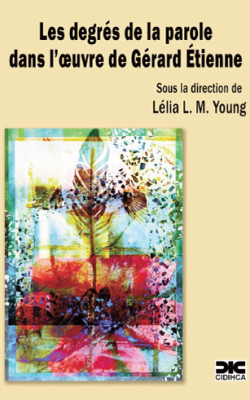
Lélia Young
2022
Young, Lélia, dir. Le Degré de la parole dans l’écriture : Portes ouvertes sur l’œuvre de Gérard Étienne. Montréal: CIDHICA, ...
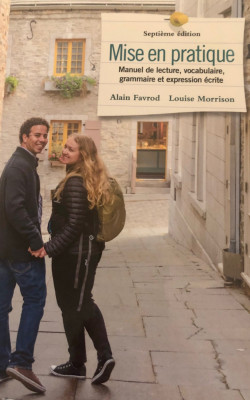
Alain Favrod, Louise Morrison
2017
Alain Favrod, Louise Morrison, Mise en pratique, Pearson Education Canada, 2017.
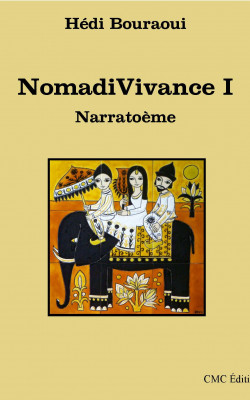
Hédi Bouraoui
2016
Hédi Bouraoui, NomadiVivance I, Toronto: CMC Éditions, 2016.
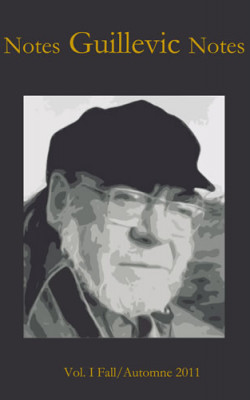
Sergio Villani
2016
Sergio Villani (red.), Notes Guillevic Notes, revue bilingue en-ligne/Bilingual Online Journal.
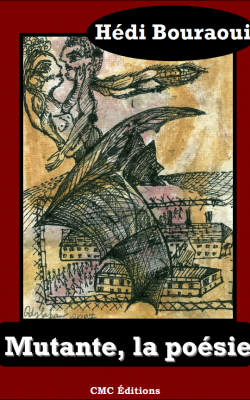
Hédi Bouraoui
2015
Hédi Bouraoui, Mutante, la poésie (PDF), Toronto: CMC Éditions, 2015.
Janusz Przychodzen
2014
Janusz Przychodzen, De la simplicité comme mode d'emploi, Presses de l'Université Laval, 2014.
Marie-Christine Pioffet
2013
Marie-Christine Pioffet, Dictionnaire analytique des toponymes imaginaires dans la littérature narrative de langue française (1605-1711), Paris : Hermann, 2013.
Janusz Przychodzen
2013
Janusz Przychodzen, Écritures québécoises, inspirations orientales, Québec, Presses de l'Université Laval, 2013.
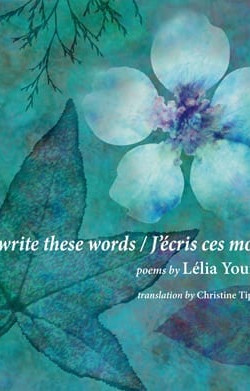
Lélia Young
2013
Lélia Young. I write these words/J'écris ces mots, Toronto, Innana Publications. 2013.
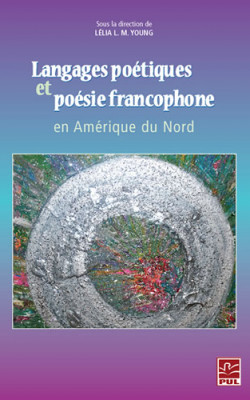
Lélia Young
2012
Lélia Young (dir.) Langages poétiques et poésie francophone en Amérique du Nord, Presses de l'Université Laval, 2012.
Diane Woody
2010
Diane Woody (ed.), Correspondance de Mme de Graffigny, vol 13, Oxford: Voltaire Foundation, 2010.
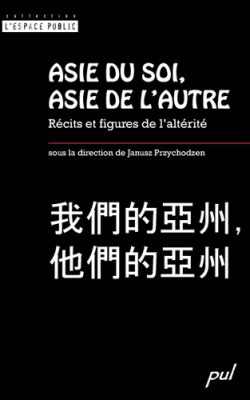
Janusz Przychodzen
2009
Janusz Przychodzen (dir.), Asie du soi, Asie de l'autre, Presses de l'Université Laval, 2009.
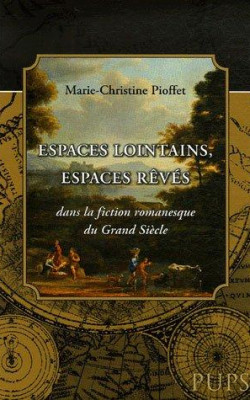
Marie-Christine Pioffet
2007
Marie-Christine Pioffet, Espaces lointains, espaces rêvés, P U De Paris-Sorbonne, 2007.
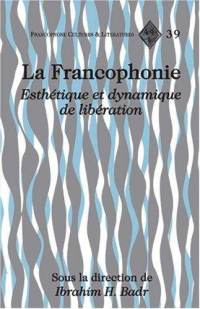
Ibrahim Badr
2007
Ibrahim Badr (dir.), La Francophonie. Esthétique et dynamique de la libération, Peter Lang, 2007.
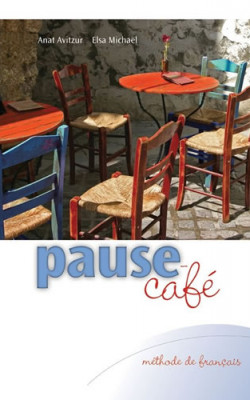
Anat Avitzur, Elsa Michael
2006
Anat Avitzur, Elsa Michael, Pause café. Méthode de français, Montréal: Thomson-Groupe Modulo, 2006.