
Four Alchemists. One Lecture. A Constellation of Ideas.
Each year, the Alchemy Lecture brings together a constellation of thinkers and practitioners from diverse disciplines and geographies to engage publicly with the most pressing questions of our time.
A multi-vocal and multi-modal forum, the Alchemy Lecture creates space for collective reflection on the social, political and environmental challenges shaping our world. Each lecture culminates in the publication of a book in Alchemy by Knopf, the series headed by Dionne Brand, extending the ideas and conversations that emerge from the event.
Previous Alchemy Lecture publications, including last year's Sound—at the Interregnum, are available for purchase in the lobby after the event and at the York University Bookstore. The book resulting from this year's lecture will be published in September 2027 and will be available for purchase at next year's event.
ScALE

Date: Thursday, Oct. 29
Time: 5 - 8 p.m.; Reception: 5 - 6 p.m.
Venue: Sandra Faire and Ivan Fecan Theatre, CIBC Lobby
Join Professor Christina Sharpe, Tier 1 Canada Research Chair in Black Studies and an internationally recognized group of scholars, artists and researchers for ScALE, the Fifth Annual Alchemy Lecture.
Featuring presentations from:
- Torkwase Dyson on the diagram, the gesture and the field of Black liberation.
- Thandi Loewenson on land, air, indigenous cosmologies and the interconnected terrains through which struggles for sovereignty must be understood.
- Lorenzo Pezzani on human and more-than-human im-mobilities and the project of liberation.
- Audra Simpson on Indigeneity and measuring the scale of harm in Canada and the United States.
Explore the abstracts below for a deeper look at the themes each speaker will examine and the conversations that will shape this year's Alchemy Lecture.
Moderator: Christina Sharpe
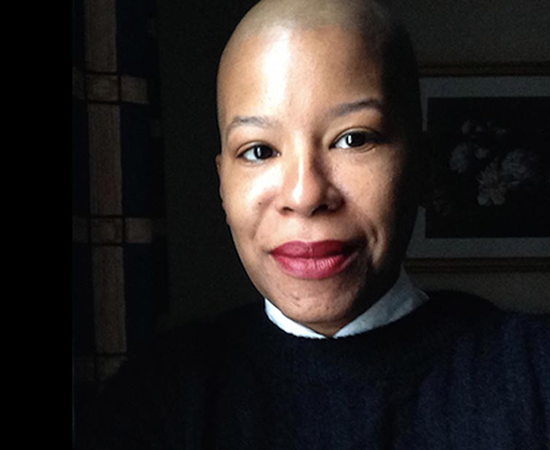
Christina Sharpe is a writer, Professor and Tier 1 Canada Research Chair in Black Studies in the Humanities at York University in Toronto. Sharpe is the author of Monstrous Intimacies: Making Post-Slavery Subjects (2010), In the Wake: On Blackness and Being (2016), and Ordinary Notes (2023)—winner of the Hilary Weston Writer’s Trust Prize in Nonfiction and the Hodler Prize, and finalist for The National Book Award in Nonfiction, The National Book Critics Circle Award in Nonfiction, the Los Angeles Times Current Interest Book Award and the James Tait Black Prize in Biography. In 2024, she was awarded a Windham-Campbell Prize in Nonfiction, was named a Guggenheim Fellow, and received the Canada Council for the Arts Molson Prize for the Sciences and Humanities. In 2025 she was named a Killam Prize winner. In 2026, Sharpe was named a Pierre Elliott Trudeau Foundation Fellow. Sharpe is currently working on What Could a Vessel Be? (FSG/Knopf, Canada 2027) and To Have Been to the End of the World: Essays on Art. Her writing has appeared in many artist catalogues and journals including Frieze, Paris Review, Harpers, BOMB Magazine and The Funambulist.
Speaker Abstracts

Photo credit ©️ Hansi Liao
Torkwase Dyson
(US) Interdisciplinary Artist
Torkwase Dyson combines expressive mark-making and geometric abstractions to explore continuity between ecology, infrastructure, and architecture. Working across painting, drawing, sculpture and sound, Dyson interrogates the built environment, exploring how individuals negotiate, negate, and transfer systems of spatial order. Dyson studied sociology and social work at Tougaloo College, Mississippi (1996), and received a BFA in Painting from Virginia Commonwealth University (1999) and an MFA in Painting from Yale University School of Art (2003). In 2026, Dyson will debut a commissioned work as a featured artist for the 59th Carnegie International, as well a new installation for the 61st International Art Exhibition of La Biennale di Venezia. She will also have her first solo exhibition in Austria at Kunsthaus Bregenz.

Thandi Loewenson
(UK/Zimbabwe) Architectural Designer and Researcher
Thandi Loewenson is an architectural designer/researcher who mobilizes design, fiction and performance to stoke embers of emancipatory political thought and fires of collective action, and to feel for the contours of other, possible worlds. Using fiction as a design tool and tactic, and operating in the overlapping realms of the weird, the tender, the earthly and the airborne, Thandi engages in projects which provoke questioning of the status-quo, whilst working with communities, policy makers, unions, artists and architects towards acting on those provocations.

Lorenzo Pezzani
(Italy) Architect and Researcher
Lorenzo Pezzani is an architect and researcher. His work explores the spatial politics, visual cultures and political ecologies of migration and borders. Over more than a decade, as co-founder of projects such as Forensic Oceanography and Border Forensics, he has worked at the crossroad of academic research, the arts and non-governmental activism, bringing new interdisciplinary perspectives on pressing issues such as migration, border violence and the environmental crisis. He is currently Associate Professor in the Department of the Arts of the University of Bologna, where he directs LIMINAL, a laboratory investigating intersectional (im-)mobilities through forensic imagination, and leads the "Hostile Environments" ERC project. His work has been used as evidence in courts of law, published across different media, and exhibited internationally.

Audra Simpson
(Kahnawà:ke Mohawk/Canada/US) Anthropologist
Audra Simpson is Professor of Anthropology at Columbia University. She researches and writes about Indigenous and settler society, politics and history. She is the author of Mohawk Interruptus: Political Life Across the Borders of Settler States (Duke University Press, 2014) and has articles and book chapters spanning various fields. She was a Distinguished Visiting Scholar at the Jackman Humanities Institute at the University of Toronto in 2018, the Nicholson Distinguished Visiting Scholar in the Unit for Criticism and Theory at University of Illinois (Urbana-Champaign) in 2019 and Distinguished Visiting Scholar in the Department of Race, Diaspora, and Indigeniety at the University of Chicago in Spring, 2023. In 2010 she won Columbia University’s School for General Studies Excellence in Teaching Award. In 2020 she won the Mark Van Doren Award for Teaching. She was the second anthropologist in the history of the award to do so. She is a Kahnawà:ke Mohawk.
Our Partners
- SA Smythe and The Collaboratory for Black Poiēsis at University of Toronto
- Grace Ngugi and Madina Agénor
- Dionne Brand, Editorial Director, Alchemy by Knopf
- Canada Research Chair in Black Studies in the Humanities
- The School of English and Theatre Studies, University of Guelph
- Dr. Rinaldo Walcott
- Natalie Diaz and Center for Imagination in the Borderlands, Arizona State University
- David Chariandy, The Avie Bennett Chair in Canadian Literature Department of English, University of Toronto
- Pierre Elliott Trudeau Foundation
- The Joan and Martin Goldfarb Gallery
- Carl James, Jean Augustine Chair in Education, Community and Diaspora
- Department of English
- Leslie Sanders, Professor Emerita, Department of Humanities
- Black Canadian Studies
- Social and Political Thought
- Humanities, Faculty of Graduate Studies
- The Office of the President
- The Office of the Dean, LA&PS
- Andrea Davis, Associate Vice-President: Equity, Diversity, and Inclusion, Wilfrid Laurier University
- Professor Canisia Lubrin