
Explore the available placement courses in your program below. Placements are designed to help students develop competencies and skills learned in the classroom with hands-on work experience in an organizational setting.
These placements focus on career exploration, employability, and professional skill development, with an emphasis on achieving specific course learning outcomes. Since placements are tied to a course, students earn academic credit and are completed on a part-time basis to ensure students can balance their coursework and other commitments.
Benefits

Gain work experience related to your field of study prior to graduation
Grow your professional network and build references for future employment

Explore career paths in your field of study

Earn course credit for your placement experience

Faculty support throughout the placement process
Hear from our Students
Learn more about LA&PS Placements by hearing from three students as they share their unique experiences. Each student offers insights into their journey, the skills they've gained and the impact these placements have had on their academic and professional development.
Placement Search

Bachelor of Social Work Practicum
SOWK 4000 6.00
The practicum is a degree requirement of the Bachelor of Social Work program.

Bachelor of Social Work Practicum
SOWK 4001 6.00
The practicum is a degree requirement of the Bachelor of Social Work program.

Black Canadian Studies Practicum
HUMA 4305 6.00
This course provides students with practical experience analyzing issues through the lens of Black Canadian Studies with placement in the offices of elected officials.

Children, Childhood & Youth Work-Focused Placement Course
CCY 4900 6.00
This course provides hands-on, Work-Focused EE opportunities to fourth-year Children, Childhood & Youth (CCY) students. Students complete part-time, supervised placements with non-profit or community organizations to gain relevant work experience for academic credit.
Communications Field Experience: Corporate and Cultural Industries
CMDS 4140 6.00
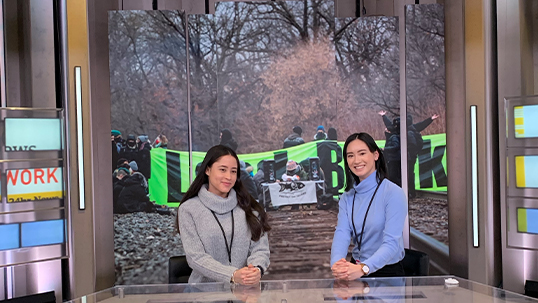
Take your studies out of the classroom and apply the skills you’ve learned in a real work situation! Available to all fourth year Communication & Media Studies, this course allows students to apply with an organization and work part-time for academic credit. Students receive hands-on experience, opportunities to network with people working in the communications sector, and insight into different career pathways.

Criminology Placement Course
CRIM 4667 6.00 (Crosslisted to SOSC 4667 6.00)
The purpose of this course is to provide students with an opportunity to develop their knowledge of criminological issues and approaches in a practical context. The course begins with in-class workplace-related skills training followed by placement in a government, community, or non-governmental organization working with people in conflict with the law, victims of crime, or in crime prevention. Application required.

Digital Authoring Practicum
PRWR 4001 6.00
This practicum allows fourth year students in PRWR to design and implement online writing and marketing campaigns for community organizations. Community service learning is central to this course. Students are matched with individuals and organizations that need digital help. Students write blogs, build websites, execute social media campaigns, write and design material appealing to multiple audiences using a variety of technologies. Students critically reflect on issues related to online communication.

Disaster & Emergency Management Practicum
DEMS 5080 6.00
Placements in the field provide students with the opportunity to apply theories of disaster and emergency management in a variety of organizations within the private, public and non-governmental organization sectors.


Doing Culture: Narratives of Cultural Production
HUMA 4207 6.00
Students discover how local cultural production is fostered, disseminated, and in some cases restricted in and by the communities they serve. Building on cultural theories and concepts of public pedagogy, students work in small groups with partner organizations to engage in a choice of research or community focused experiential learning activities to be used for a range of real-world applications.

Info for Students on Placement
As a requirement of placement, all students will access Experience York/Orbis to:
- Accept terms and conditions of placement
- Upload your completed health & safety checklist
FAQ
The answers in this section are general and apply to all placement courses. If you would like more information about the placement course specific to your program, please refer to the course listings above. The individual course webpages will provide detailed information relevant to your program(s) of interest.
How many hours do I need to complete for placement?
The number of required hours vary depending on the course. However, placements are part-time, generally unpaid, and normally do not exceed 8 hours a week.
What is the placement duration?
The length of placement varies depending on the course. If you’re enrolled in a 6.00 credit placement course, your placement can be anywhere between 4 to 7 months. For a 3.00 credit placement course, the placement duration will be 4 months or less.
Do I need to secure my own placement?
It depends on the design of the course. In some cases, you may need to contact external partners with your resume and cover letter to inquire about placement opportunities. For most courses, however, the Course Director will match you to a placement depending on availability.
How are placements graded?
Please review the course outline carefully at the start of the term. A significant portion of your grade depends on your performance during the placement, and your supervisor will also be asked to provide an evaluation.
Can I find my own placement?
Some courses allow students to find their own placements. However, final approval from the Course Director is required to ensure that the role and responsibilities align with the learning outcomes of the course.
What about health & safety?
Placement agreements must be signed before students begin their placements. These agreements outline insurance requirements and obligations for unpaid placements. The Experiential Education (EE) Office will work closely with your Course Director to facilitate this process.
Testimonials
The field placement course provided me with the practical knowledge and skills that I needed to both find employment in the emergency management field, but more importantly be successful within this field. Learning and understanding how an emergency management program operates first-hand is essential to making the transition from university into the workforce. Shortly after completing the field placement course, I was hired full-time by the organization I had completed my placement with. Now, two years later, I am responsible for coordinating and supervising the students that do their placements with our emergency management program. My experience has come full-circle.
— Ben Gallagher
Alumnus, Disaster & Emergency Management '19

I was supported by the entire team when it came to my goals and I was always allowed to attend events and different groups to expand my learning and knowledge.
— Brittni Harris
Student, Social Work


Questions?
If you have any additional questions, please reach out to the Experiential Education Office at eelaps@yorku.ca.